search
Search

Enter keywords to search for products, blog posts, and more.

Truck-Mounted Boom Pump

Truck-Mounted Boom Pump

Concrete Boom Pumps Built for Real Jobsite Conditions

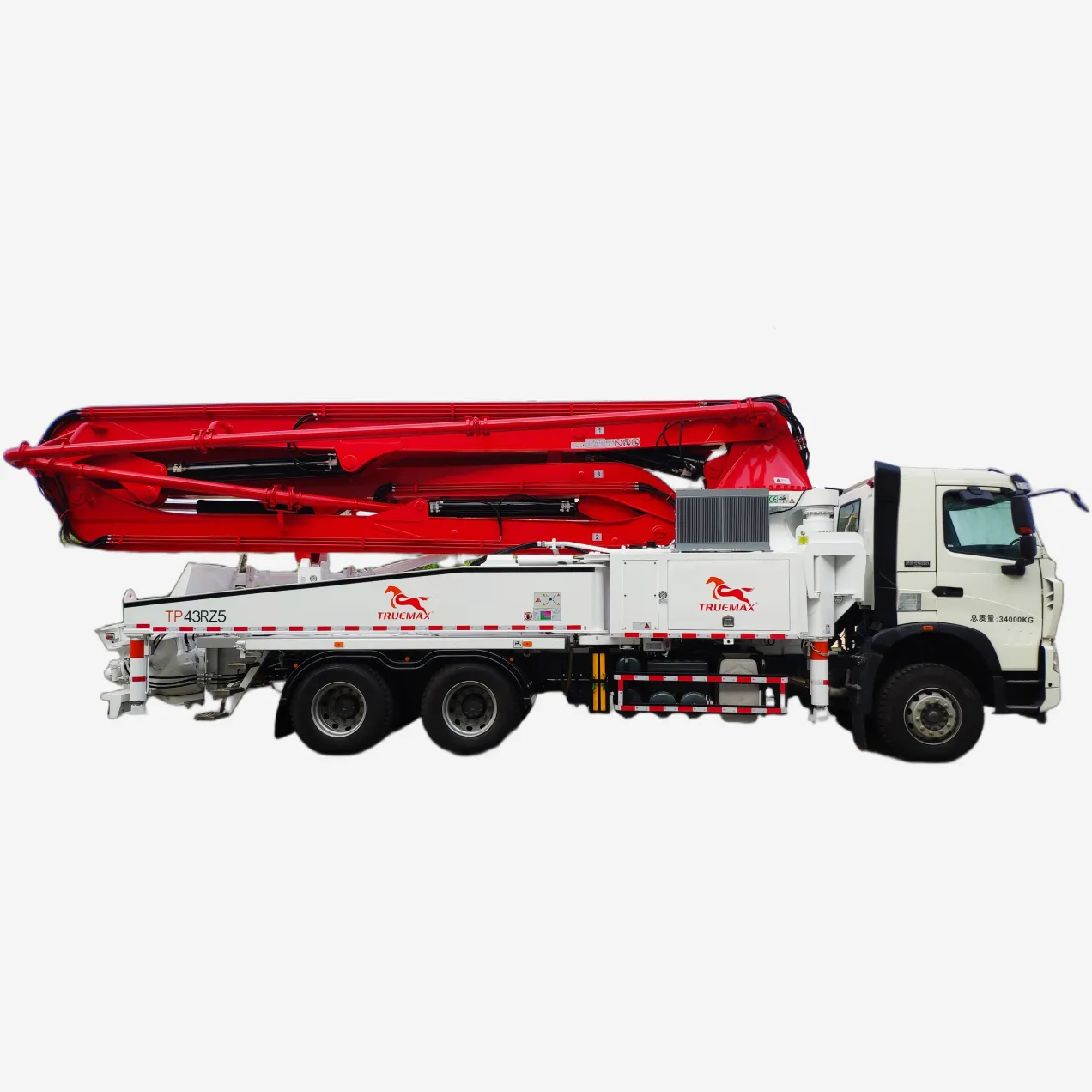
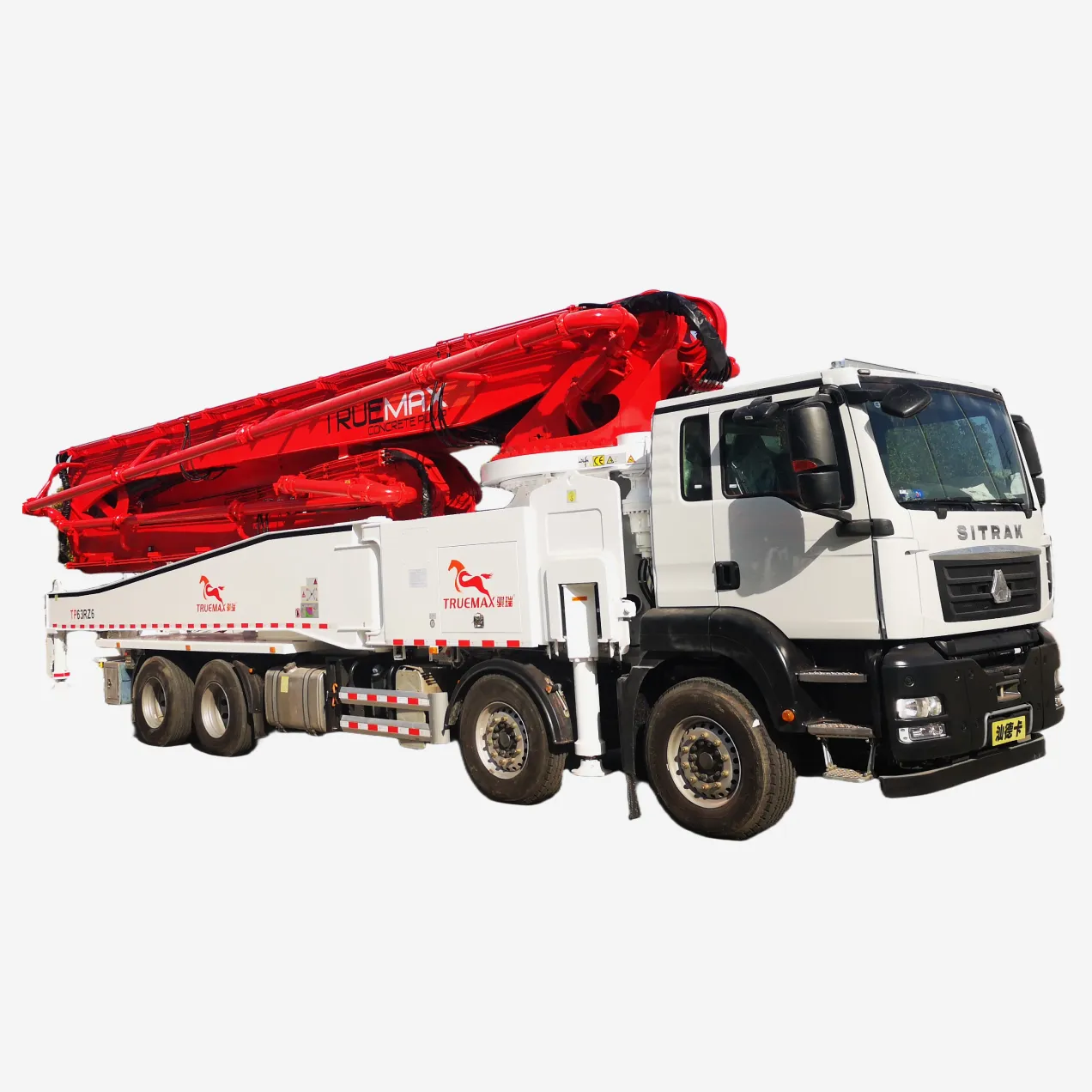
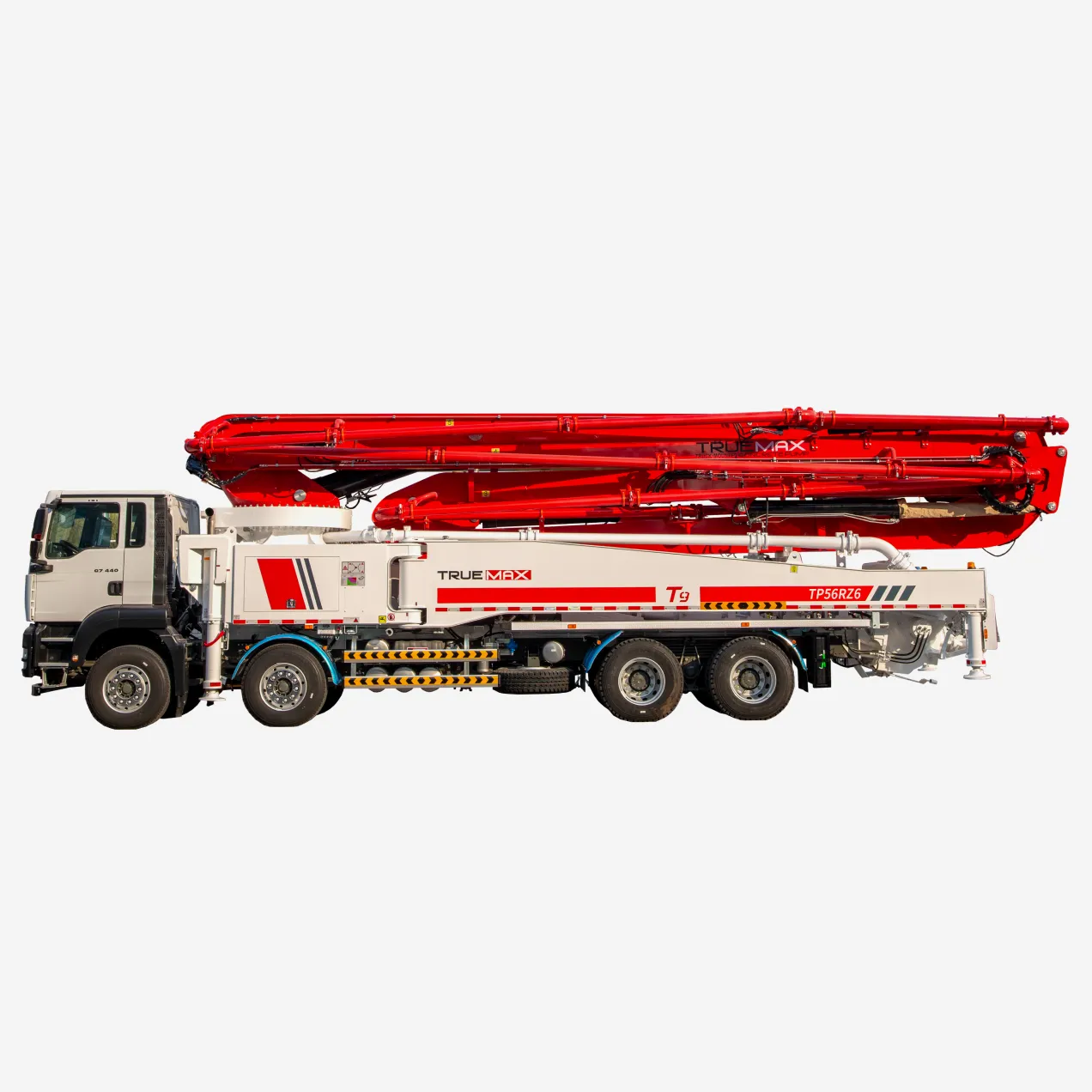
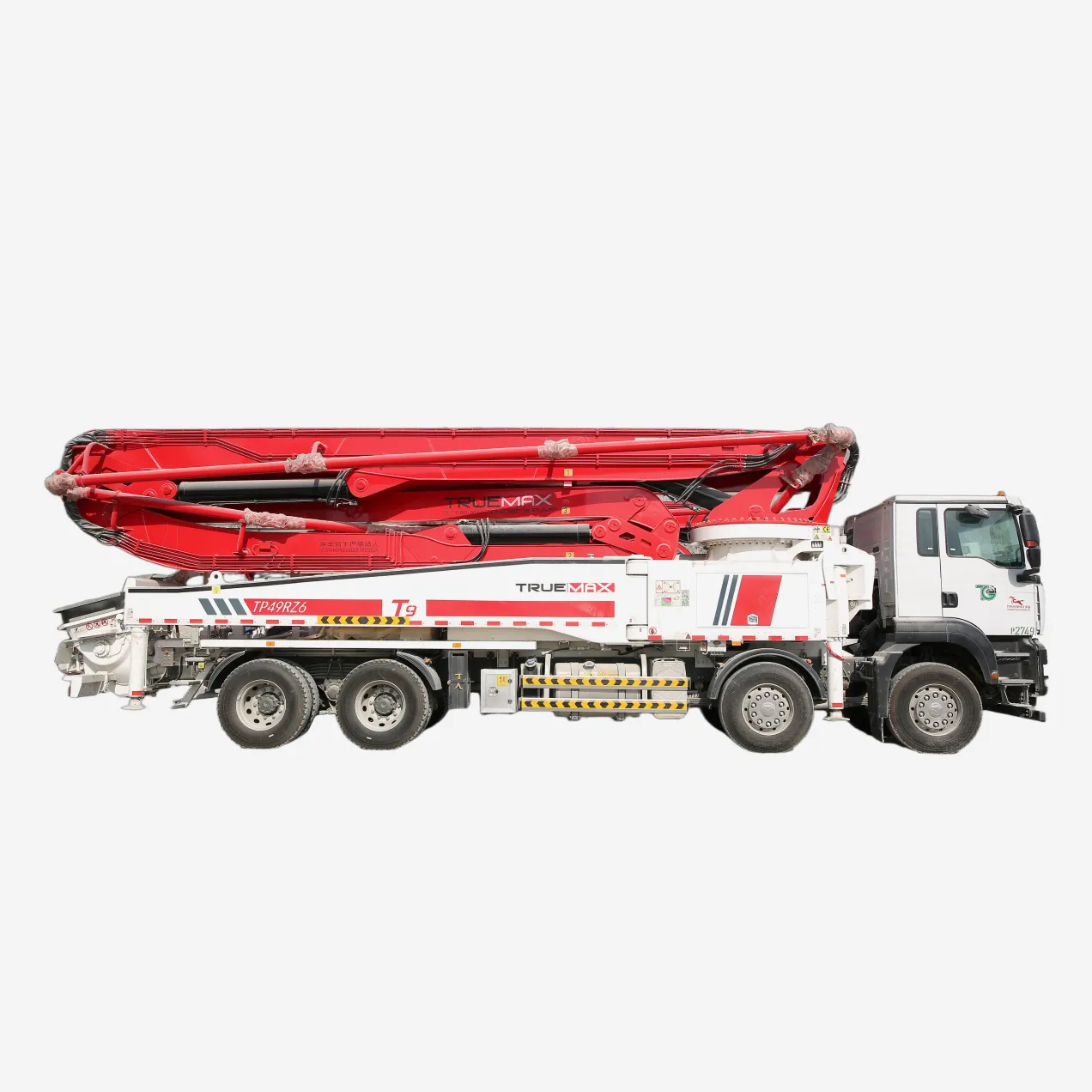
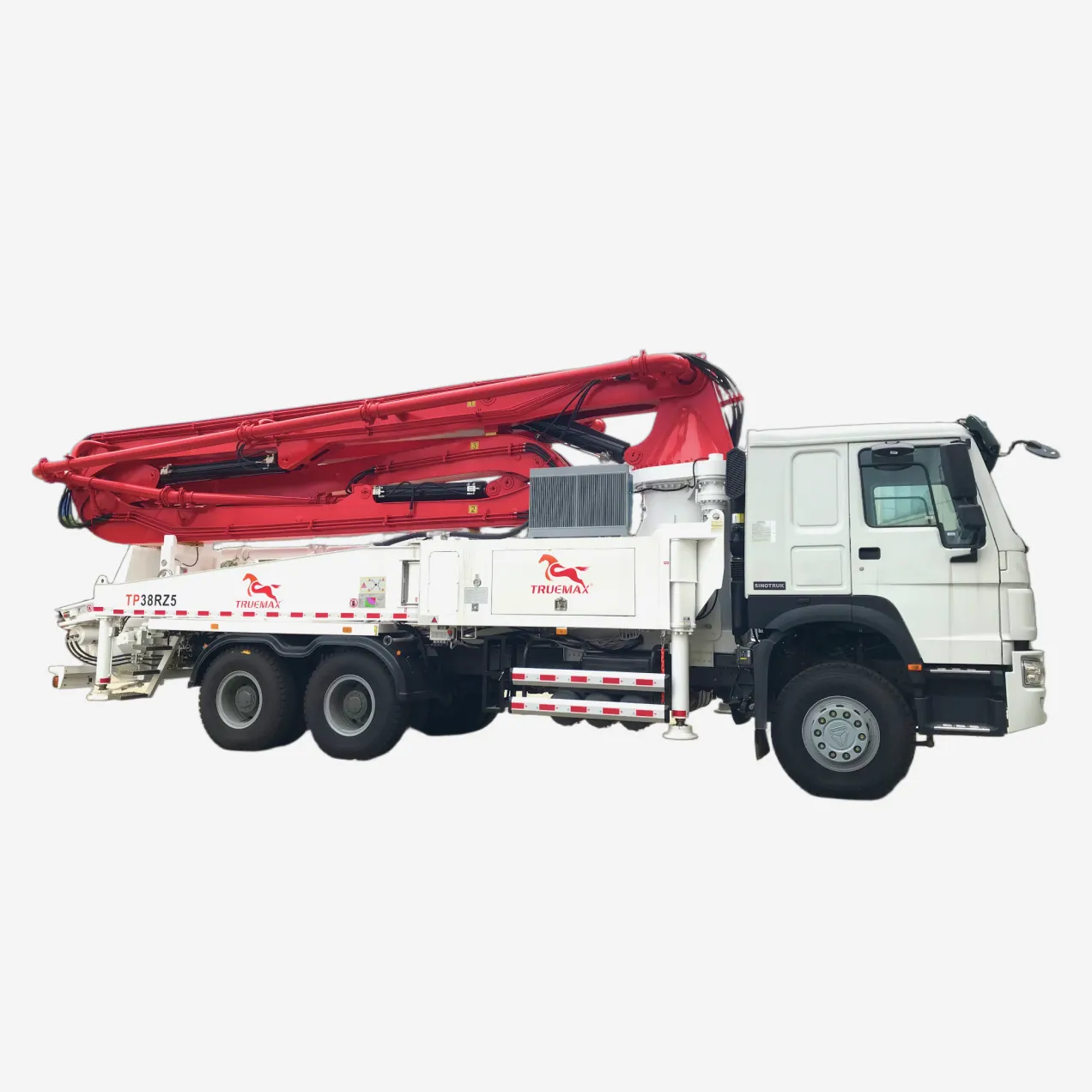
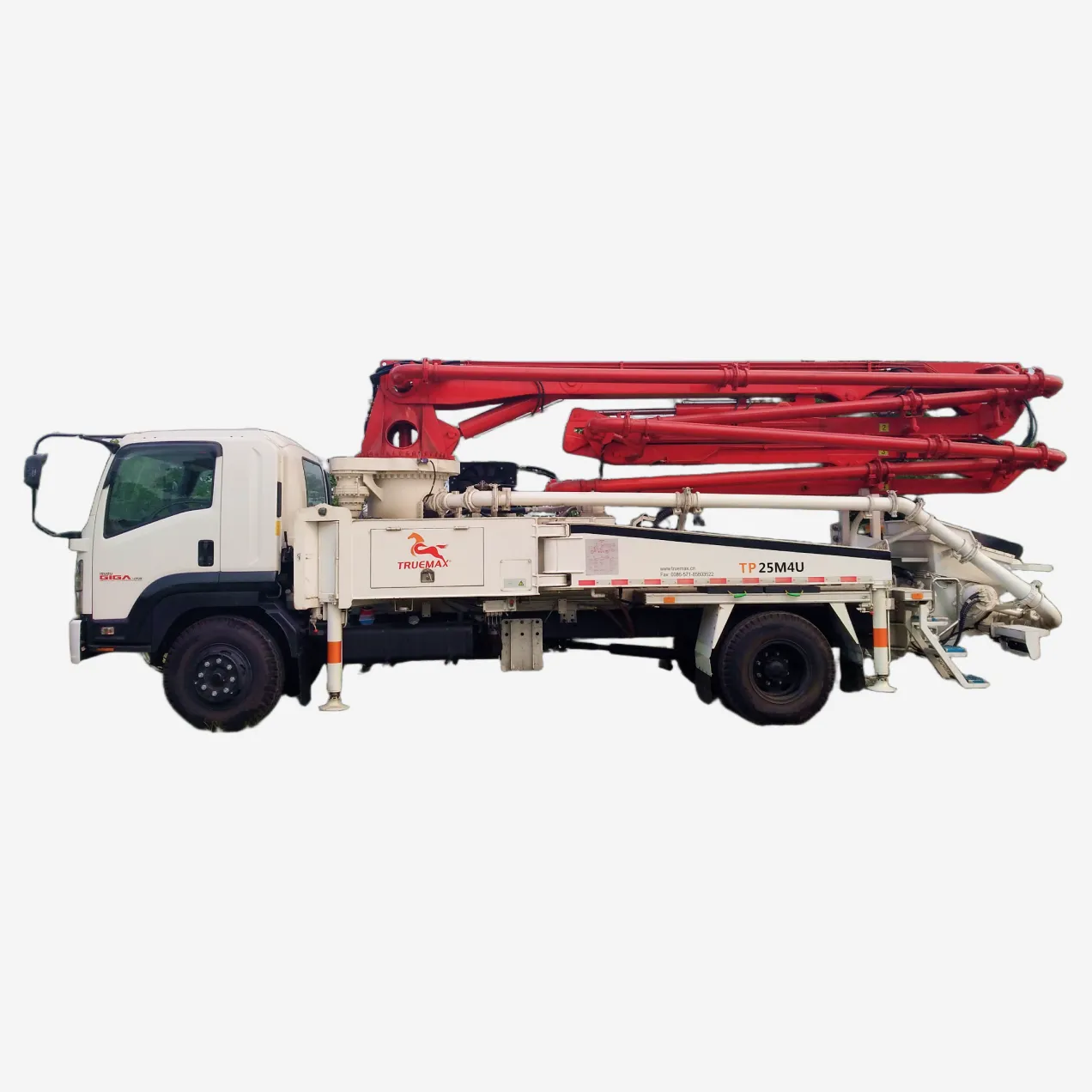
Truck-mounted boom pumps cover working heights from 24.2m to 62.1m. The boom sections utilize imported high-strength low-alloy steel (yield strength above 900MPa), with 100% non-destructive weld testing. The boom system is designed through multi-physics analysis and structural optimization for lighter weight and extended service life. Standard configurations include Rexroth hydraulic components, STIEBEL PTO systems, and PLC/CAN-BUS electronic controls. Operations are managed via panel, wireless remote, or manual emergency mode. The pumping system features tungsten carbide wear plates and cutting rings to maximize uptime between replacements. These units operate on high-rise buildings, bridges, tunnels, and infrastructure projects globally. Upper parts can be configured on various chassis brands based on regional requirements.

Products in This Series

Truck-Mounted Boom Pump Specifications

Full model comparison — TP25M4 to TP63RZ6

SpecificationTP25M4TP38RZ5TP43RZ5BTP49RZ6TP56RZ6TP63RZ6
Vertical Reach (m)24.23843495662.1
Horizontal Reach (m)20.63439445156.9
Boom Sections455666
Theo. Output Low/High (m³/h)100150 / 85170180 / 120180 / 120180 / 120
Max. Concrete Pressure (MPa)5.65.9 / 10.75.98.3 / 128.3 / 128.3 / 12
Valve TypeSSSSSS
Hydraulic Pressure (MPa)323232323232
Chassis Axle4×26×46×48×48×48×4
Engine Power (kW)210297297324324324
Outrigger TypeX-typeX front / Swing-out rearX front / Swing-out rearX front / Swing-out rearX front / Swing-out rearX front / Swing-out rear
Control SystemPLC + RemotePLC/CAN-BUS + RemotePLC/CAN-BUS + RemotePLC/CAN-BUS + RemotePLC/CAN-BUS + RemotePLC/CAN-BUS + Remote
Typical ApplicationsSmall sites, bridgesMid-rise, bridges, tunnelsMid-rise, highwaysHigh-rise, infrastructureHigh-rise, stadiumsSuper high-rise, mega projects


* Specifications are based on standard configurations. Actual values may vary with chassis brand and on-site conditions.

* Upper parts can be mounted on customer-specified chassis (Sitrak, Sinotruk, Dongfeng, etc.). Contact us for chassis options.

* All models feature Rexroth main hydraulic pumps and STIEBEL (Germany) PTO systems.


How We Build Our Boom Systems

How We Build Our Boom Systems

The boom structures utilize imported high-strength low-alloy steel with a yield strength exceeding 900MPa, offering nearly three times the tensile strength of standard structural steel. All welds undergo 100% non-destructive testing. Finite element analysis and multi-physics simulation optimize the boom structure to reduce dead weight while maintaining robust load-bearing capacity. This lowers chassis stress, improves fuel efficiency, and extends the operational life. Multi-section booms utilize R-type folding for efficient deployment in confined spaces, while a load-sensing proportional system ensures smooth, shock-free articulation.


Chassis Flexibility for Your Local Market

Chassis Flexibility for Your Local Market

Boom pump upper parts function as independent modules, enabling mounting on Sitrak, Sinotruk, Dongfeng, Shacman, or other chassis brands based on regional regulations and availability. Sitrak serves as the standard pairing for medium to high-reach models, while Steyr applies to compact units like the TP25M4. PTO integration, hydraulic plumbing, and full vehicle testing are completed prior to deployment.

Why Contractors Choose Truemax Boom Pumps

We manufacture, deliver, and support your equipment — from our factory floor to your jobsite, with local teams standing behind every unit we sell.

Factory-Direct Pricing

Factory-Direct Pricing

Customized Configuration

Customized Configuration

Proven Project Track Record

Proven Project Track Record

On-Site Installation & Training

On-Site Installation & Training

24-Hour After-Sales Response

24-Hour After-Sales Response

Global Spare Parts Supply

Global Spare Parts Supply

About Truemax

Established in 2003, Truemax is a concrete and construction equipment manufacturer with its own factory in Haining, China and over 10 overseas offices. We supply equipment, spare parts, and on-site service to contractors in more than 120 countries.

About Us Projects Solutions Facility

FAQs

What is the difference between a truck-mounted boom pump and a line pump?

A truck-mounted boom pump features an articulating arm (the "boom") of 24.2–62.1 m that places concrete precisely without manual hose handling. A line pump pushes concrete through a steel pipeline laid on the ground or up a riser. Boom pumps offer advantages in deployment speed and labor efficiency; line pumps provide extended horizontal reach beyond 60 m and accessibility in constrained urban sites. See our blog "Boom Pump vs Line Pump vs Stationary Pump" for the full selection guide.

Which boom pump model is right for my project?

Match the boom reach to the building height plus a 5–10 m safety margin. The TP25M4 (24.2 m) covers small residential and bridge work. The TP38RZ5 / TP43RZ5B handle mid-rise residential (8–12 storeys) and routine commercial work. The TP49RZ6 covers high-rise up to ~14 storeys. The TP56RZ6 and TP63RZ6 are standard selections for high-rise commercial structures up to ~20 storeys. Above 60 m vertical reach, operations typically transition to a stationary concrete pump driving concrete through a riser to a placing boom.

What chassis brands can the boom pump be mounted on?

The boom pump upper parts are engineered as independent modules and mount on Sitrak, Sinotruk, Dongfeng, Shacman, FAW, and other chassis brands depending on the destination market. PTO integration, hydraulic plumbing, and complete vehicle testing are finalized prior to shipment.

What emission standards are supported?

Boom pumps are available in Euro II through Euro V emission specifications to comply with regional regulatory requirements. The mainstream Sitrak and Sinotruk chassis cover the full Euro II–V band.

What after-sales support comes with the boom pump?

Standard support includes on-site commissioning and operator training, rapid response to service requests, technical issue resolution, remote diagnostics through the intelligent monitoring system, and regional spare parts inventories. After-sales contact: service@truemax.cn, WhatsApp +86 15888872611.

Learn More About Truck-Mounted Boom Pumps

A practical reference for engineers and procurement teams evaluating truck-mounted concrete boom pumps for construction projects. Covers how a boom pump works, the concrete mix-design parameters that make a mix pumpable, pump-to-pipeline pressure matching, and how to select the right model and reach for your project.


How a Truck-Mounted Boom Pump Works

A truck-mounted concrete boom pump is a self-propelled, articulated boom pump used to deliver fresh concrete from a truck mixer (or central hopper) to the point of placement through a closed pipeline running along the boom arms. The pump itself is a twin-cylinder hydraulic piston pump fitted with an S-tube switching valve at the hopper end. The two pumping cylinders work in 180° opposition: while one cylinder draws concrete from the hopper through the suction side of the S-tube, the second cylinder discharges into the delivery pipeline. The S-tube swings between the two cylinders on every stroke, switching the suction and discharge paths.

Concrete pressure is generated by the hydraulic system acting on the back face of each pumping piston. On the TRUEMAX A-series boom pumps, the hydraulic main pressure is 32 MPa, transmitted to the pumping cylinders to produce concrete pressures of 8.3 to 12 MPa at the discharge — enough to deliver concrete vertically through the boom and onward into a placing boom or end hose. Boom positioning is independent of pumping: a separate proportional hydraulic circuit articulates each boom section, with load-sensing flow control for shock-free movement under load.

Pumpable Concrete: Mix Design Parameters

Pump performance directly correlates with mix design parameters. ACI 304.2R-17 (Guide to Placing Concrete by Pumping Methods) is the authoritative reference. Pumpability depends on six interrelated variables:

•        Water-binder ratio: 0.30–0.50 typical, 0.30–0.40 for high-strength and high-rise vertical pumping. Lower ratios require enhanced lubrication from cement paste and SCMs.

•        Slump / consistency: 100–180 mm (4–7 in) for conventional pumped concrete; up to 210 mm or self-consolidating concrete (SCC) for constrained placements. Slump retention throughout the pumping duration must be accounted for on long pours.

•        Cement / binder content: 320–450 kg/m³ typical, depending on strength class. Excess cement reduces economic efficiency without independently enhancing pumpability.

•        Supplementary cementitious materials (SCM): Fly ash (Class F) replacing 15–25% of cement improves pumpability and reduces line friction. Ground granulated blast-furnace slag (GGBS) at 30–50% replacement is frequently utilized in high-rise and durability-driven mixes.

•        Coarse aggregate grading: ASTM C33 / C33M compliance is required. Maximum aggregate size ≤ 1/3 the smallest inside pipe diameter (typically 25 mm for 125 mm pipe, 32 mm for 150 mm pipe). Continuous grading minimizes friction loss.

•        Fines content: Sand fraction passing 300 µm at 15–20% of total aggregate, passing 150 µm at 5–8%. Insufficient fines lead to bleed-water separation and pipeline blockage at bends.

Admixture selection: water-reducing admixtures (mid-range or high-range) improve workability without increasing the water-binder ratio; air-entraining agents at 4–7% are standard in freeze-thaw climates but reduce structural strength predictably. Polycarboxylate ether superplasticisers (PCE) remain the standard for high-rise and SCC pumping operations.

Mixes that fail pumpability assessment — generally due to inadequate fines, oversized aggregate, low cementitious content, or excessive fibre dosage — should not be deployed for pumped placement. ACI 304.2R recommends trial-pumping of marginal mixes prior to structural operations.

Pump-to-Pipeline Matching

Pipeline sizing and routing determine the pressure budget available at the point of discharge. The pump's nameplate pressure (e.g. 12 MPa peak on a TP49RZ6) is the upstream value; losses through the pipeline reduce the effective discharge pressure.

Typical pressure losses (125 mm steel pipe, conventional mix)

•        Vertical rise: ~1 bar (0.1 MPa) per 4–5 m of lift

•        Horizontal run: ~0.5–1.0 bar (0.05–0.1 MPa) per 100 m

•        Each 90° bend: ~1–2 bar equivalent additional loss

•        Reducers and flexible hose: ~2–3 bar combined

A truck-mounted boom pump rated for 12 MPa (120 bar) discharge pressure delivers approximately 60 m vertical reach through the boom in addition to its mechanical extension — which is why the TP63RZ6 (62.1 m vertical) does not require a riser pipe to reach its full extension. Beyond the boom range, stationary high-pressure pumps are utilized to drive concrete into building-mounted riser pipework feeding a placing boom on the working storey.

Pipeline material and accessories

Boom delivery pipes deploy hardened seamless steel pipe featuring double-layer construction at high-wear bends. The standard configuration operates a 125 mm internal diameter. Pipe couplings utilize quick-release clamp connections to EN-equivalent specifications, incorporating hardened wear sleeves at every bend. The flexible end hose at the boom tip employs wire-reinforced rubber rated to the maximum operational pump pressure.


You May Also Be Interested In

message