

 LANGUAGE
Tunnel concrete is a long-distance problem. A mixer truck cannot drive up to the pour at the face, so the last few hundred metres happen inside a steel pipeline, with a pump pushing the concrete through it. Get the pump pressure or the mix wrong and you block that line half a kilometre in, which is slow and costly to clear. Underground work asks a different question of the equipment than a surface pour does. The spec that matters is how far you have to push the concrete, and how to keep the line moving for a full shift.
TRUEMAX equipment has delivered concrete underground on the Qatar Rail Metro in Doha, over 60 sets of heavy equipment and 7,000 tons of tunnel steel structures built to UK and Qatar standards, and on the Dubai Expo 2020 stormwater tunnel, along with underground and civil works across the Middle East, Africa and Southeast Asia. This page covers what makes tunnel concrete equipment different, how to size the package to your drive length and tunnel section, and where our range fits.
What Makes Tunnel Concrete Different
In a tunnel the concrete travels horizontally through a pipeline to reach the pour. Two numbers set the job: how far you have to push it, the drive length from portal to face, and what you are casting, whether that is the invert, a cast-in-place lining, or the portal structures. Everything in the equipment package follows from those two.
Three things separate tunnel pumping from a surface pour:
- A long horizontal pipeline. Runs stretch from a few hundred metres up to around a kilometre along the tunnel, so pump pressure is the spec that decides the job, more than any figure on a boom.
- A pumpable, controlled-set mix. Tunnel linings usually run on a flowable or self-consolidating mix with a set time long enough to pump for hours without the line blocking, and aggregate kept under a third of the pipe bore, about 40 mm in a standard 125 mm pipeline.
- Confined space and ventilation. Equipment has to fit the bore and the crew has to breathe, so underground pours often run on electric-drive pumps or low-emission diesel rather than open exhaust.
The TRUEMAX Tunnel Concrete Equipment Package
A tunnel pour is built from a pump, a pipeline and a supply chain that keeps the pump fed. Each piece below is a real TRUEMAX product line.
| Equipment | Role | TRUEMAX range |
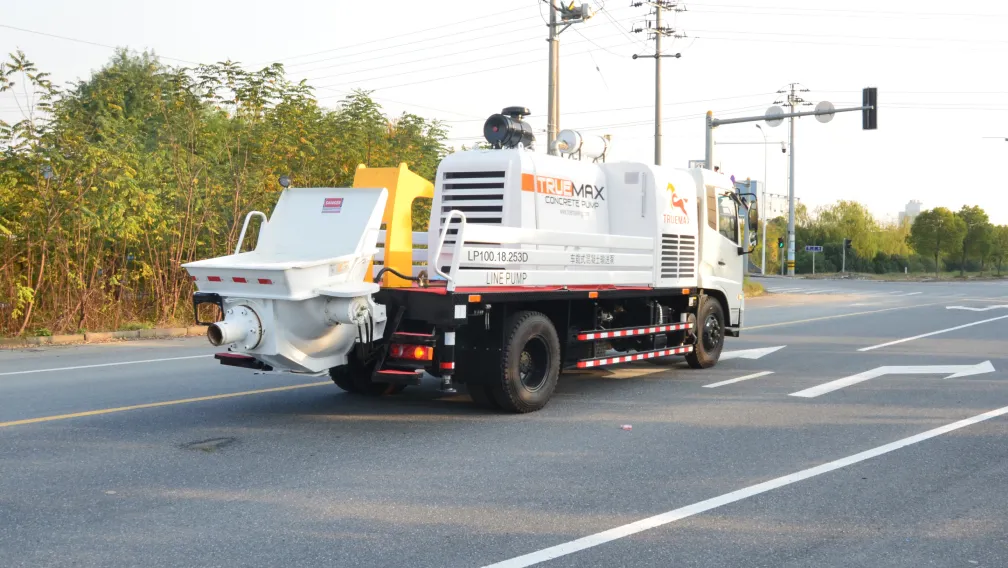
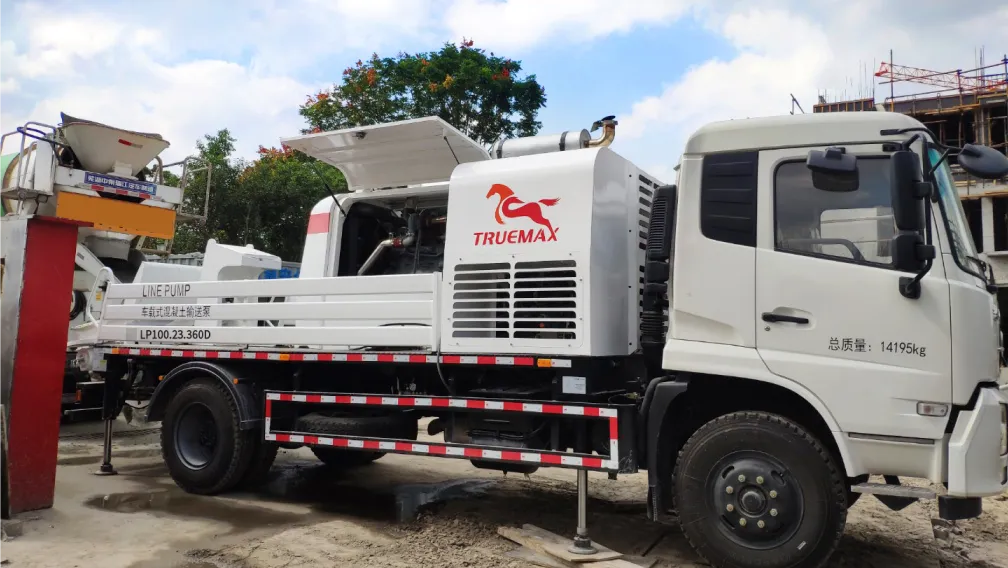
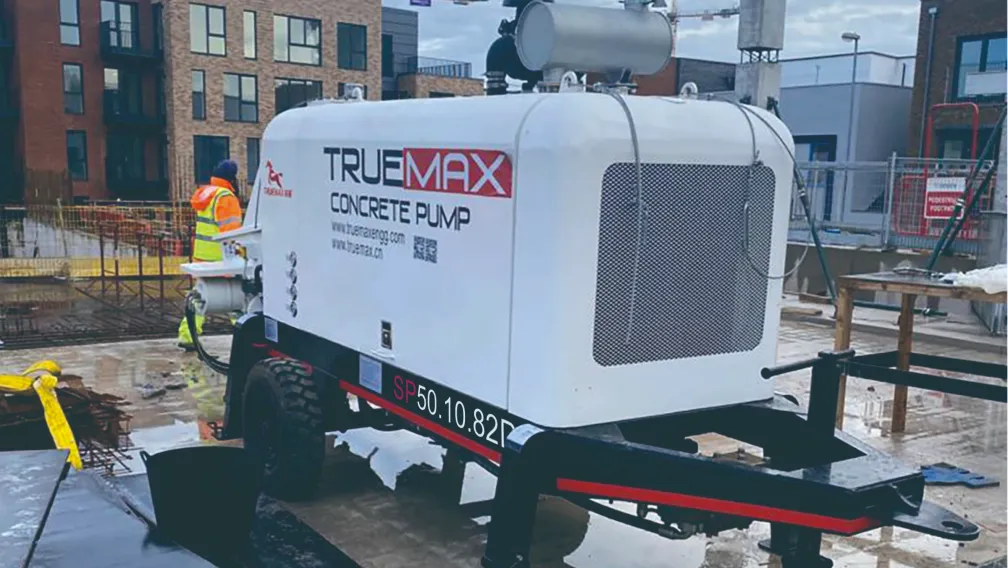
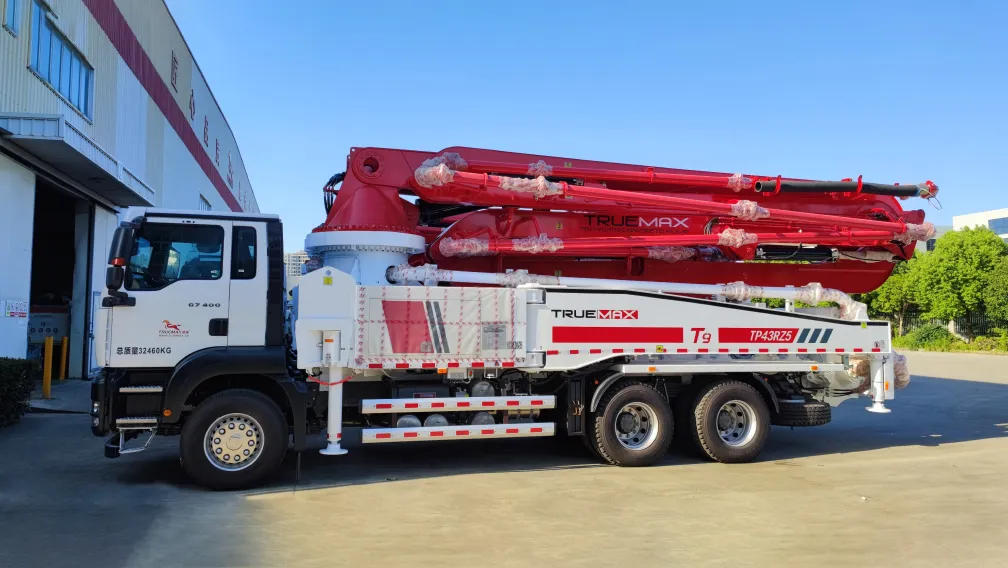
| Truck-mounted line pump | Drives concrete through the pipeline to the face; moves itself to the portal | LP100.18.253D (18 MPa) to LP100.23.360D (23 MPa), about 100 m3/h |
| Stationary high-pressure pump | The pressure source for the longest drives; diesel or electric drive | SP50.10.82D (10 MPa, 50 m3/h) to SP100.23.360D (23 MPa, 100 m3/h) |
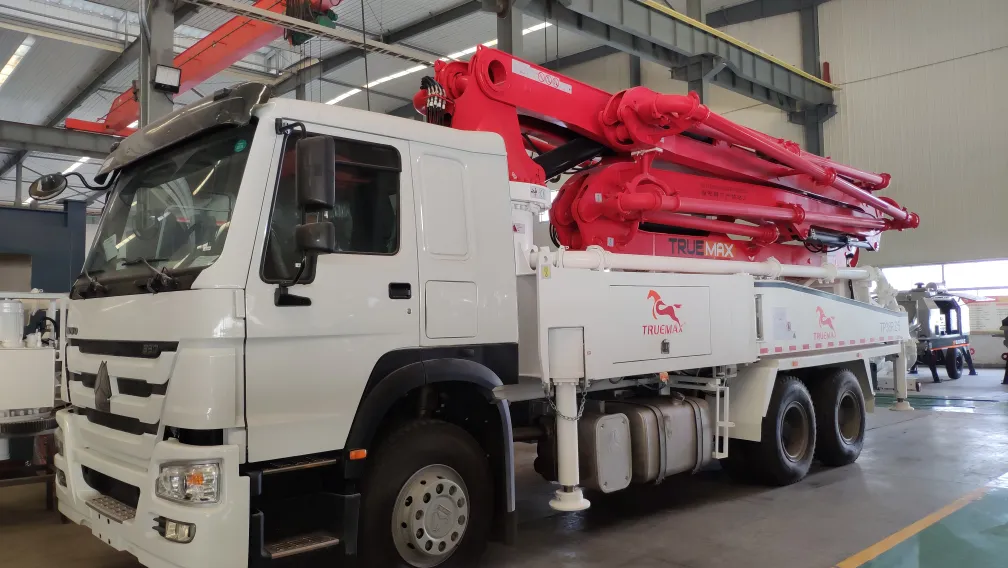
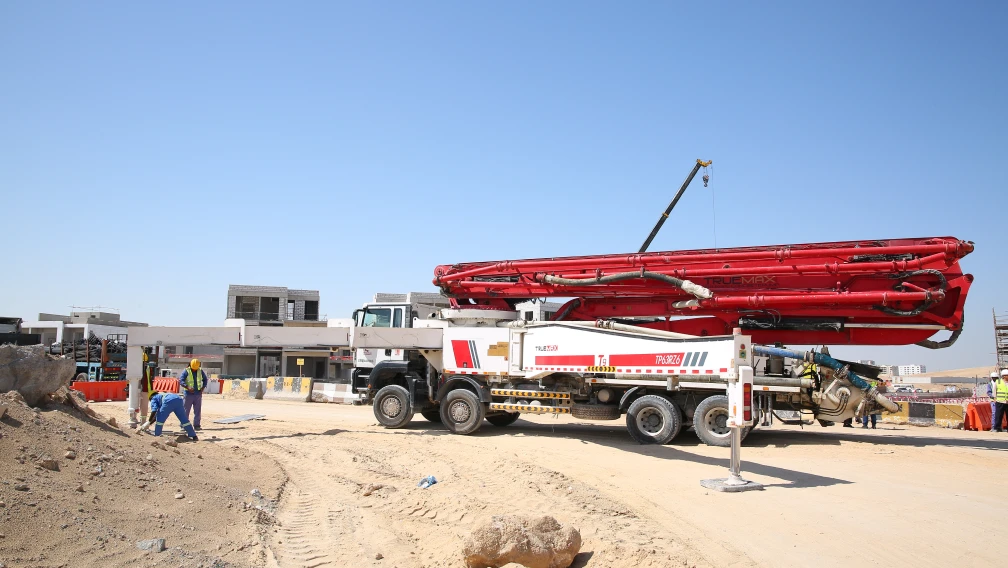
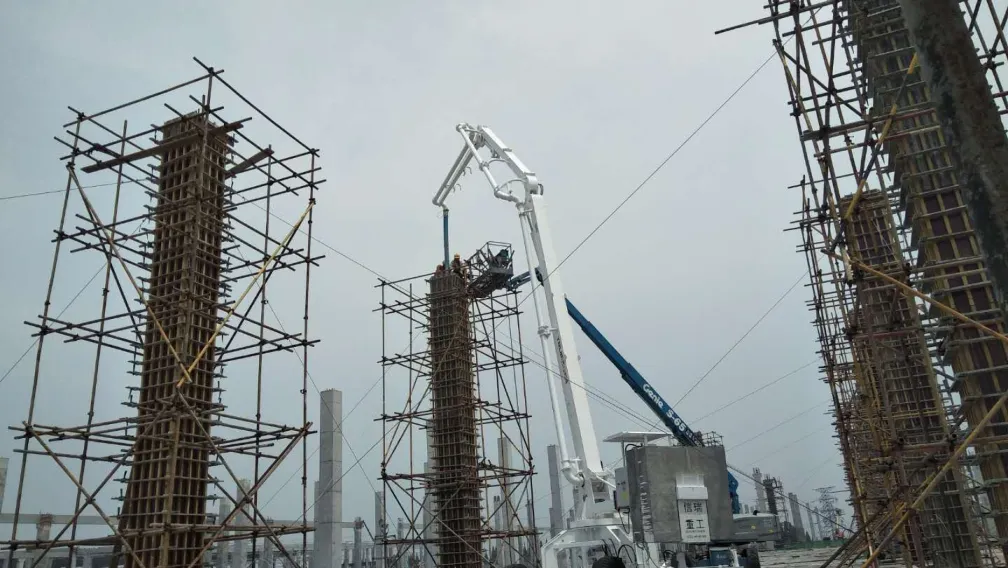
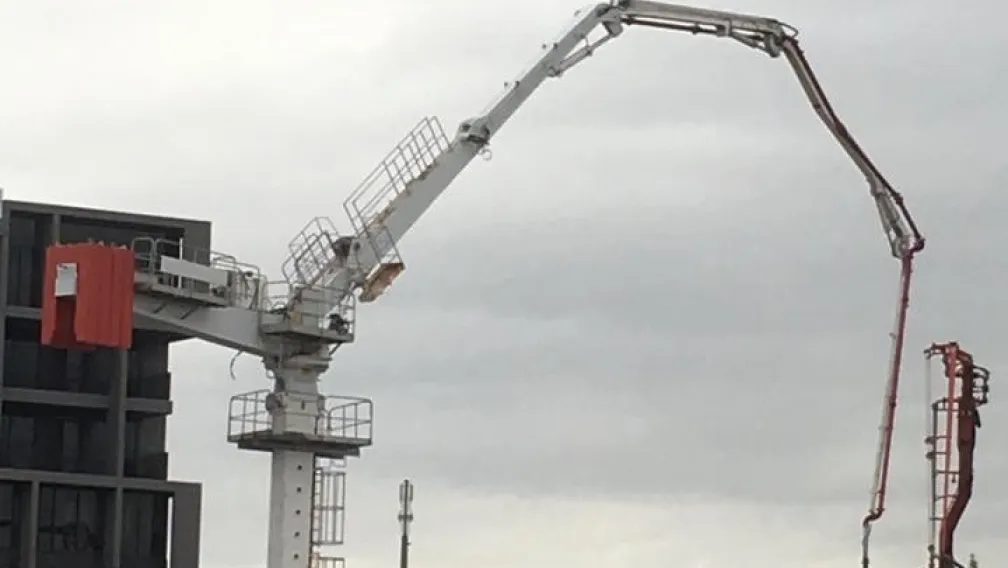
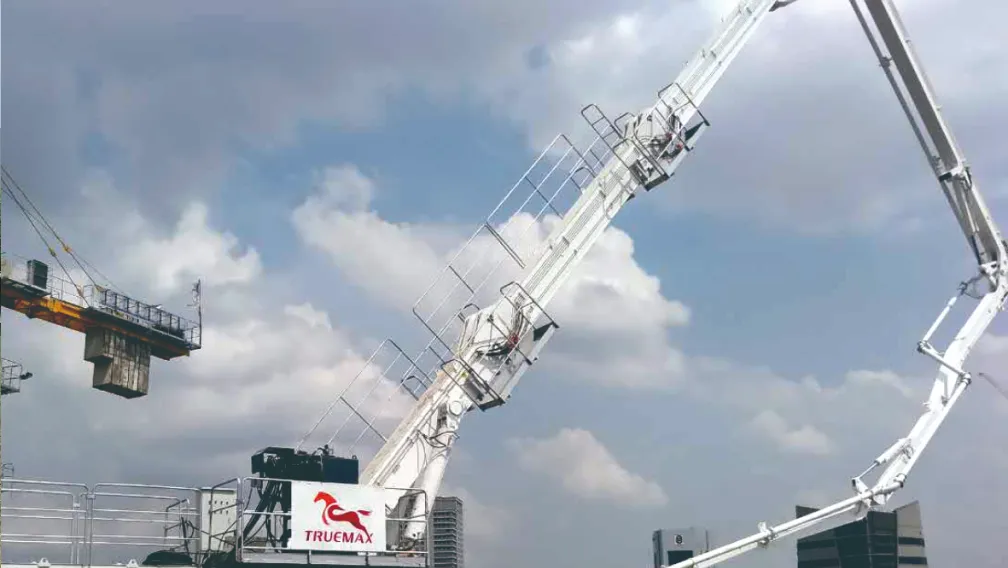
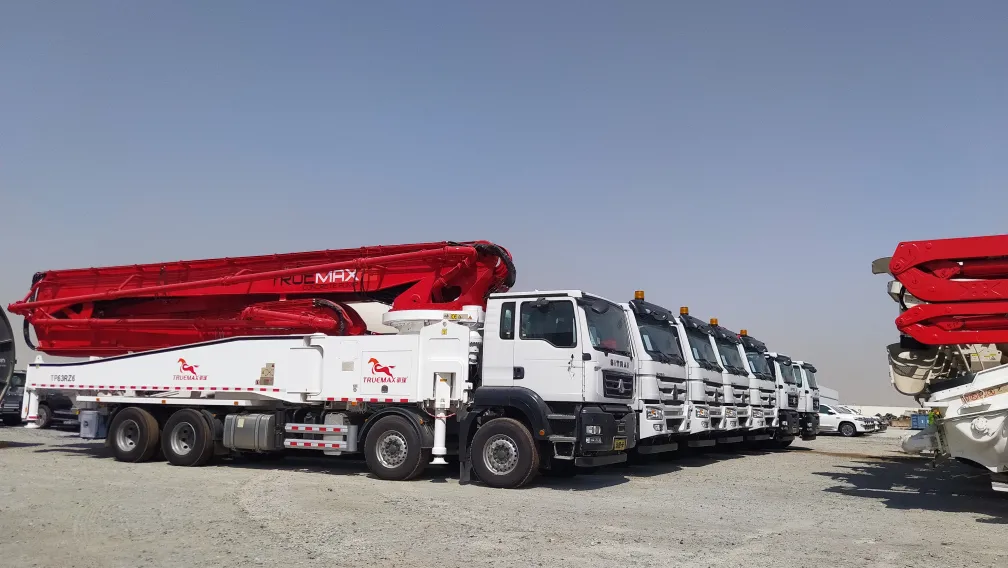
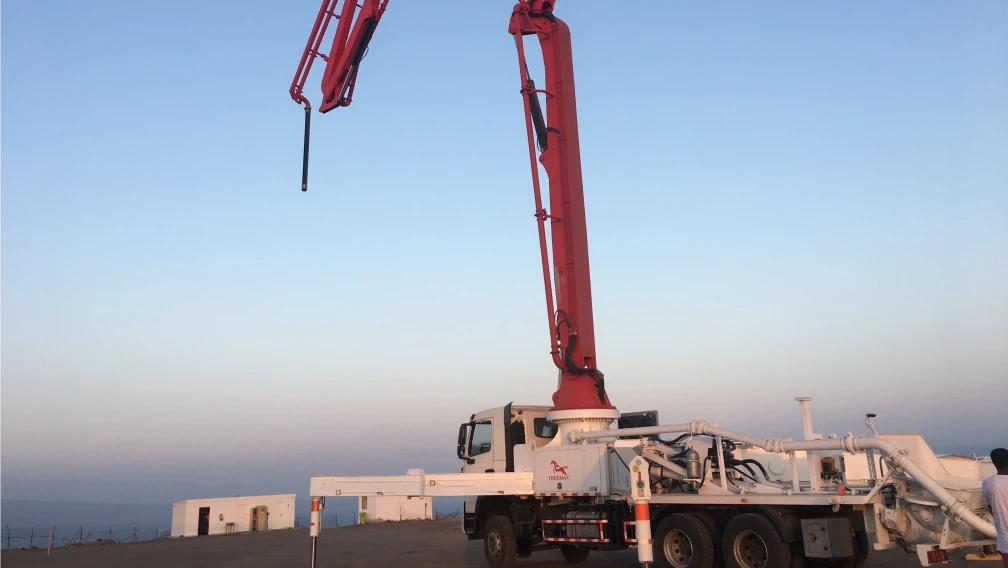
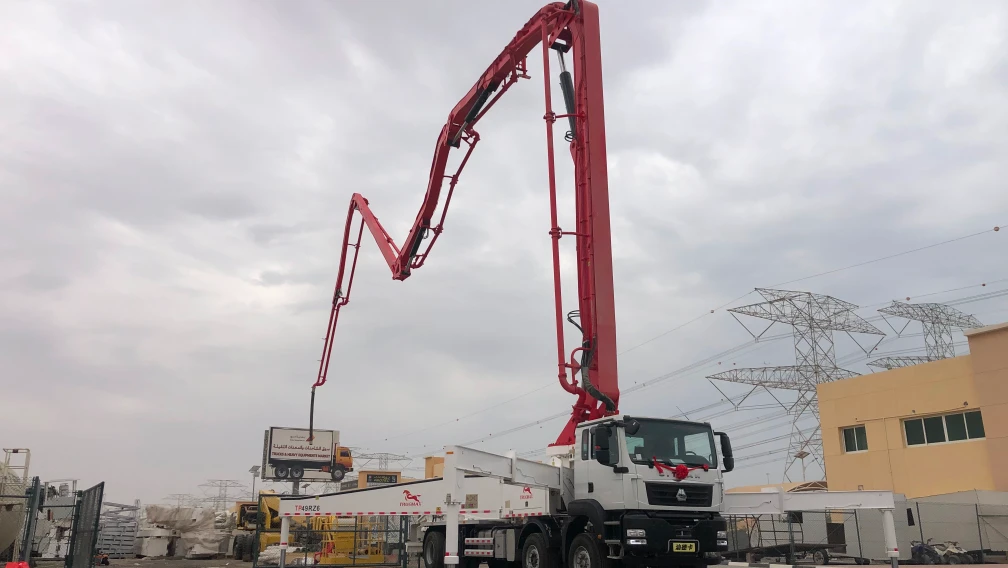
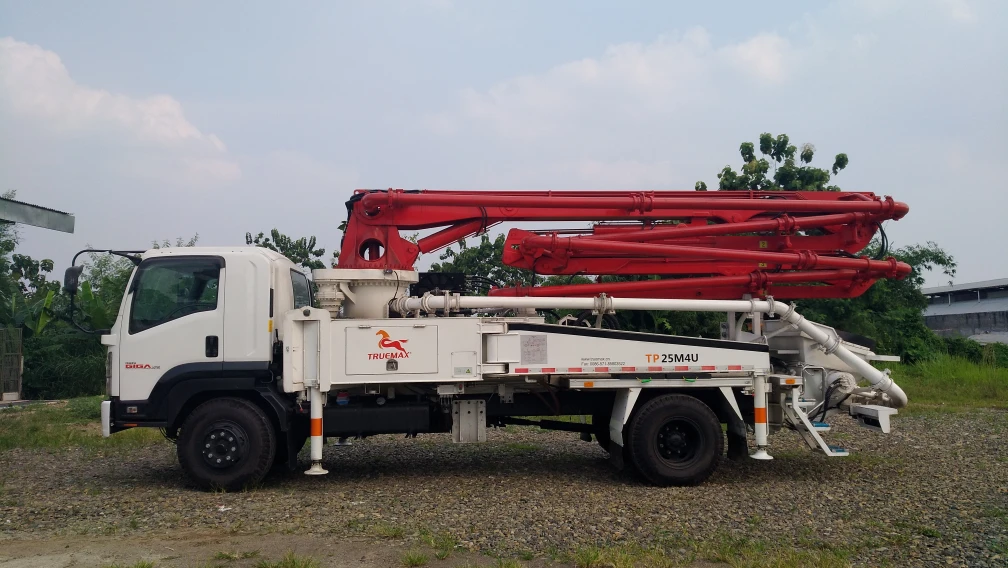
| Concrete placing boom | Spreads concrete at the pour: invert, lining form, portal works | PB series, 17 to 51 m |
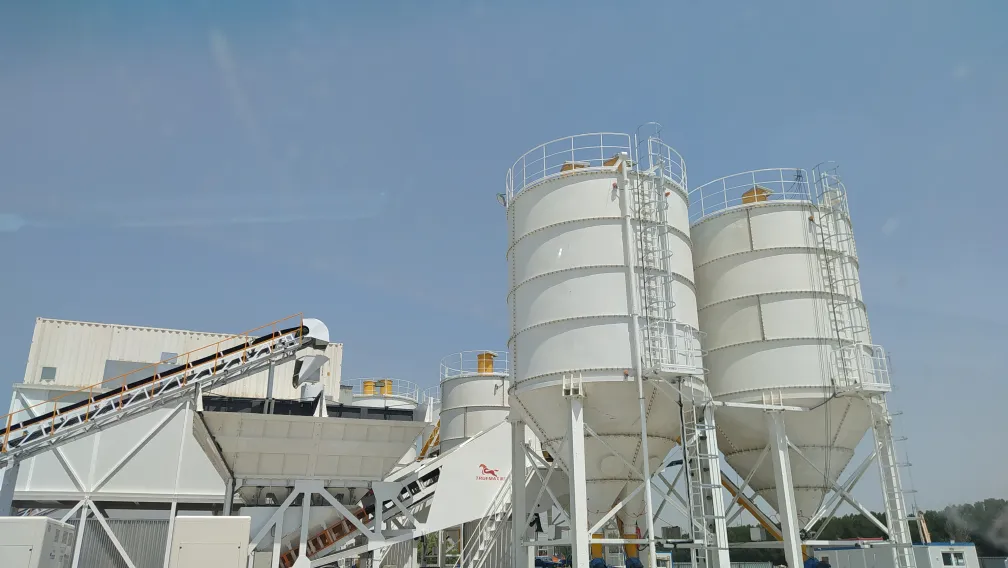
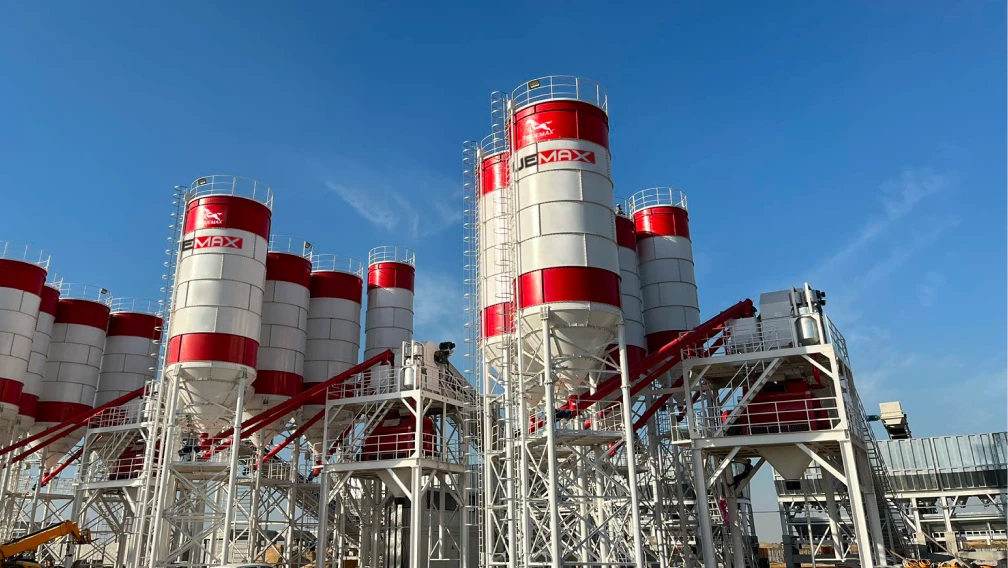
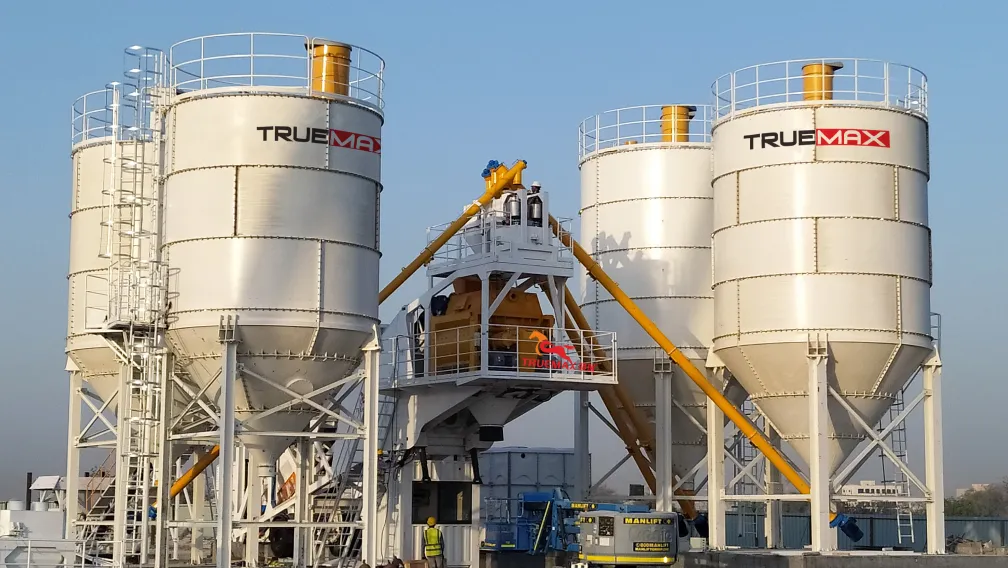
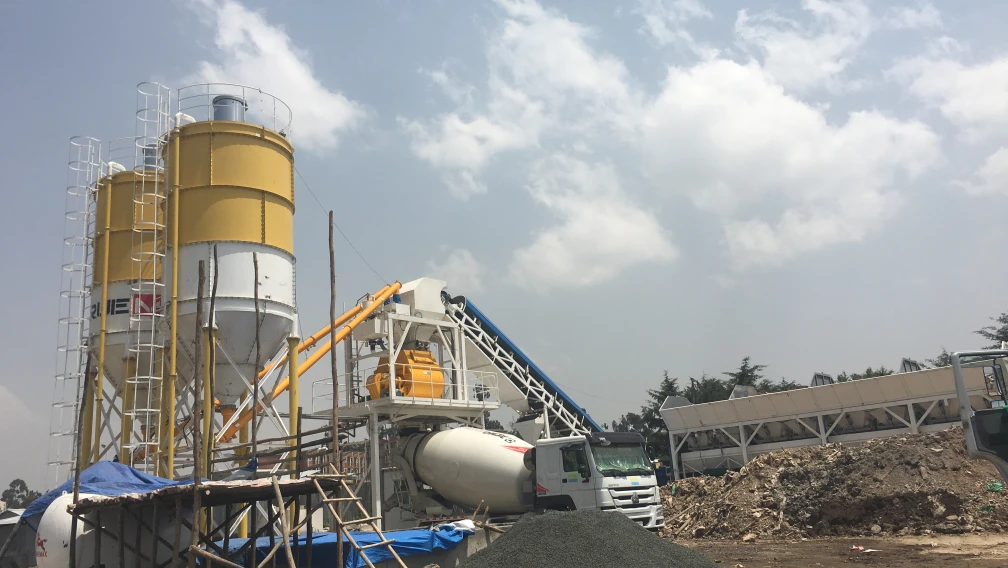
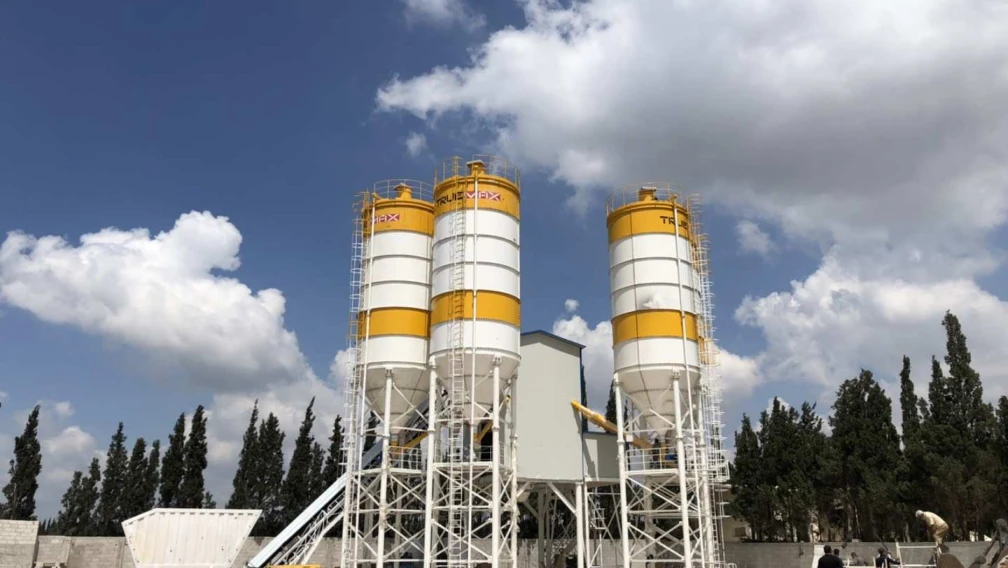
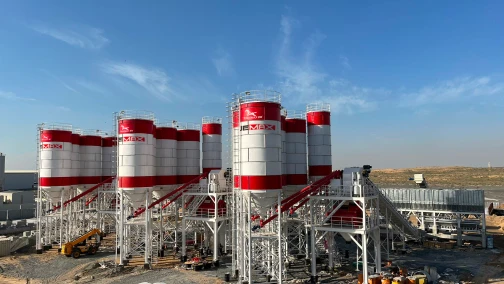
| Concrete batching plant | Produces tunnel-spec concrete at the portal or a satellite plant | CBP60S (60 m3/h) to CBP240S (240 m3/h) |
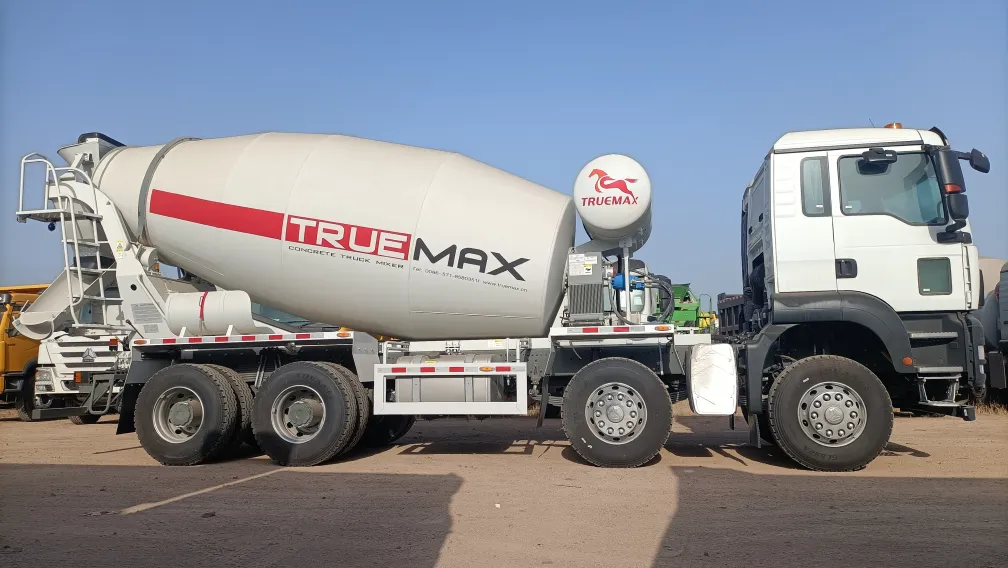
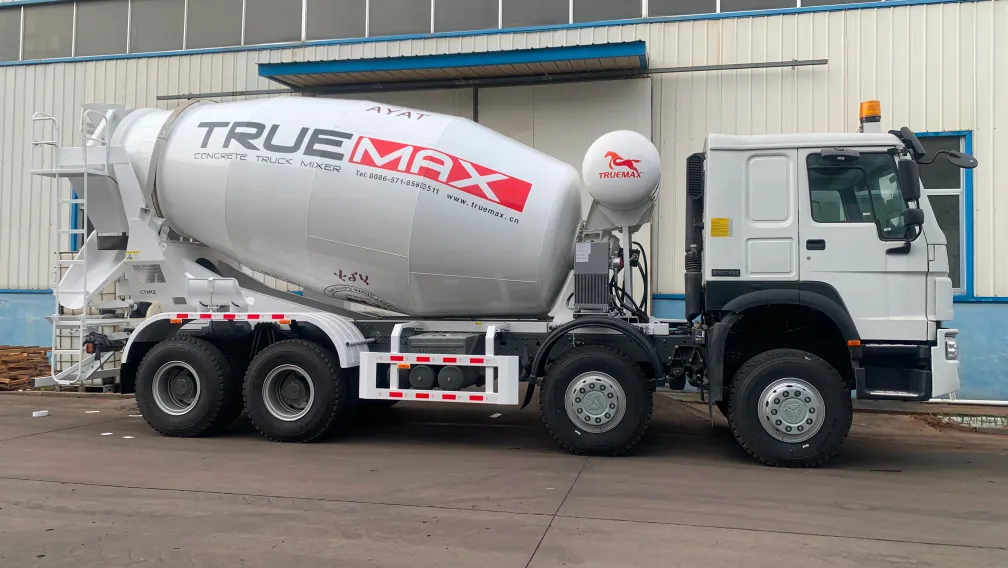
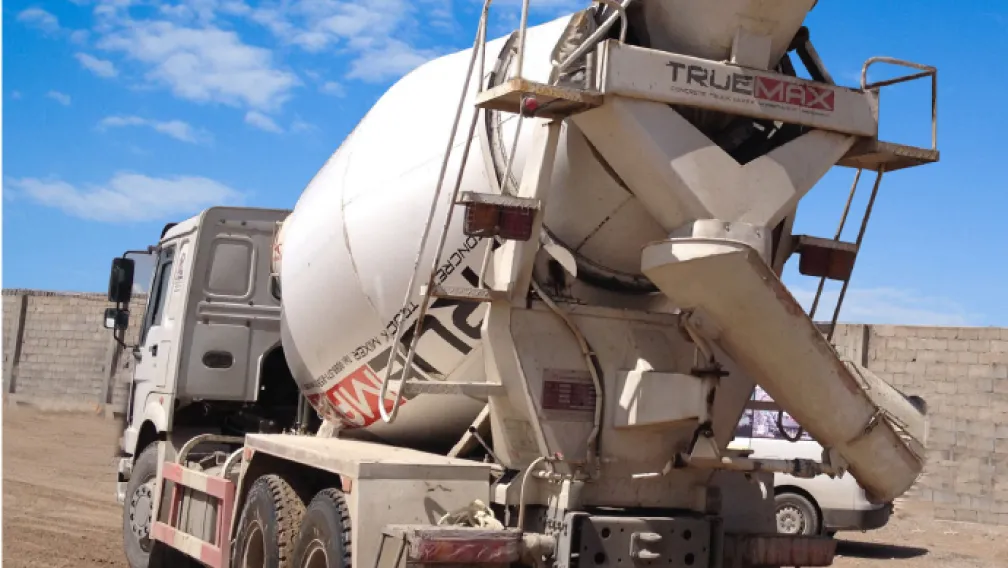
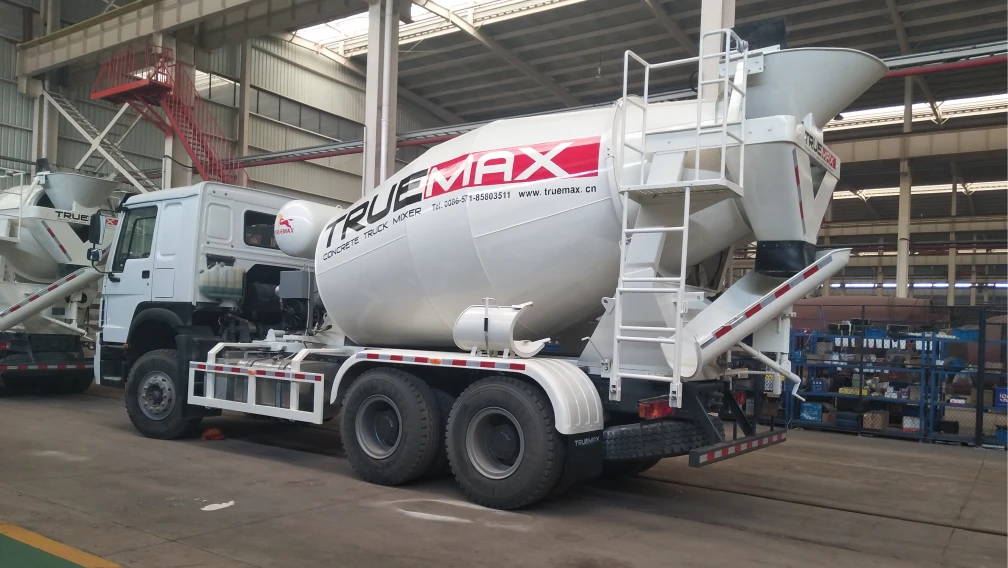
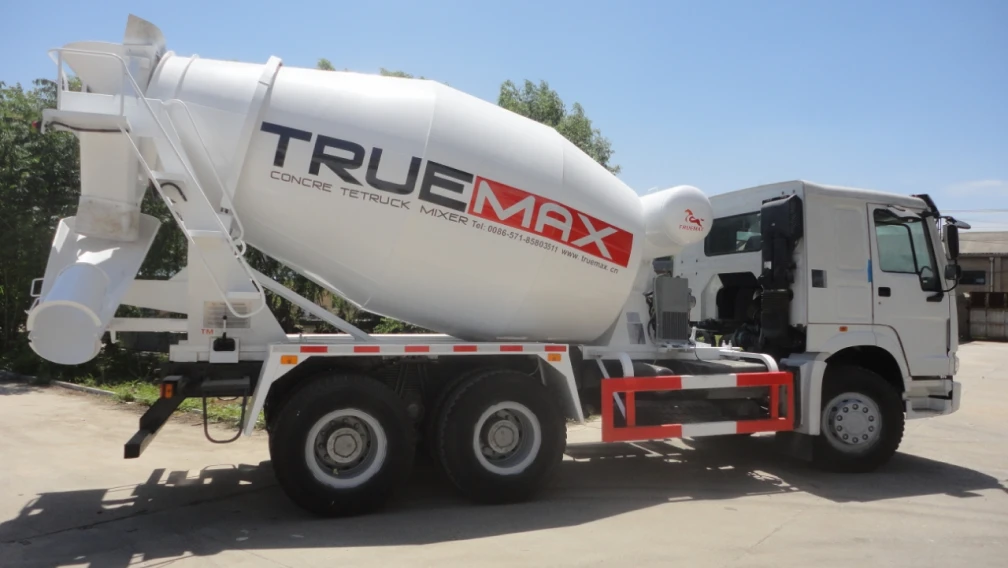
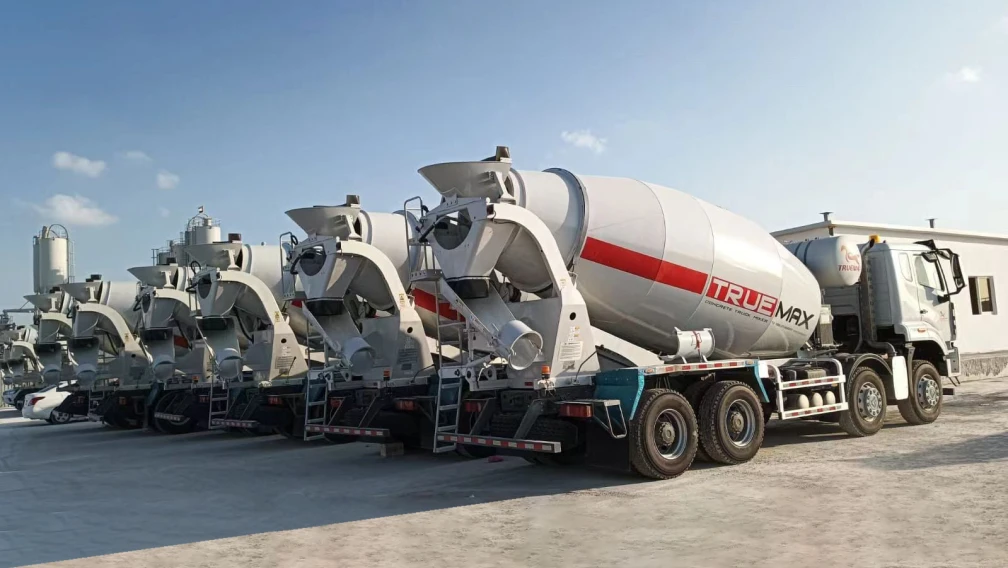
| Concrete truck mixers | Shuttle ready-mix from the plant to the pump hopper | CTM3 to CTM14 |
1. Pump: size the pressure to your drive length
The pump spec that matters underground is pressure, because pressure is what buys horizontal distance. A 10 MPa pump moves an ordinary mix about 300 m; a high-pressure pump at 20 to 23 MPa can push it toward 1,000 m. Horizontal runs cost far less pressure than lifting concrete straight up, and as a rough rule a metre of rise is worth four to five metres of horizontal run, which is why a tunnel reaches so much further on the same pump than a high-rise does. Take your longest drive from portal to face, add the pipeline back to the pump position, and size the pressure to cover it.
TRUEMAX A9-series pumps run from 10 to 23 MPa. For long drives the 23 MPa units are the default: the SP100.23.360D stationary pump, or the self-moving LP100.23.360D line pump, both around 100 m3/h theoretical output. They run a Kawasaki high-pressure plunger pump and a skirt-valve hopper for clean, low-resistance feeding, and we build them diesel (DEUTZ) or electric to suit the ventilation rules underground. Shorter drives and smaller sections take a lower unit such as the SP50.10.82D.
2. Keeping the pipeline running
The failure that costs a tunnel crew a shift is a blocked line deep in the drive. Three habits prevent it. The mix has to stay pumpable for the whole run, which is a job for a controlled-set design and the right admixtures. The pipeline has to be laid out and anchored properly along the wall or invert, because a blocked line still under pressure can whip and injure someone. And the line has to be cleaned on a set routine at the end of each pour. We plan the pipeline route, bend positions and cleaning cycle with you before the pump reaches site.
3. Placing at the face
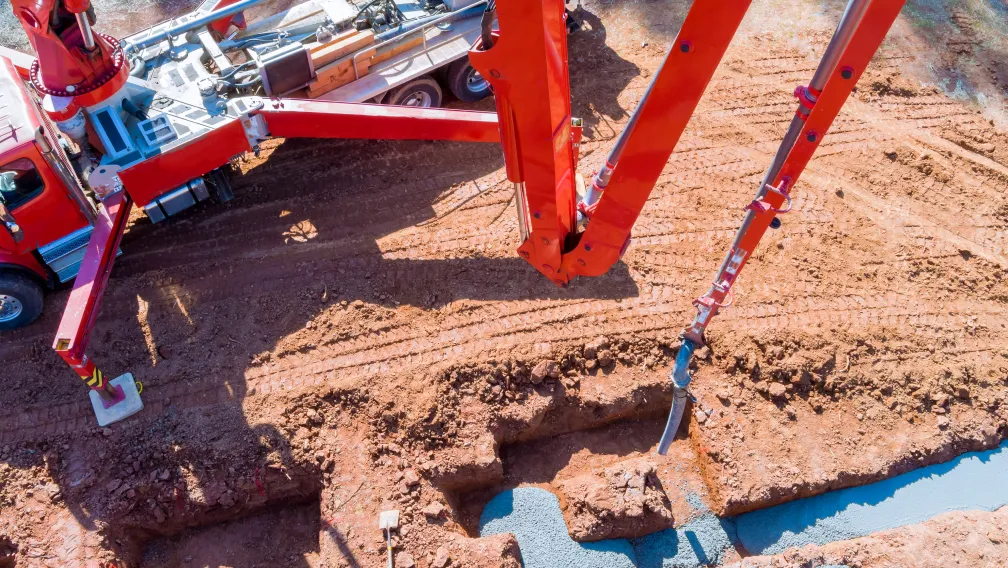
Once the concrete reaches the pour it still has to go into the invert or the lining formwork. On large-section tunnels and at portals, a placing boom saves the crew hauling heavy end-hose around the form. On smaller bores the pipeline discharges straight into the shutter and no boom is needed. We match the placing method to the section, so a small tunnel is not carrying the cost of a boom it will not use.
4. Batching and haul: feed the pump without gaps
Continuous pumping needs continuous supply, so the plant and the mixer fleet get sized to match the pump's sustained output. A portal-side batching plant produces the flowable, controlled-set concrete the drive needs, and a mixer fleet shuttles it to the hopper. Size the plant to the pump's real output, since a 100 m3/h pump averages 60 to 70 m3/h once you count cleaning and pipe work, and size the fleet to the haul distance from plant to portal. Gaps in supply are the quiet cause of most blocked lines.
Proven in Underground and Metro Works
TRUEMAX equipment has run on some of the region's most demanding underground jobs:
- Qatar Rail Metro, Doha: over 60 sets of heavy equipment and 7,000 tons of tunnel steel structures, delivered to UK and Qatar dual standards
- Dubai Expo 2020 stormwater tunnel: high-volume, continuous concrete delivery
- Underground, drainage and civil works across the Middle East, Africa and Southeast Asia
On each of these, the real work was planning the pipeline and the supply chain, sizing the pump to the drive and staying through commissioning, rather than dropping off a machine and leaving. You can see more on our projects page. That is what the line "one supplier, one service team, one responsibility" means in practice.
When You Specify a Tunnel Concrete Package
Send us five things and we can quote a complete package within a working week:
1. Tunnel type and section: bore diameter or cross-section, and the method (TBM, drill-and-blast or cut-and-cover)
2. Longest pumping distance: portal to face, plus the run back to the pump position
3. What you are pouring (invert, cast-in-place lining, portal structures) and the target pour rate
4. Concrete spec: mix design, strength class, slump or flow, and maximum aggregate size
5. Power available underground and any ventilation limits, so we can advise diesel or electric drive
We respond within 24 hours on new enquiries and within three minutes on service calls from existing customers. Equipment ships with on-site installation, operator training and a remote monitoring system that reads faults without sending an engineer to site, and we hold spare parts through our own offices in Dubai, Saudi Arabia, Nigeria, Indonesia and elsewhere. Send your tunnel details through the contact page and we will come back with a configuration and price.
Frequently Asked Questions
How far can concrete be pumped horizontally in a tunnel?
It depends on pump pressure, mix and pipe diameter. A 10 MPa pump moves an ordinary mix roughly 300 m horizontally; a high-pressure pump at 20 to 23 MPa can reach toward 1,000 m through a 125 mm steel pipeline. Horizontal distance is much cheaper on pressure than vertical lift, which is why tunnel runs can be so long. For drives past a kilometre, an intermediate re-pumping station is added.
Line pump or stationary pump for tunnel work?
Both are used, and the choice comes down to drive length and setup. A truck-mounted line pump is quick to position at the portal and suits moderate drives. For the longest drives you want a high-pressure stationary pump, which delivers the pressure to push concrete the full distance. TRUEMAX builds both at 18 and 23 MPa, so the pump is matched to the tunnel rather than to whatever is standing on the yard.
What concrete mix works for long-distance tunnel pumping?
A flowable, cohesive mix, often self-consolidating concrete for final linings, with a set time long enough to pump for the whole shift without blocking the line. Aggregate is kept under a third of the pipe bore, about 40 mm in a 125 mm pipe. The exact design comes from your engineer; we size the pump and pipeline to suit it.
Diesel or electric pump underground?
It comes down to power and ventilation. Diesel pumps work anywhere without a supply, which suits portals and remote sites, but exhaust in a confined tunnel is a problem. Where there is power underground, an electric-drive pump keeps the air clean and is often preferred for long tunnel drives. We build the A9-series pumps in both, so you can match the drive to the site.
How do you stop a long pipeline from blocking on a long drive?
Three things together: a controlled-set mix that stays pumpable through the shift, a pipeline that is correctly sized and anchored along the wall or invert, and a disciplined line-cleaning routine at the end of each pour. Steady supply from the plant matters too, since gaps let concrete stiffen in the line. We plan the layout and cleaning cycle with you before the pour starts.
Do you supply precast tunnel segments or cast-in-place lining equipment?
Our tunnel package covers cast-in-place work: pumps, pipeline, placing, and the batching and mixer supply behind them. If your tunnel uses precast segmental linings, those segments are cast in a yard, which is a batching-plant and precast setup we also supply. Tell us which method your design uses and we scope the right equipment.
What is the lead time on a tunnel concrete package?
Typically 90 to 150 days from PO to ready-for-shipment for a full package of pump, batching plant and truck mixers, depending on how much is customised. The A9-series pumps and CBP batching plants are core products we keep in scheduled production, and we confirm a firm date when we quote. Urgent single machines can be priority-scheduled in 45 to 60 days.
-

TrueMax
Concrete & Construction Equipment ManufacturerEstablished in 2003, Truemax designs, manufactures, and delivers concrete pumping equipment, crushing machinery, and construction hoisting systems from our own factory in Haining, China to jobsites in over 120 countries.