

 LANGUAGE
Ask how much concrete a mixer truck carries and the usual answer is a single number — 6 cubic meters, 8 cubic meters, 10 cubic meters. That figure is the rated mixing capacity, and it is only the starting point. What a truck can legally and practically deliver is set by three separate limits: the geometric volume of the drum, the payload the chassis is permitted to carry, and the time the mix can survive in transit. A drum that looks right on the specification sheet can still be the wrong choice once axle regulations, plant output, and pour rate enter the calculation.
This guide explains how mixer truck capacity is defined, which drum sizes dominate which applications, and how to size both the truck and the fleet around it. The same logic is what we apply when configuring machines in the concrete truck mixer range for contractors and ready-mix producers in different regulatory environments.
1. Drum Volume vs. Rated Capacity: The Number That Actually Matters
A mixer drum has three volume figures, and buyers regularly confuse them. The geometric volume is the total internal space of the drum shell. The waterline volume is the space below the loading opening. The rated mixing capacity — the number in the model name — is the volume of concrete the drum can mix and transport properly, and it typically sits between 45% and 55% of the geometric volume. A drum rated at 6 m³ usually holds roughly 11,500 liters geometrically; a 3 m³ drum around 6,300 liters.
The freeboard above the concrete is working space, not waste. Inside the drum, two helical blades lift the material and let it cascade down with every rotation. Without that headroom, concrete climbs out through the loading hopper, the blades cannot fold the batch over itself, and the first cubic meter discharged carries a different slump than the last. Overloading a drum to squeeze out extra payload destroys the homogeneity the drum exists to protect.
One further distinction matters in specifications: mixing capacity versus agitating capacity. A drum can agitate — keep already-mixed concrete in gentle motion — a slightly larger load than it can mix from dry constituents. Transit mixers in ready-mix service mostly do the former, since batching happens at the plant. Manufacturers nevertheless rate conservatively for mixing duty, and that rating is the figure to plan around.
2. Standard Sizes and What Each One Is Built For
Drum ratings cluster into a few classes, each tied to a chassis format and a type of work:
| Rated capacity | Concrete payload | Typical chassis | Typical application |
| 3–4 m³ | 7.2–9.6 t | 4x2 light truck / self-loading | Narrow urban streets, small pours, remote sites |
| 6 m³ | 14.4 t | 4x2 or compact 6x4 | City ready-mix delivery, weight-restricted roads |
| 8–9 m³ | 19.2–21.6 t | 6x4 heavy-duty | Mainstream ready-mix fleets worldwide |
| 10–12 m³ | 24–28.8 t | 8x4 four-axle | Large pours, infrastructure, high-volume plants |
| 14 m³ | 33.6 t | 8x4 / 10x4 where permitted | Markets with generous axle limits, long-haul batching supply |
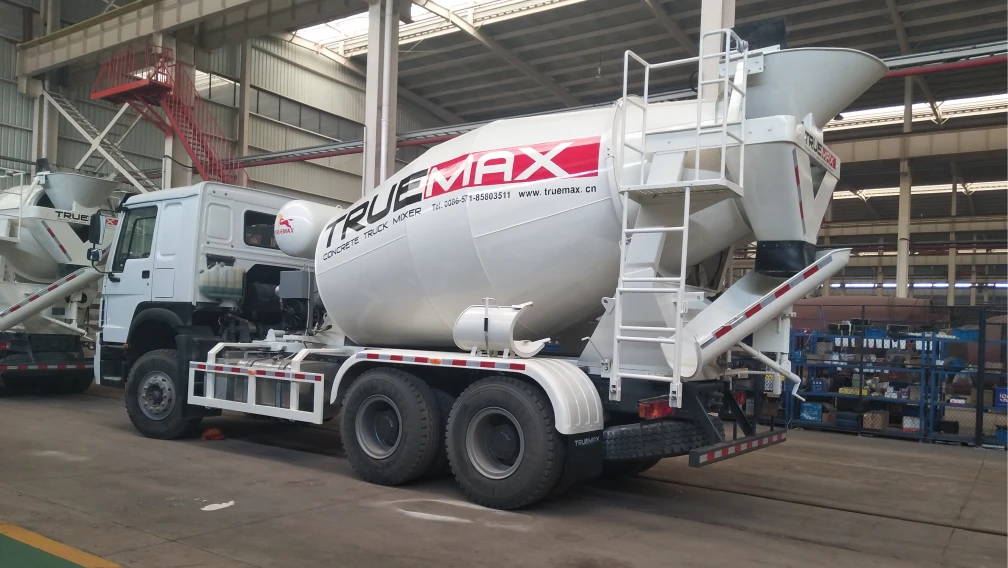
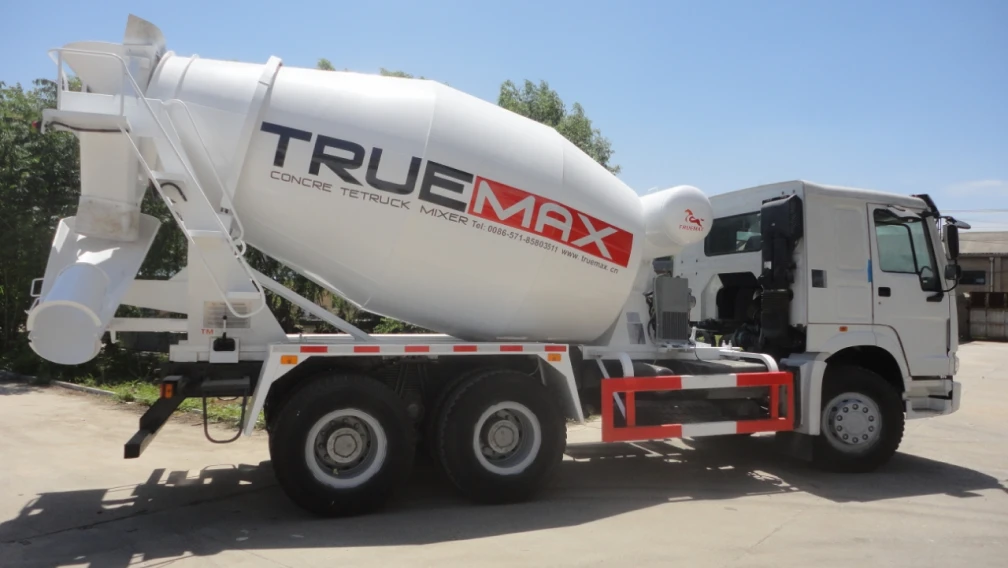
Payload figures assume normal-weight concrete at roughly 2,400 kg per cubic meter. The 8–9 m³ class on a 6x4 chassis is the global workhorse because it balances legal payload, turning circle, and cost per delivered cubic meter. TRUEMAX covers this full spread with the CTM3–CTM14 transit mixer series, from compact 3 m³ units to 14 m³ drums for high-volume operations.
3. Payload and Axle Limits Usually Decide Before the Drum Does
Normal-weight concrete weighs about 2.4 tonnes per cubic meter, so an 8 m³ load is 19.2 tonnes of payload before the drum, water tank, and chassis tare are counted. A 6x4 mixer working at that load typically runs at a gross vehicle weight of 31 to 33 tonnes. Many markets cap three-axle rigids at 26 to 32 tonnes, which means the legal load can fall well below the drum rating.
The practical sequence is therefore inverted from what spec sheets suggest. Start with the gross vehicle weight and per-axle limits on your delivery routes, subtract the tare weight of the candidate truck, and the remainder is your real payload ceiling. Only then choose the drum. Buying a 12 m³ drum that can only legally be filled to 9 m³ adds purchase cost, fuel consumption, and tire wear for capacity that never leaves the plant. In markets with strict enforcement, on-board weighing systems are increasingly specified to keep every load inside the limit without sacrificing payload to guesswork.
4. The 90-Minute, 300-Revolution Rule
ASTM C94, the standard specification for ready-mixed concrete, requires discharge within 90 minutes and before 300 drum revolutions after water contacts the cement, unless the purchaser waives the limit. Most national codes outside the United States impose a comparable window. When water is added on site to recover slump, the drum must complete at least 30 revolutions at mixing speed before discharge, and acceptance testing commonly expects at least 75% of the batched slump to survive the trip.
Drum speed does the daily work of meeting that window. During transit the drum turns at agitating speed, typically 2 to 6 rpm — enough to keep aggregates suspended without grinding away slump. Mixing speed, up to roughly 12 rpm on modern hydraulic drives, is reserved for blending after charging or after a water addition. Running at mixing speed for the whole journey accelerates slump loss and burns fuel without improving the concrete.
The time limit converts directly into a capacity decision. A plant serving sites 60 to 80 minutes away has little usable margin in the 90-minute window, so its trucks must be sized for fewer, larger loads — or the mix must be designed with retarders to stretch the window. A plant 20 minutes from its sites can run smaller drums at higher trip frequency and often delivers more concrete per truck per day despite the smaller load.
5. How Many Trucks Your Batching Plant Needs
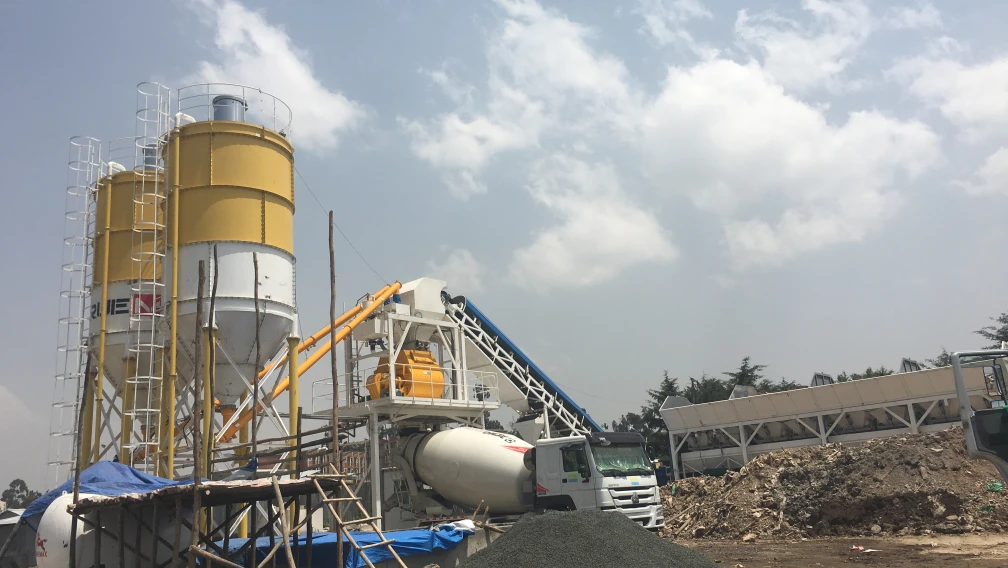
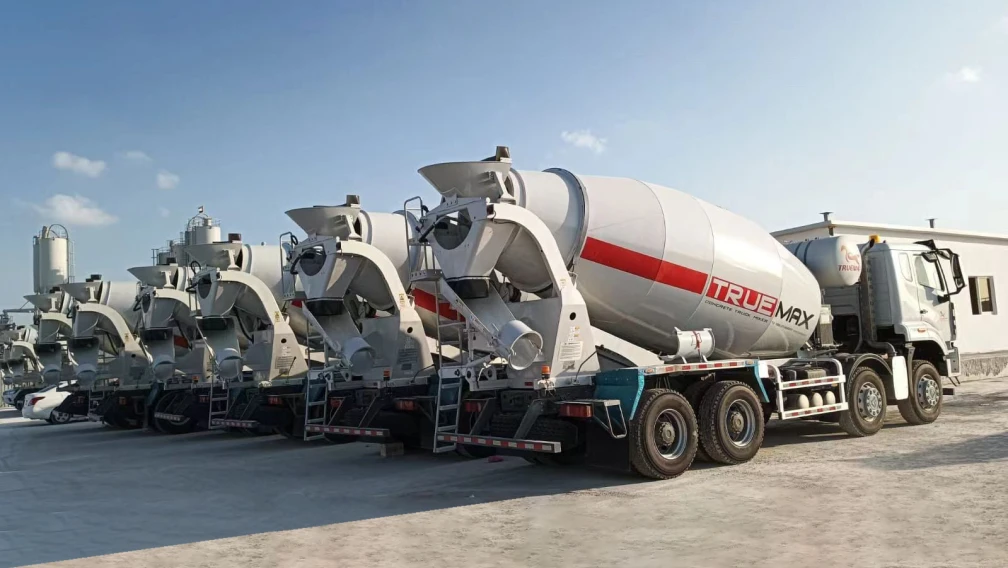
Fleet size follows one formula: required trucks = plant output (m³/h) × full cycle time (h) ÷ effective load per truck (m³), rounded up, with 10–15% reserve for maintenance and delays. The cycle time includes loading at the concrete batching plant, travel out, queuing, discharge, return, and washout.
Worked example: a 60 m³/h plant loading 8 m³ effective payloads, with a 1.5-hour complete cycle, needs 60 × 1.5 ÷ 8 = 11.25, so 12 trucks in service plus one or two in reserve. Halve the cycle time by serving closer sites and the same plant needs only 6 to 7 trucks — the clearest demonstration that fleet economics are set by minutes, not drum liters.
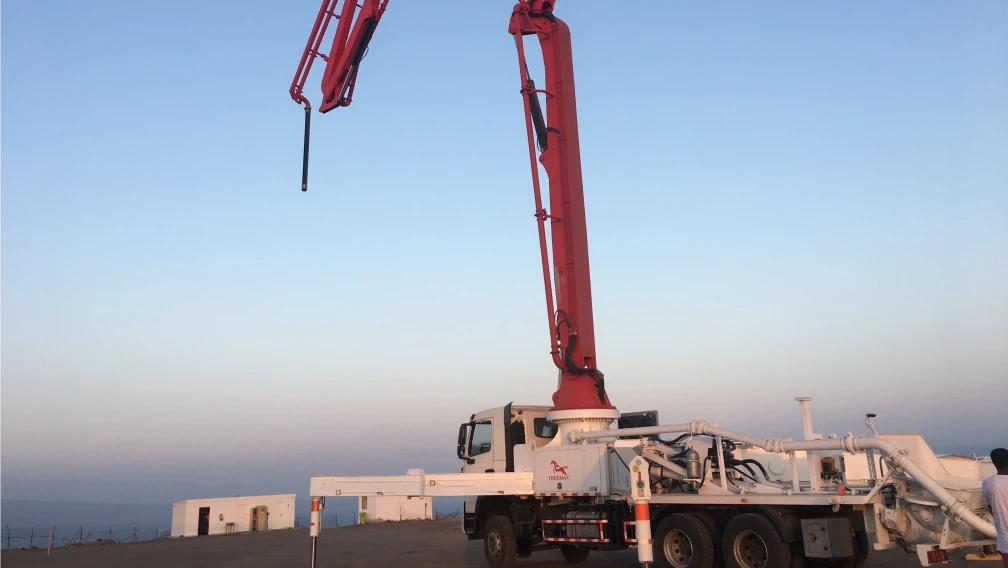
The discharge interface belongs in this calculation as well. A load discharging by chute onto a slab may take 15 minutes; the same load feeding the hopper of a stationary concrete pump is metered to the pump's throughput and the truck can be occupied far longer. Where pumps set the discharge pace, smaller drums at higher frequency usually beat large drums standing in a queue.
6. Choosing the Drum Size for Your Market
Selection condenses to five checks, in order:
- Regulations first: confirm gross vehicle and per-axle limits on actual delivery routes; they fix the payload ceiling before any drum is considered.
- Dominant pour size: housing work with 30–50 m³ pours favors 6–8 m³ drums; dam, bridge, and industrial slabs reward 10–12 m³ loads.
- Site access: turning circle, ground bearing, and gradients can exclude four-axle trucks regardless of their payload advantage.
- Plant proximity: short hauls favor smaller drums at high frequency; long hauls favor the largest legal load.
- Fleet utilization: a 10 m³ truck habitually running half-loaded costs more per delivered cubic meter than an 8 m³ truck running full.
7. Get a Configuration Matched to Your Routes and Regulations
TRUEMAX supplies transit mixers from 3 to 14 m³ on 4x2, 6x4, and 8x4 chassis, with PTO or independent engine drive, and configures drum, chassis, and water system against the axle limits and pour profile of each market. Send your route distances, typical pour sizes, and local weight regulations through the contact page, and our engineers will return a capacity and fleet recommendation with it.
8. Frequently Asked Questions
Q1: How many cubic meters does a standard concrete mixer truck hold?
A: Mainstream ready-mix trucks carry 8 to 9 cubic meters, equivalent to roughly 10 to 12 cubic yards. The full market range runs from compact 3–4 m³ units for tight sites up to 12–14 m³ drums on multi-axle chassis where road regulations permit.
Q2: What is the difference between geometric drum volume and rated capacity?
A: Geometric volume is the total internal space of the drum shell. Rated capacity is the volume of concrete the drum can mix and transport correctly, typically 45–55% of the geometric volume. The freeboard above the load is the working space the helical blades need to fold and homogenize the batch.
Q3: How much does a fully loaded mixer truck weigh?
A: Normal-weight concrete weighs about 2.4 tonnes per cubic meter, so an 8 m³ load adds 19.2 tonnes of payload. With drum unit and chassis tare included, a loaded 6x4 mixer commonly runs at a gross vehicle weight of 31 to 33 tonnes.
Q4: How long can concrete stay in the drum before it must be discharged?
A: ASTM C94 sets the limit at 90 minutes or 300 drum revolutions after water contacts the cement, whichever comes first, unless the purchaser agrees otherwise. Retarding admixtures can extend the workable window in hot weather or on long hauls.
Q5: What drum rotation speed should be used during transport?
A: Agitating speed of 2 to 6 rpm keeps the mix homogeneous in transit. Mixing speed, up to about 12 rpm, is used only when blending after charging or after a water addition; if water is added on site, run at least 30 revolutions at mixing speed before discharge.
Q6: How do I calculate how many mixer trucks my batching plant needs?
A: Multiply plant output in cubic meters per hour by the full truck cycle time in hours — loading, travel, queuing, discharge, return, washout — then divide by the effective load per truck. Round up and add 10–15% reserve. A 60 m³/h plant with 8 m³ loads and a 1.5-hour cycle needs 12 trucks in service.
Q7: Is a bigger drum always the better choice?
A: No. Axle weight limits may cap the legal load below the drum rating, and a large truck running half-empty costs more per delivered cubic meter than a smaller truck running full. Match the drum to the payload ceiling, the dominant pour size, and the haul distance.
-

TrueMax
Concrete & Construction Equipment ManufacturerEstablished in 2003, Truemax designs, manufactures, and delivers concrete pumping equipment, crushing machinery, and construction hoisting systems from our own factory in Haining, China to jobsites in over 120 countries.