

 LANGUAGE
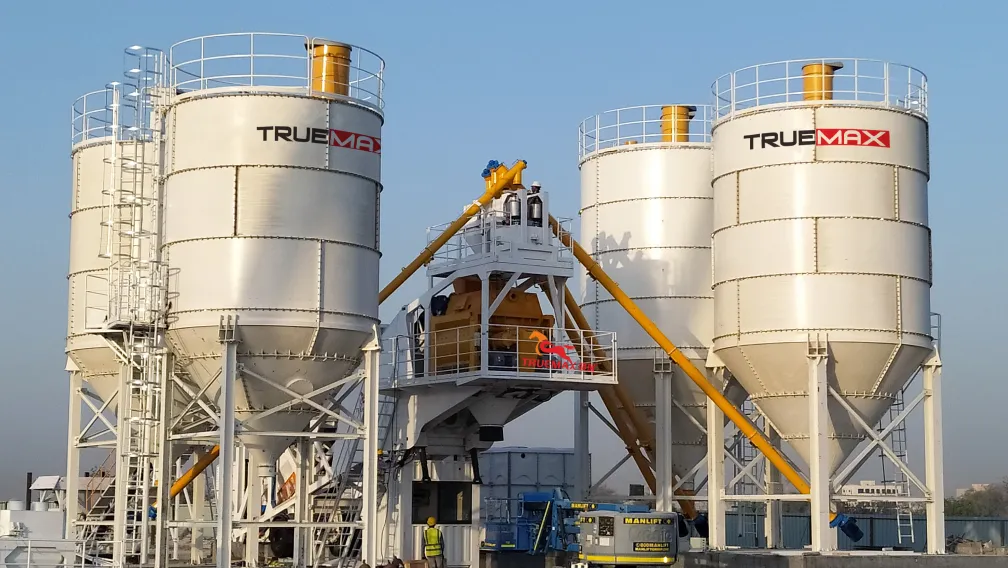
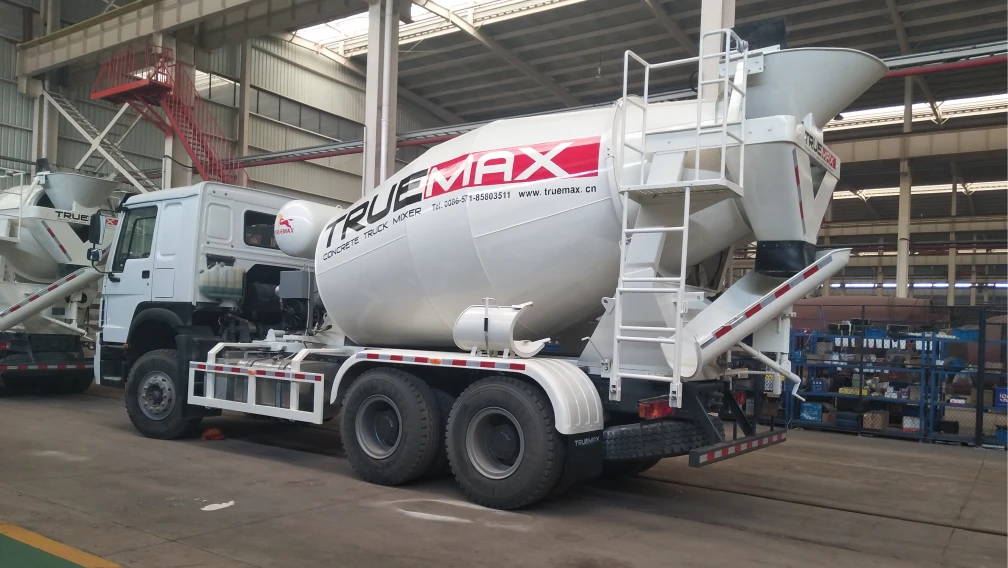
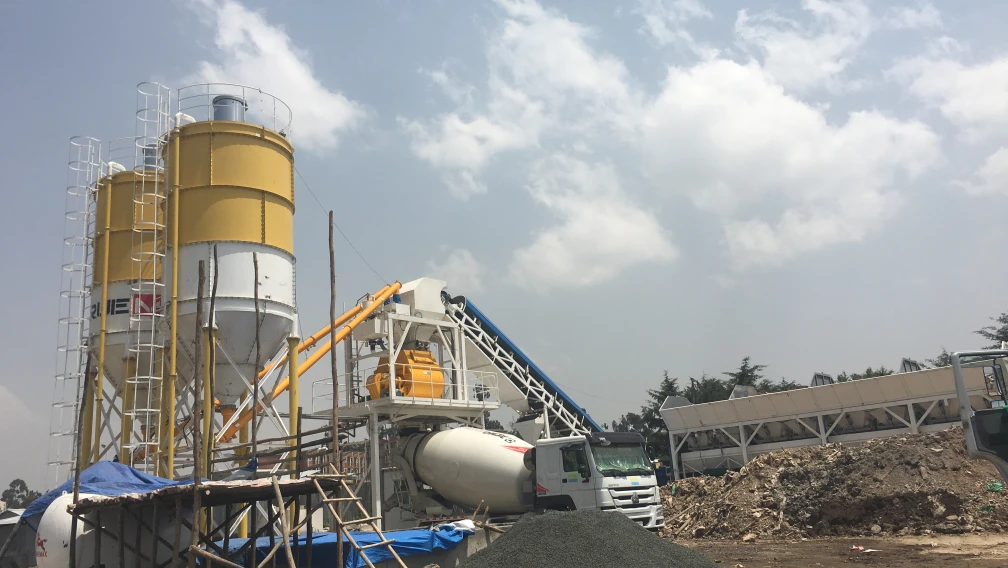
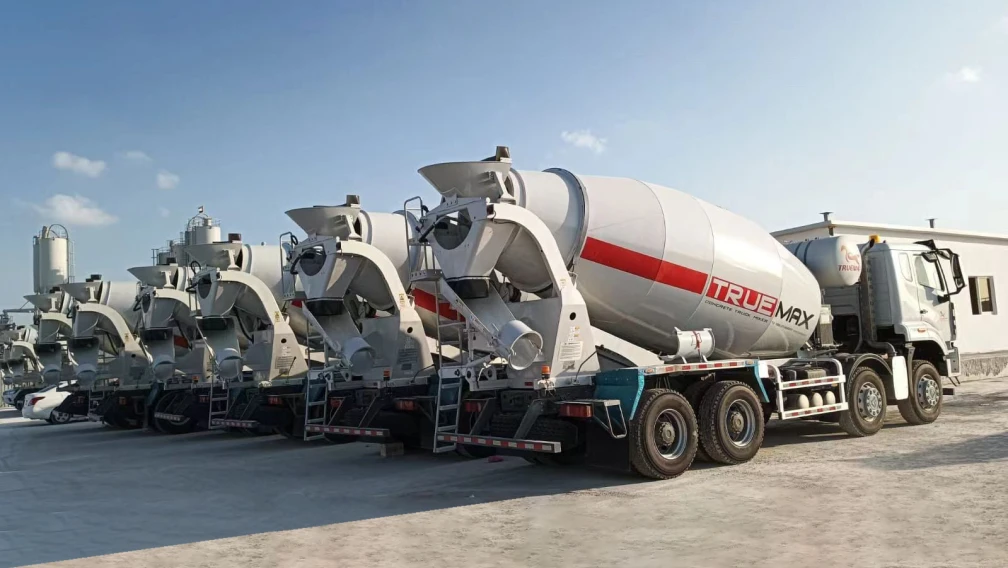
A concrete batching plant sits at the front of the concrete supply chain. It stores cement, aggregate, water, and admixtures, weighs each material against a recipe, mixes the batch in a central mixer, and discharges finished concrete into a concrete truck mixer for delivery, or straight into a pump hopper on site. Pumping, placing, and finishing all depend on the plant holding its output rate and its weighing accuracy through the full pour.
Selection errors at this stage are expensive in both directions. An undersized plant holds back every crew on the schedule. An oversized plant locks capital into capacity that never runs and still costs the same to insure, staff, and maintain. This guide follows the same sequence our engineers use when configuring a plant for a contractor: capacity first, then mixing method, mobility class, aggregate feeding, core components, and site layout.
1. Calculate the Capacity You Actually Need
Start From Peak Daily Demand
Plant capacity is rated in cubic meters per hour (m³/h). The calculation starts from the project's peak daily concrete demand, divided by the actual production hours available per day. A crew working an 8-hour shift rarely achieves 8 hours of production; warm-up, cleaning between mix designs, truck changeover, and breaks typically leave 5.5 to 6 effective hours. Add a 20–30% margin on top of the result to cover maintenance downtime and peak pour days.
A worked example: a project requiring 400 m³ per day across roughly 6 production hours needs about 67 m³/h of real output. With a 25% margin applied, the correct choice sits in the 90–120 m³/h class. Buying a 60 m³/h unit and running it at its limit every day shortens wear-part life and leaves no reserve for a delayed truck or a large continuous pour.
Theoretical Output vs. Real Output
The model designation of a stationary plant comes from a 60-second mixing cycle. A JS1000 twin-shaft mixer compacts roughly 1 m³ per batch, so the plant completes 60 batches per hour and carries an HZS60 rating. Real output typically lands at 70–85% of the rated figure once cement feeding time, weighing cycles, discharge time, and truck waiting are counted. Plan against the realistic figure, and confirm that the mixer size — not the brochure headline — matches your batch volume requirements.
| Output Class | Typical Range | Typical Application |
|---|---|---|
| Small | 25–60 m³/h | Single-building projects, rural works, dedicated on-site supply for one contractor |
| Medium | 60–120 m³/h | Road and bridge contracts, mid-size commercial pours, district supply |
| Large | 120–240 m³/h | Regional ready-mix supply, infrastructure packages, precast plants |
| Commercial | 240–360 m³/h | Metropolitan ready-mix operations, dam and airport programs |
2. Wet-Mix or Dry-Batch: Decide Where the Concrete Is Mixed
The first configuration decision is the mixing method. A wet-mix (central-mix) plant weighs all ingredients including water and mixes them in a central mixer before discharge; the truck only agitates the finished concrete during transport. A dry-batch plant meters the dry materials into the truck drum and adds water en route or at the site; the truck does the mixing.
| Item | Wet-Mix (Central Mix) | Dry-Batch (Transit Mix) |
|---|---|---|
| Mixing location | Central twin-shaft mixer at the plant | Truck drum during transit |
| Quality consistency | High; water-cement ratio under load-cell control | Variable; depends on driver and drum condition |
| Equipment cost | Higher; includes mixer and mixing tower | Lower; no central mixer |
| Maintenance load | Mixer blades, liners, daily washout | Truck drum and blade wear |
| Delivery radius | Short to medium hauls | Long hauls and remote sites |
| Best fit | Structural concrete with specified strength and slump tolerance | Scattered sites, small volumes, flexible scheduling |
For structural work where the specification names a strength class and a slump tolerance, central mixing keeps every batch under the same weighing and mixing cycle, and the production record stays traceable per batch. That is why TRUEMAX builds wet-mix plants around a twin-shaft mixer. Dry batching remains a valid answer for remote projects with haul times beyond 90 minutes, where early setting inside the drum is the larger risk.
3. Stationary, Mobile, or Container-Modular
Stationary Plants
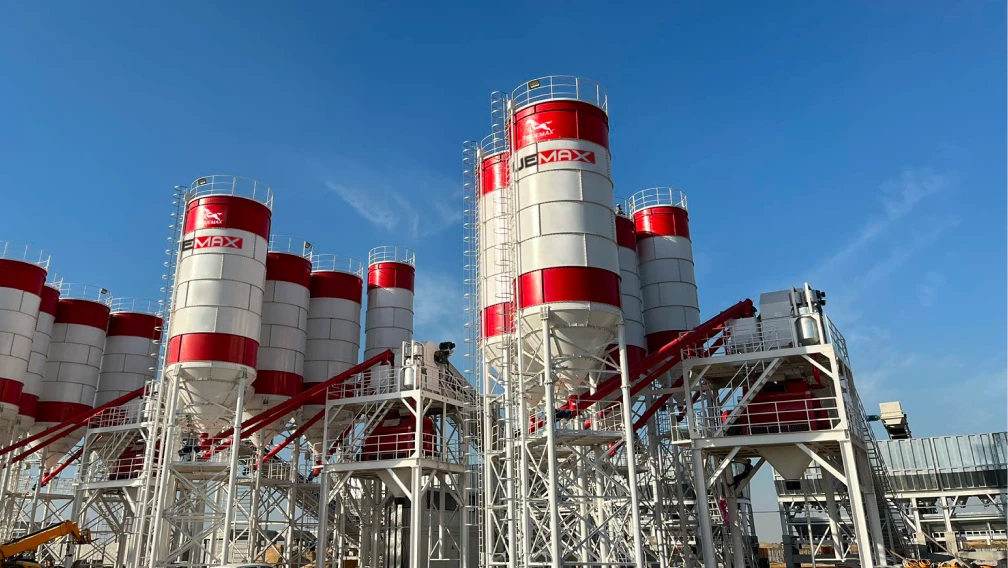
A stationary plant is erected on poured concrete foundations for long-term, high-volume production at one location. The configuration allows the largest mixers, the tallest silo arrangements, and full environmental enclosures. For a road or bridge contract running two years or more, or a permanent ready-mix yard, the stationary line from 60 to 360 m³/h is the standard answer. The CBP120S stationary batching plant is a frequent selection for highway contracts in this class.
Mobile Plants
A trailer-mounted plant carries the batching machine, mixer, scales, and control cabin on a wheeled chassis. Installation needs a level, compacted yard rather than deep foundations, and the plant can be towed to the next contract within days. Mobile units suit road maintenance, runway repair, and any program where the plant must follow the work front. The CBP100M mobile batching plant covers 100 m³/h in this format; smaller projects use the 60 m³/h trailer version.
Container-Modular Plants
Container-design plants package the modules to standard shipping-container dimensions. They export without break-bulk freight, assemble with bolted connections, and relocate with far less crane work than a conventional stationary build. For overseas projects where installation labor is limited or the plant will serve several sites in sequence, the CBP180C modular container plant and its 240 m³/h counterpart reduce both freight cost and erection time.
4. Aggregate Feeding: Skip Hoist vs. Belt Conveyor
The aggregate feeding method sets the plant's footprint, civil cost, and production rhythm.
A skip hoist plant lifts each weighed batch of aggregate to the mixer in a bucket on a rail. The structure is compact, the foundation work is light, and the failure points are few. Feeding is batch-by-batch with a waiting interval between cycles, which caps practical capacity around 75 m³/h. A belt conveyor plant carries aggregate continuously from the batching bins to a holding hopper above the mixer, with each aggregate fraction weighed on its own scale. The continuous flow raises cycle efficiency by roughly 15% and supports outputs from 60 to 360 m³/h, at the price of a larger footprint and deeper foundations.
The selection rule is straightforward: tight sites, short projects, and capacities at or below 75 m³/h point to the skip hoist; permanent installations running several hours per day point to the belt conveyor. A 60 m³/h plant can be built either way, so the decision there comes from site area and project duration rather than output alone.
5. Core Components That Decide Concrete Quality
The Twin-Shaft Mixer
The twin-shaft forced mixer is the standard heart of a stationary wet-mix plant because it homogenizes fast across a wide slump range and large batch sizes. Compacted yields run from 1 m³ (JS1000) to 6 m³ (JS6000). Uptime depends on wear-resistant blades and liners, reliable shaft-end sealing, and automatic lubrication; intelligent monitoring on the gearbox and discharge pump catches problems before they stop production. TRUEMAX offers its own mixer build alongside SICOMA and BHS options, so the buyer can match the mixer to the aggregate abrasiveness and the target concrete grades.
Weighing Accuracy
Each material is weighed on a dedicated load-cell scale before it reaches the mixer: aggregate to ±2%, and cement, water, and admixture to ±1%. Water and additive scales use two-speed coarse/fine weighing with automatic drop compensation, so each batch hits the target without manual correction. When comparing suppliers, ask for the weighing accuracy figures in writing; batch-to-batch strength variation in hardened concrete traces back to these tolerances more often than to any other cause.
Control System
The plant should run fully automatically with manual override available at any point in the cycle. A PC-based control displays the batching process live, allows recipe adjustment online, and stores production data for traceability and quality audits. TRUEMAX plants are offered with the Italian Elettrondata (Betonwin) package or the TRUEMAX control system, both built on Siemens, Schneider, and ABB electrical components for stable operation in dusty, high-interference environments.
Powder Storage and Conveying
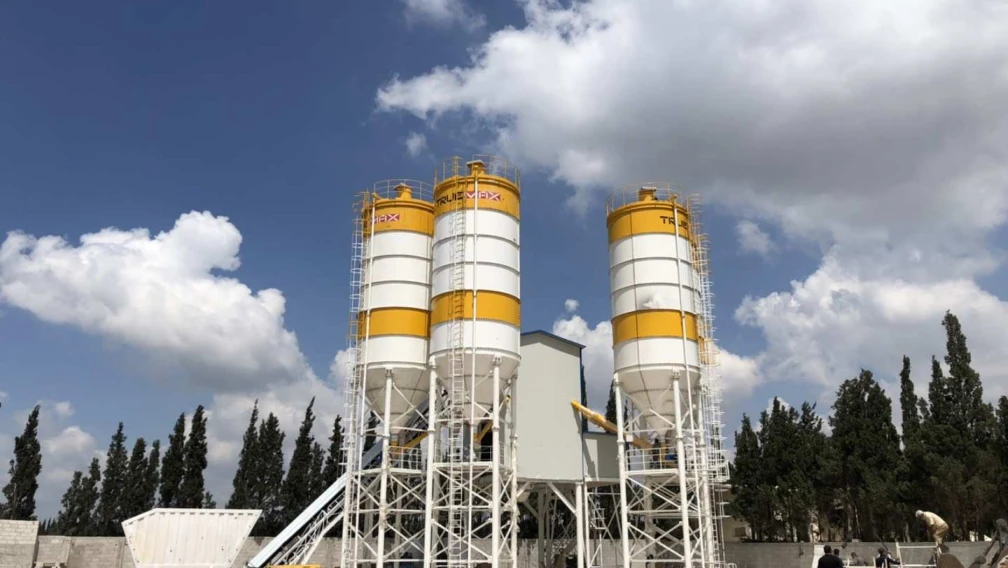
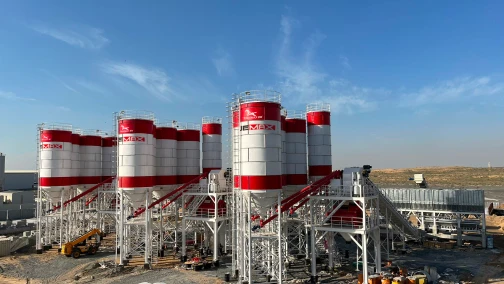
Count one silo per powder material. A mix using only cement needs one or two silos; a mix adding fly ash and mineral powder needs separate storage for each, sized against daily consumption and delivery frequency. Screw conveyors move powder from silo to scale, and the conveyor diameter — commonly 168, 219, 273, or 323 mm — must match the batching speed of the plant, or cement weighing becomes the bottleneck of every cycle.
6. Plan the Site Layout Before You Order
Layout planning belongs before the purchase order, because the plant's foundation drawings, power demand, and material flow all follow from it. The main points:
- Ground conditions: choose flat, raised ground with drainage; standing water under aggregate stockpiles ruins moisture compensation and invites foundation settlement.
- One-direction material flow: aggregate stockpiles beside the batching bins, silos beside the mixing tower, and the truck loading lane directly under the discharge hopper. Counterflow costs minutes on every batch.
- Truck circulation: separate entry and exit gates with enough turning radius for fully loaded mixer trucks; a queue layout that never blocks the loading position.
- Power and water: confirm the supply against the plant's total installed power — roughly 70 kW for a 60 m³/h plant, rising past 400 kW at the 360 m³/h class — and plan water storage for mixing and washout.
- Environmental compliance: dust collectors on the mixer and silo vents, sedimentation and recycling for washout water, and a buffer distance from residential areas for noise and dust regulations.
- Expansion room: reserve a position for one more aggregate bin or an additional silo; most ready-mix operations grow within the plant's first contract cycle.
7. Get a Configuration Proposal From the Manufacturer
A workable specification needs five inputs: peak daily demand, the concrete grades and slump ranges to be produced, site dimensions, available power, and the project duration. Send these to our engineering team and you will receive a configuration proposal with a layout drawing within 24 hours. All TRUEMAX plants are pre-assembled and test-run at our Haining factory before shipment, and our service teams handle installation, commissioning, and operator training on your site. Contact us with your project data to start the configuration review.
8. Frequently Asked Questions
Q1: How do I calculate the concrete batching plant capacity I need?
A: Divide your peak daily concrete demand by the actual production hours available per day — usually 5.5 to 6 hours inside an 8-hour shift — then add a 20–30% margin for downtime and peak pours. A 400 m³/day project with 6 production hours needs about 67 m³/h of real output, which places the correct selection in the 90–120 m³/h class.
Q2: What is the difference between theoretical and actual batching plant output?
A: Theoretical output assumes a full 60-second mixing cycle repeated for an hour: a 1 m³ mixer produces 60 batches, hence a 60 m³/h rating. Actual output runs at 70–85% of that figure because cement feeding, weighing, discharge, and truck changeover all consume cycle time. Capacity planning should use the realistic figure.
Q3: Should I choose a wet-mix or dry-batch concrete plant?
A: Choose wet-mix (central-mix) when the specification requires consistent strength and slump across every batch, because the water-cement ratio is controlled by the plant's scales and the mixing cycle is identical each time. Choose dry-batch when haul times exceed roughly 90 minutes or sites are scattered, since mixing in the truck drum eliminates the risk of concrete setting during transport.
Q4: When does a mobile batching plant make more sense than a stationary one?
A: A mobile plant pays off when the plant must relocate between contracts — road maintenance, staged infrastructure programs, or short-duration remote projects. It installs on a level compacted yard without deep foundations and can move within days. A stationary plant returns the higher investment only when it will produce at one location for two years or more.
Q5: How many cement silos does a batching plant need?
A: One silo per powder material is the baseline. A plant using only cement typically runs one or two silos; a mix design adding fly ash or mineral powder requires separate storage for each powder. Silo capacity should cover at least two to three days of consumption at peak production, matched to the delivery frequency your suppliers can guarantee.
Q6: How accurate does the weighing system need to be?
A: Industry-standard stationary plants weigh aggregate to ±2% and cement, water, and admixture to ±1% on dedicated load-cell scales. Water and additive scales should include coarse/fine two-speed weighing with automatic drop compensation. These tolerances directly control batch-to-batch strength variation, so request the figures in writing before comparing prices.
Q7: Can one batching plant produce several different concrete grades?
A: Yes. A modern plant stores multiple mix designs in its control system and switches between recipes in seconds; the operator selects the grade and the scales dose accordingly. The practical limits are powder storage — each additional cementitious material needs its own silo — and cleaning discipline when switching between very different mix designs.
-

TrueMax
Concrete & Construction Equipment ManufacturerEstablished in 2003, Truemax designs, manufactures, and delivers concrete pumping equipment, crushing machinery, and construction hoisting systems from our own factory in Haining, China to jobsites in over 120 countries.