

 LANGUAGE
1. The Transition to Cyber-Physical Concrete Production
Commercial ready-mix concrete production demands absolute rheological consistency. Modern infrastructure projects utilizing High-Performance Concrete (HPC) specify strict water-to-cement ratios, often with a tolerance margin of less than 1.0 percent. A legacy facility relying on manual operator judgement and basic gravimetric weighing scales cannot consistently meet these tight specifications. A rejected 10-cubic-meter load of concrete carries massive financial penalties regarding wasted raw materials, transit fleet downtime, and structural demolition costs at the jobsite.
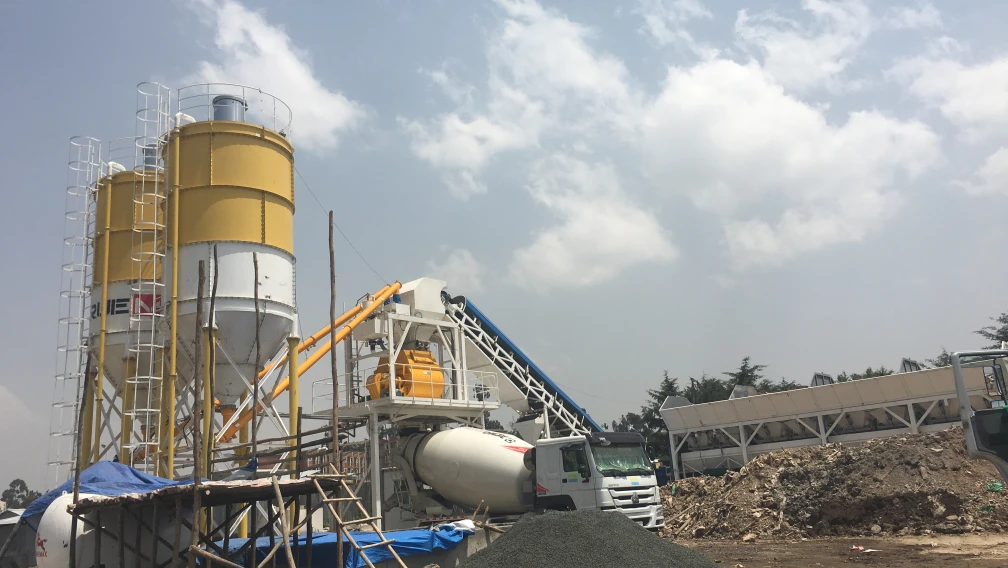
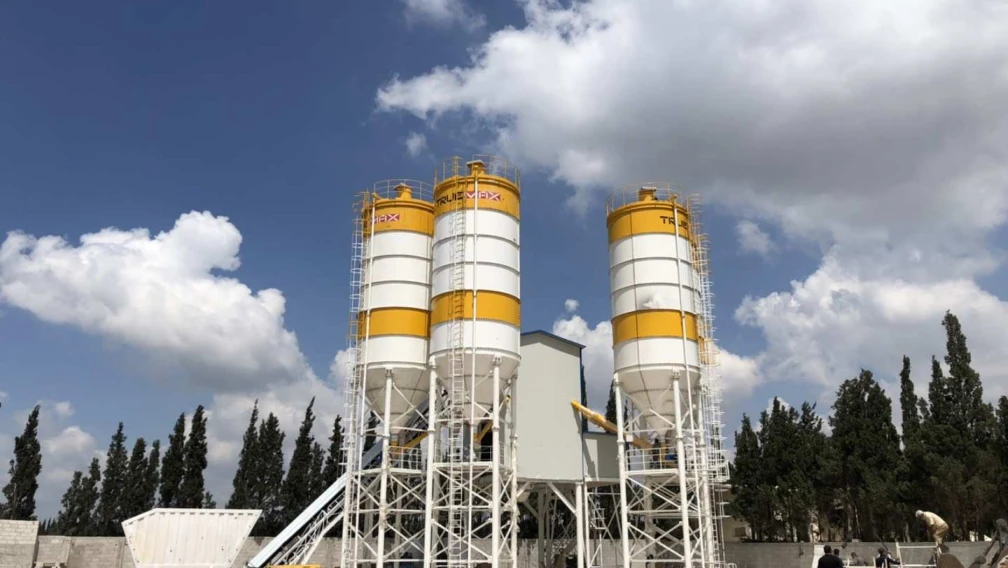
To guarantee batch-to-batch homogeneity, the modern Concrete Batching Plant functions as a highly integrated cyber-physical system. Programmable Logic Controllers (PLCs) interface directly with a network of microwave sensors, load cells, and electrical wattmeters. This automation layer continuously monitors environmental variables, material properties, and mechanical resistance, adjusting the mix proportions dynamically in real-time before the material is ever discharged into the delivery fleet.
2. Aggregate Moisture Compensation: Microwave Sensor Integration
The greatest variable in concrete production is the fluctuating moisture content of the raw aggregate stockpiles. Sand and crushed stone stored in open yards absorb rainwater and ground moisture. If a batching recipe calls for 1,000 kilograms of sand, and that sand contains 6 percent internal moisture, the operator is unknowingly injecting 60 liters of undocumented free water into the mix. This excess water drastically alters the final yield strength and workability of the concrete.
Industrial automation eliminates this error through continuous moisture compensation. Heavy-duty microwave radar sensors are installed directly inside the aggregate discharge gates or the primary weigh hoppers. Unlike older capacitive sensors, which are highly sensitive to aggregate chemical composition and temperature fluctuations, microwave sensors penetrate the material flow to measure the internal dielectric constant of the aggregates.
The sensor transmits real-time moisture percentages to the central PLC at a rate of 25 readings per second. The automation software instantly performs a mathematical deduction: it increases the dry aggregate target weight to compensate for the weight of the water replacing the stone, and simultaneously deducts that exact volume of liquid from the primary water scale dosage. This closed-loop compensation ensures the exact theoretical water-to-cement ratio remains perfectly locked, regardless of sudden rainstorms or yard drying conditions.
3. Real-Time Slump Monitoring via Mixer Motor Wattmetry
In a central-mix operation, verifying the exact slump (fluidity) of the wet concrete inside a sealed twin-shaft mixer presents a physical barrier. Operators cannot visually inspect the mix accurately while the heavy steel doors are locked. Instead, advanced batch plants utilize electrical wattmeter slump control to evaluate the rheology of the mixture mechanically.
The principle relies on motor torque resistance. Stiff, low-slump concrete creates immense drag against the cast-iron mixing blades, forcing the electric drive motors to draw higher electrical current (amperage) to maintain their rotational speed. Conversely, highly fluid concrete provides less resistance, resulting in a lower power draw.
The plant's PLC continuously monitors the active power consumption curve of the twin-shaft mixer motors. During the commissioning phase, engineers calibrate the software by mapping specific kilowatt-hour resistance values to physical slump test measurements. During daily operation, the system evaluates the active watt curve in the final 15 seconds of the mixing cycle. If the motor resistance is too high, indicating the mix is too stiff, the automated dosing system injects a micro-dose of water or superplasticizer directly into the mixing trough, adjusting the batch to the precise target slump before the discharge gates open to load the Concrete Truck Mixer.
4. Chemical Admixture Dosing Tolerances and Calibration
Modern structural mixes rely heavily on chemical interventions, including Polycarboxylate Ether (PCE) superplasticizers, hydration stabilizers, and air-entraining agents. These chemicals are highly concentrated. An over-dosage of just 500 milliliters in a large batch can delay the initial setting time of a structural slab by several hours or cause catastrophic aggregate segregation.
Automated batching facilities utilize isolated, gravimetric liquid dosing arrays. Rather than relying on volumetric flow meters, which fail when chemical viscosity changes due to temperature drops, the admixtures are pumped into suspended stainless-steel weigh bottles equipped with high-resolution load cells. The PLC controls precision pneumatic butterfly valves to execute a two-stage dosing sequence: a rapid bulk fill followed by a micro-pulsing top-off to hit the exact target weight.
To prevent chemical cross-contamination, which neutralizes the active polymers, each admixture is weighed in an independent bottle and discharged through an independent pressurized manifold directly into the water discharge line. This ensures the chemicals are pre-diluted and distributed evenly into the aggregate matrix the exact second they enter the mixing chamber.
5. Ribbon Feeding Sequences: Optimizing Twin-Shaft Homogenization
The sequence in which raw materials enter the mixer dictates the mechanical wear on the machine and the duration of the mixing cycle. A poorly programmed plant drops all the aggregates first, followed by a sudden dump of dry cement, and finally the water. This sequence causes extreme head-packing. The cement powder impacts the wet floor of the mixer and immediately forms a dense, unmixable solid layer that jams the mixing paddles and forces the motors into extreme overload.
Automation software executes a precise material discharge protocol known as Ribbon Feeding. The aggregate holding hopper, cement weigh scale, and water discharge valves are programmed to open simultaneously but at mathematically staggered aperture rates. The materials flow into the twin-shaft mixer as an overlapping, pre-blended ribbon. The cement is sandwiched between layers of damp aggregate and injected water. Ribbon feeding eliminates dry cement dusting, prevents material from sticking to the mixer floor, and reduces the required compulsory mechanical mixing time by up to 30 percent, generating significant electrical energy savings across a full production shift.
6. Interlocking Batch Production with Jobsite Placement Logistics
A fully automated batch plant acts as the pacemaker for the entire construction logistics chain. Production speed must be electronically interlocked with the capability of the receiving equipment at the jobsite.
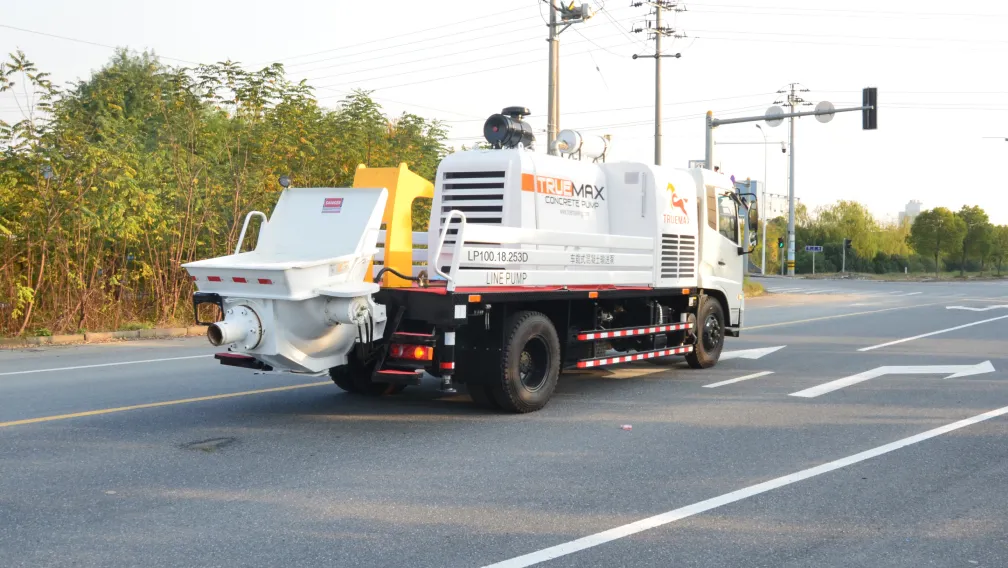
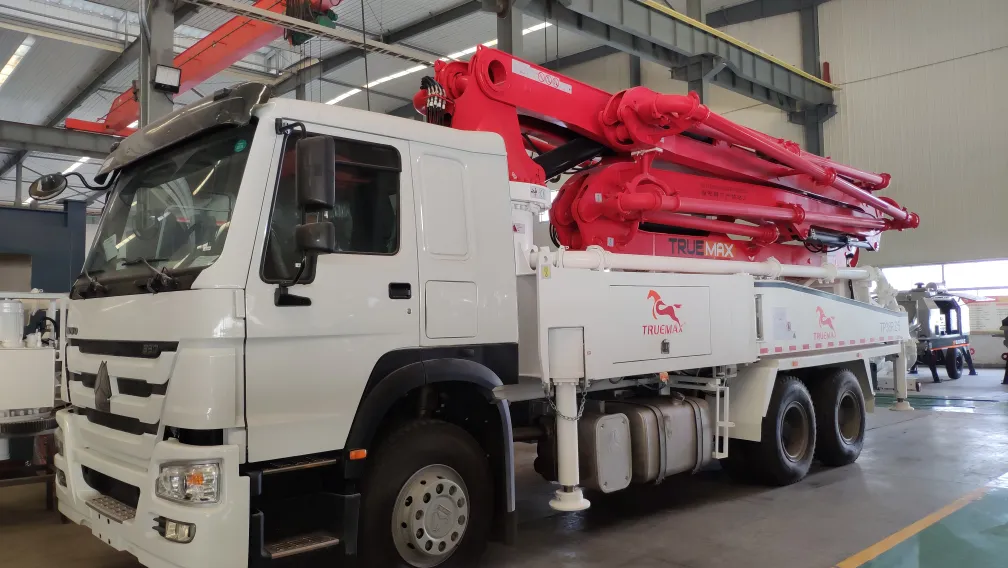
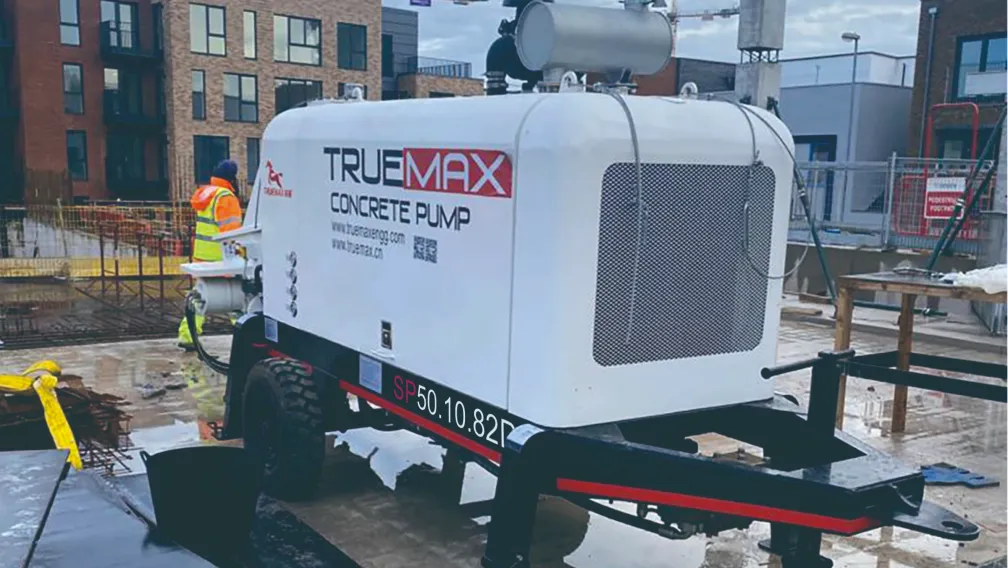
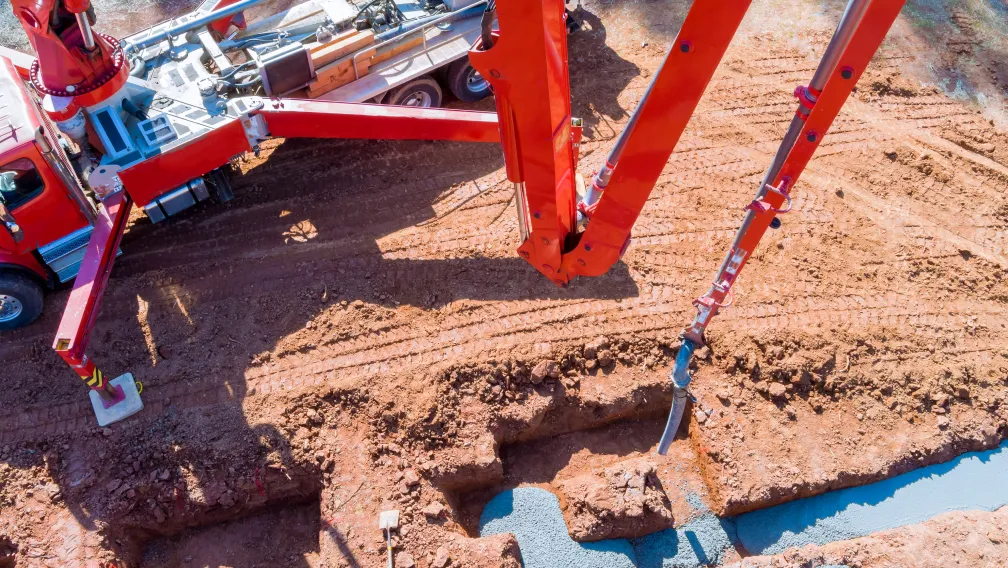
If the plant produces 150 cubic meters per hour, but the jobsite Stationary Concrete Pump is pushing highly viscous material vertically up a skyscraper core at only 60 cubic meters per hour, the transit fleet will queue at the site. Concrete idling in a truck drum for over 90 minutes begins to undergo initial hydration, losing slump rapidly. When this stale concrete is finally discharged into a Truck-Mounted Boom Pump, the stiff material will induce massive line friction, causing explosive pressure spikes and potential pipeline blockages.
Advanced plant dispatch software utilizes GPS tracking and jobsite pump telemetry to pace the batching queue automatically. The PLC adjusts the plant's hourly throughput to match the exact consumption rate of the placement pumps, guaranteeing that every truck arrives with fresh material exactly when the pump hopper requires a refill, eliminating cold joints in the structure and reducing fuel waste in the delivery fleet.
7. Frequently Asked Questions
Q1: What is the difference between capacitive and microwave moisture sensors?
A: Capacitive sensors measure moisture based on electrical conductivity, which makes them highly vulnerable to errors caused by changes in aggregate mineral composition, salt content, and ambient temperature. Microwave radar sensors measure the dielectric constant of the water itself, ignoring the mineral properties of the stone, resulting in highly accurate, drift-free moisture readings regardless of environmental changes.
Q2: Can a batch plant automatically adjust for varying aggregate absorption rates?
A: Yes, advanced batch plant automation allows operators to input the specific specific gravity and water absorption coefficient of different aggregates (such as porous lightweight expanded shale versus dense granite). The PLC calculates the difference between total internal moisture and surface free moisture, ensuring only the surface moisture is deducted from the mix water.
Q3: How does a wattmeter determine concrete slump inside the mixer?
A: A wattmeter measures the active electrical power (kilowatts) drawn by the mixer's drive motors. Concrete with a low slump (stiff) generates high mechanical friction against the mixing blades, forcing the motor to draw more power. High-slump (fluid) concrete generates less friction. The automation software maps this power consumption curve directly to established slump values in real-time.
Q4: What causes a dosing system to dispense incorrect admixture volumes?
A: Incorrect chemical dosing is almost always caused by using volumetric flow meters in regions with wide temperature swings. Chemical viscosity changes with temperature, slowing down or speeding up the flow rate. Upgrading to a gravimetric system (weighing the liquid physically on a load cell) ensures absolute dosing accuracy regardless of liquid viscosity.
Q5: What is head-packing, and how does automated ribbon feeding prevent it?
A: Head-packing occurs when raw dry cement powder drops onto a wet mixer floor before the aggregates, creating an impenetrable layer of hardened paste that jams the mechanical blades. Ribbon feeding prevents this by discharging the aggregates, cement, and water simultaneously in a layered stream, ensuring the cement is mechanically blended with the stone before it hits the bottom of the trough.
Q6: How frequently must a commercial batch plant weigh scale be calibrated?
A: International concrete production standards generally require gravimetric weigh scales (cement, aggregate, and water load cells) to be physically calibrated with certified test weights every 6 to 12 months. However, the plant's automation software performs a continuous auto-tare sequence before every single batch to zero out any residual material dust clinging to the hopper walls.
8. Technical Equipment Consultation
Upgrading to a fully automated batching system fundamentally reduces material waste, eliminates rejected loads, and lowers electrical overhead per cubic meter produced. To integrate advanced microwave moisture compensation, wattmeter slump control, or precision gravimetric admixture dosing into your existing or planned production facility, submit your plant specifications to the Truemax engineering team for a comprehensive automation upgrade proposal within 24 hours.
-

TrueMax
Concrete & Construction Equipment ManufacturerEstablished in 2003, Truemax designs, manufactures, and delivers concrete pumping equipment, crushing machinery, and construction hoisting systems from our own factory in Haining, China to jobsites in over 120 countries.