

 LANGUAGE
1. The Thermodynamics of Mass Concrete in High Ambient Temperatures
Executing structural concrete placements in regions with high ambient temperatures, such as the Middle East, North Africa, and Southeast Asia, presents severe thermodynamic challenges. Portland cement hydration is a highly exothermic chemical reaction. When the ambient air temperature exceeds 35 degrees Celsius, the initial thermal baseline of the raw materials causes the resulting concrete matrix to reach dangerous peak temperatures during the curing phase.
International construction standards typically restrict the maximum placement temperature of fresh concrete to 32 degrees Celsius (90 degrees Fahrenheit), with mass foundation pours often restricted to 25 degrees Celsius. Exceeding these limits leads to accelerated slump loss, premature setting, and structural cold joints. More severely, if the temperature differential between the hot core of a massive concrete element and its cooler outer surface exceeds 20 degrees Celsius, thermal stresses will induce severe micro-cracking and delayed ettringite formation (DEF), permanently compromising the structural integrity of the foundation.
To mitigate these risks, construction operators must control the thermal mass of the concrete before it is discharged into the delivery fleet. This requires specialized mechanical cooling integration directly at the production source.
2. Managing Aggregate Thermal Mass
Aggregates (coarse crushed stone and fine sand) constitute 70 to 80 percent of the total volume and mass of a concrete mix. Consequently, the temperature of the aggregate pile exerts the greatest physical influence on the final temperature of the fresh concrete.
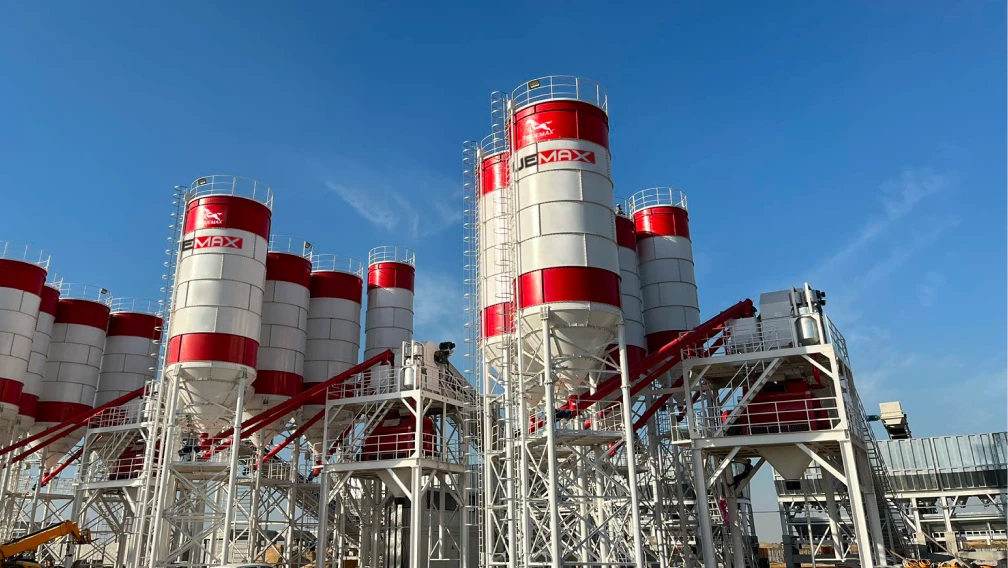
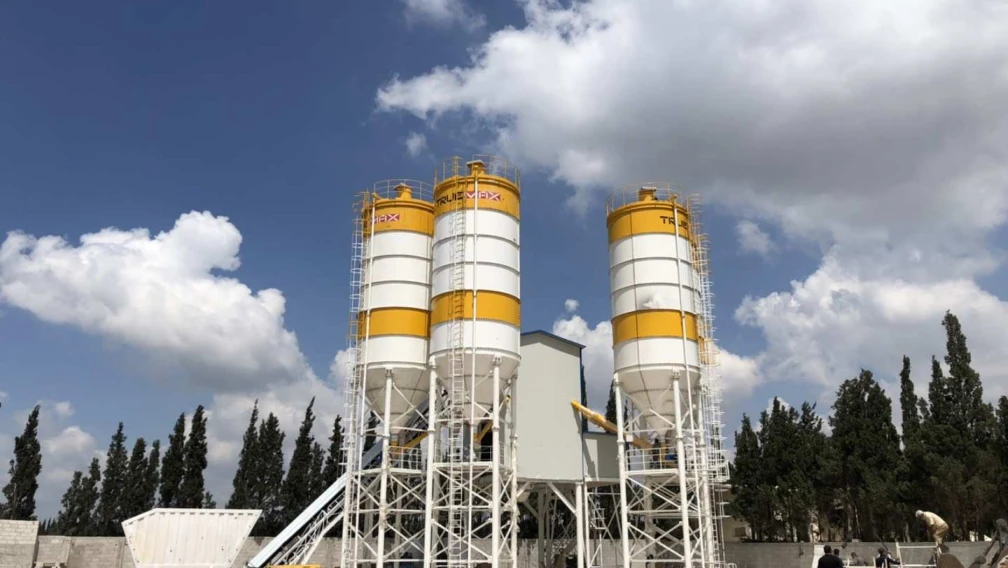
Basic thermal management begins in the stockyard. Operators erect heavy sunshades over the aggregate storage bins to block direct solar radiation. For continuous cooling, high-pressure evaporative sprinkler systems are mounted above the coarse aggregate stockpiles. As the water evaporates from the surface of the stones, it draws latent heat away from the material, dropping the aggregate temperature by several degrees. However, the plant operator must strictly monitor the moisture content of the sand and stone. The automated control system of the Concrete Batching Plant must recalculate the aggregate dry weight continuously using microwave moisture sensors to prevent the excess sprinkler water from altering the final water-to-cement ratio of the structural mix.
3. Chilled Water Integration in Batching Facilities
When aggregate shading and evaporative cooling are insufficient to meet maximum temperature specifications, engineers turn to mechanical refrigeration. The most efficient primary intervention is replacing the standard ambient mixing water with chilled water.
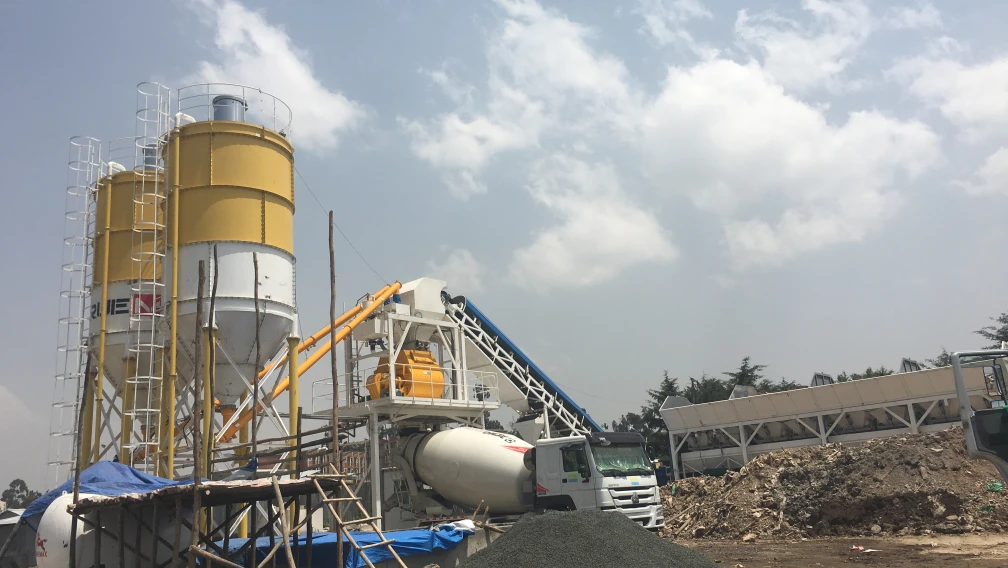
Industrial air-cooled or water-cooled chillers are integrated into the batching plant's fluid delivery system. These high-capacity units draw standard municipal or well water at 30 degrees Celsius and circulate it through specialized heat exchangers, dropping the water temperature to between 1 and 4 degrees Celsius. The chilled water is stored in heavy-duty insulated holding tanks positioned adjacent to the main mixing tower.
A standard 120 cubic meter per hour batching plant producing chilled-mix concrete requires a dedicated chiller unit rated at approximately 150 to 200 refrigeration tons (TR). The piping connecting the chiller, the holding tank, and the plant's internal water weighing scale must be wrapped in closed-cell elastomeric insulation to prevent thermal gain during the transfer phase. Utilizing water at 4 degrees Celsius can lower the total concrete mix temperature by approximately 4 to 5 degrees Celsius, which is often sufficient for standard commercial slab and column placements.
4. Flake Ice Plants for Mass Foundation Pours
For extreme ambient environments or massive raft foundation pours exceeding 2,000 cubic meters, chilled water alone cannot absorb enough thermal energy. In these scenarios, structural specifications require the substitution of a portion of the mixing water with solid ice.
Ice absorbs heat through the latent heat of fusion. When one gram of ice melts into liquid water, it absorbs 334 Joules of thermal energy without raising its own temperature. This phase change provides massive cooling potential. However, the ice cannot be produced as standard cubes or blocks; it must be manufactured as sub-cooled flake ice (typically 1.5 mm to 2.5 mm in thickness).
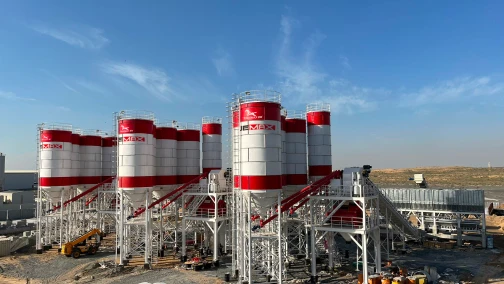
Flake ice systems are installed directly on the upper platform of the batching plant, feeding into a specialized insulated weigh hopper mounted directly above the twin-shaft mixer. The extreme surface-area-to-volume ratio of the thin ice flakes ensures they melt completely within the standard 60-to-90-second mixing cycle. If the ice pieces are too thick and fail to melt before the concrete is discharged, they will melt later during the curing phase, leaving void spaces (honeycombing) inside the hardened structural element.
Engineering Solution Block: Temperature Reduction Formula
To estimate the required mass of ice, engineers utilize the specific heat capacities of the mix components. Replacing 10 percent of the total mixing water with flake ice typically lowers the final concrete temperature by roughly 1.5 to 2.0 degrees Celsius. In extreme cases, up to 75 percent of the free mixing water can be substituted with flake ice.
5. Fleet Logistics and Drum Heat Gain in Transit
Producing chilled concrete at the batching facility is completely ineffective if the material absorbs excessive heat during transit. The transit phase inside the delivery fleet is a highly vulnerable thermal window.
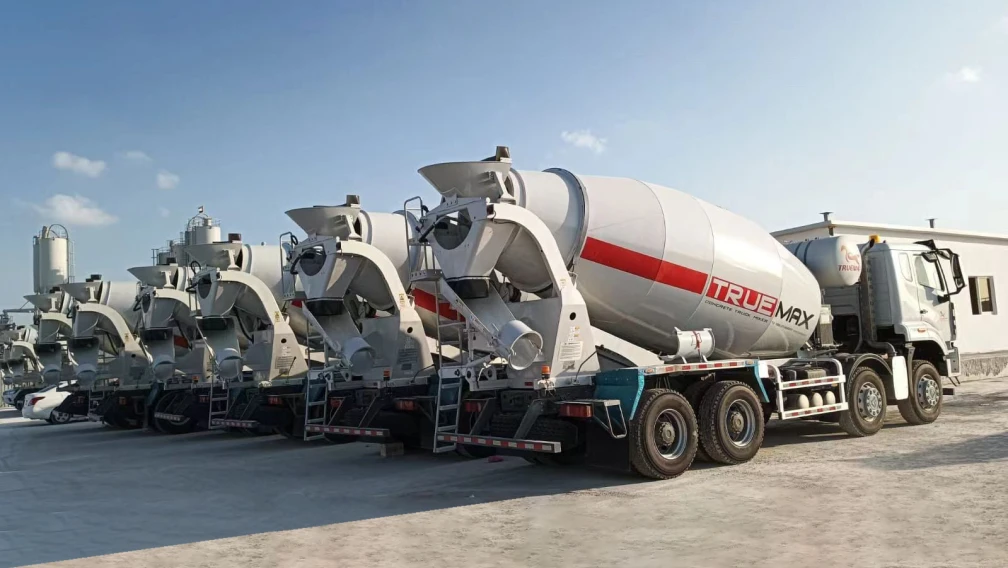
Standard steel drums act as massive solar collectors. To minimize thermal gain, fleet managers paint the exterior of the Concrete Truck Mixer drums with highly reflective titanium white paint. In regions with extreme peak temperatures, specialized thermal insulation jackets made of neoprene or heavy canvas are strapped around the mixer drums.
Furthermore, mechanical friction generated by the internal spiral blades during transit agitation adds measurable kinetic heat to the concrete mix. Dispatchers must enforce strict transit time limits, ensuring the material is discharged within 60 to 90 minutes of initial batching. Chemical retarding admixtures and hydration-control stabilizers are injected into the mix to delay the initial setting time, allowing the truck mixer to reach remote jobsites without the concrete stiffening in the drum.
6. Thermal Considerations for Pumping and Placement
Upon arrival at the jobsite, the concrete faces its final thermal exposure during the placement phase. The steel pipelines used to transport the material from the street level to the structural formwork can easily reach 60 degrees Celsius when left exposed to direct afternoon sunlight.
Pumping raw concrete through a blistering hot pipeline will flash-evaporate the moisture at the leading edge of the mix, resulting in immediate friction spikes and mechanical blockages. Before commencing operations, the operator must prime the Stationary Concrete Pump by pumping a chilled cement slurry through the entire pipeline to lower the internal steel temperature and lubricate the walls.
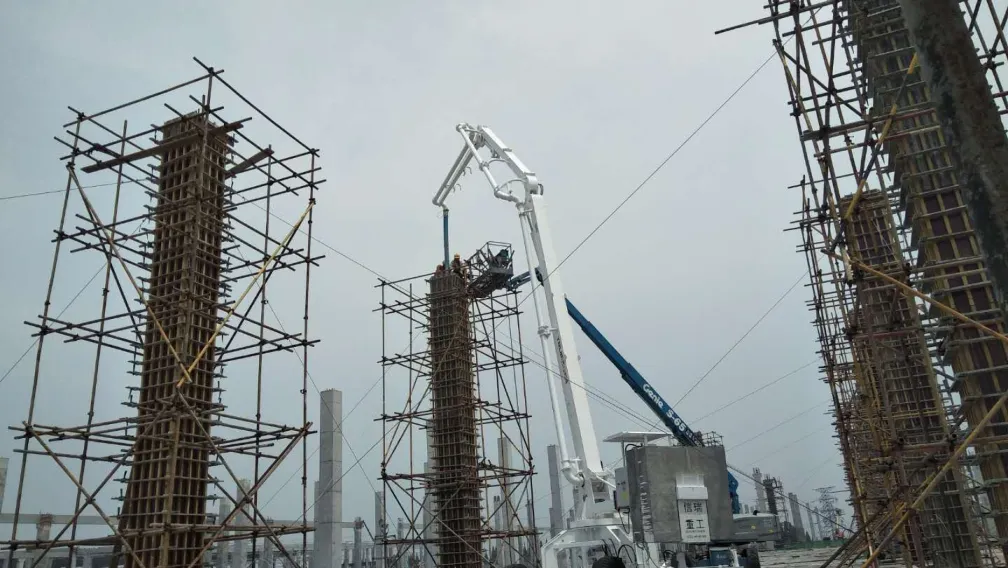
For long horizontal pipeline runs, site crews wrap the exposed steel pipes in industrial burlap sacks and soak them continuously with water hoses. The ongoing evaporation keeps the steel pipes significantly cooler than the ambient air. For rapid, high-volume pours where pipeline insulation is impractical, contractors deploy a Truck-Mounted Boom Pump. The aerial boom places large volumes of concrete at high speed, minimizing the exact duration the concrete spends exposed to the ambient environment before being consolidated into the deep, shaded formwork.
7. Frequently Asked Questions
Q1: What is the absolute maximum allowable placement temperature for structural concrete?
A: While specific engineering codes vary by region, the globally accepted threshold (such as ACI 305R for hot weather concreting) specifies that concrete should not exceed 32 to 35 degrees Celsius at the time of placement. For mass concrete elements like bridge footings or dam structures, this limit is often lowered to 20 to 25 degrees Celsius to prevent thermal cracking.
Q2: Why must ice be produced in flake form rather than cubes for batching operations?
A: Flake ice possesses a massive surface-area-to-volume ratio and measures only 1.5 mm to 2.5 mm in thickness. This ensures the ice melts entirely during the brief 60-second mechanical mixing cycle. Standard ice cubes would not melt in time, resulting in frozen pockets trapped inside the poured structure that melt later to form hollow void defects.
Q3: How much of the total mixing water can be safely replaced by flake ice?
A: Engineers can replace up to 70 to 80 percent of the total added mixing water with flake ice, depending on the aggregate moisture levels and the required temperature drop. The remaining 20 to 30 percent of liquid water is necessary to dissolve chemical admixtures and ensure immediate workability when the cement makes initial contact with the aggregates.
Q4: How does high ambient temperature physically affect concrete slump?
A: High temperatures accelerate the cement hydration reaction and increase the rate of moisture evaporation. This causes the concrete to lose its plasticity and workability rapidly, a phenomenon known as slump loss. Adding unauthorized water at the jobsite to restore this slump will drastically reduce the final compressive strength of the concrete.
Q5: How do batching plant operators adjust for the extra water added by aggregate sprinklers?
A: High-end batching plants utilize automated microwave moisture probes mounted inside the sand and aggregate hoppers. These sensors read the real-time water content of the wetted aggregates. The central control computer then mathematically subtracts this existing moisture weight from the total liquid water required for the mix, ensuring the water-to-cement ratio remains perfectly accurate.
Q6: Can liquid nitrogen (LN2) be utilized instead of mechanical chillers?
A: Yes, liquid nitrogen injection is the fastest and most powerful cooling method available. LN2 can be injected directly into the truck mixer drum or the batch plant holding tank. However, it is exponentially more expensive than operating a mechanical chiller or flake ice plant, and its rapid expansion creates severe safety and ventilation hazards, making it viable only for extreme, highly specialized pours.
8. Technical Equipment Consultation
Engineering a temperature-controlled concrete production facility requires exact thermodynamic calculations based on your local climate data, target mix designs, and peak hourly production volumes. For precise sizing of mechanical chillers, automated flake ice modules, and advanced moisture compensation controls, submit your site parameters to the Truemax engineering team to receive a comprehensive technical integration plan within 24 hours.
-

TrueMax
Concrete & Construction Equipment ManufacturerEstablished in 2003, Truemax designs, manufactures, and delivers concrete pumping equipment, crushing machinery, and construction hoisting systems from our own factory in Haining, China to jobsites in over 120 countries.