

 LANGUAGE

1. The Logistics of Precast Concrete Distribution
Precast concrete manufacturing relies on absolute predictability. The efficiency of a precast plant is fundamentally dictated by the speed, consistency, and reliability with which fresh concrete is transferred from the central batching plant to the various casting beds, molds, and formworks distributed across the factory floor. Any delay in this internal logistics chain results in premature concrete setting, cold joints in architectural panels, and severe bottlenecks that degrade overall daily output. Industrial precast facilities typically deploy one of two primary distribution methodologies: overhead flying bucket systems (monorail or bi-rail) or high-pressure pumping networks utilizing a stationary concrete pump. Selecting the appropriate distribution architecture is not merely a matter of preference; it is a rigid engineering decision dictated by the factory layout, the required daily volumetric throughput, and, most importantly, the rheological properties of the specific concrete mix designs being utilized. A mismatch between the mix design and the delivery system will lead to severe material segregation, equipment blockages, and unacceptable defect rates in the finished precast elements.
2. Overhead Bucket Systems: Batch Delivery and Structural Constraints
Overhead bucket systems, commonly referred to as flying buckets, have been the traditional standard for concrete distribution in precast plants for decades. These systems consist of a motorized bucket traveling along a suspended steel monorail or twin-rail track network, carrying discrete batches of concrete from the mixer discharge gate directly to the casting stations. The primary technical advantage of a bucket system lies in its ability to transport zero-slump, extremely dry concrete mixes. Hollow-core slabs, concrete pipes, and certain extruded pre-stressed elements require concrete with zero workability, which cannot be physically pumped through a pipeline. An overhead bucket transports these stiff materials without subjecting them to shear forces or requiring lubrication paste, discharging them directly into the hoppers of the extrusion machines.
However, overhead bucket systems operate on a discrete batch delivery cycle, which introduces inherent logistical inefficiencies. The cycle time includes filling the bucket, traversing the factory, discharging the payload, and returning empty. For large continuous pours, this creates unavoidable waiting periods. Furthermore, installing a bucket system requires a massive initial capital expenditure (CapEx) in structural steel. The factory roof trusses or dedicated gantry structures must be engineered to support the dynamic, swinging load of a bucket carrying up to three cubic meters of dense concrete (roughly 7.5 metric tons of moving mass). This structural requirement often limits the installation of bucket systems to purpose-built new factories, as retrofitting them into existing warehouses is structurally prohibitive and extremely costly.
3. Stationary Concrete Pumps: Continuous Extrusion Architecture
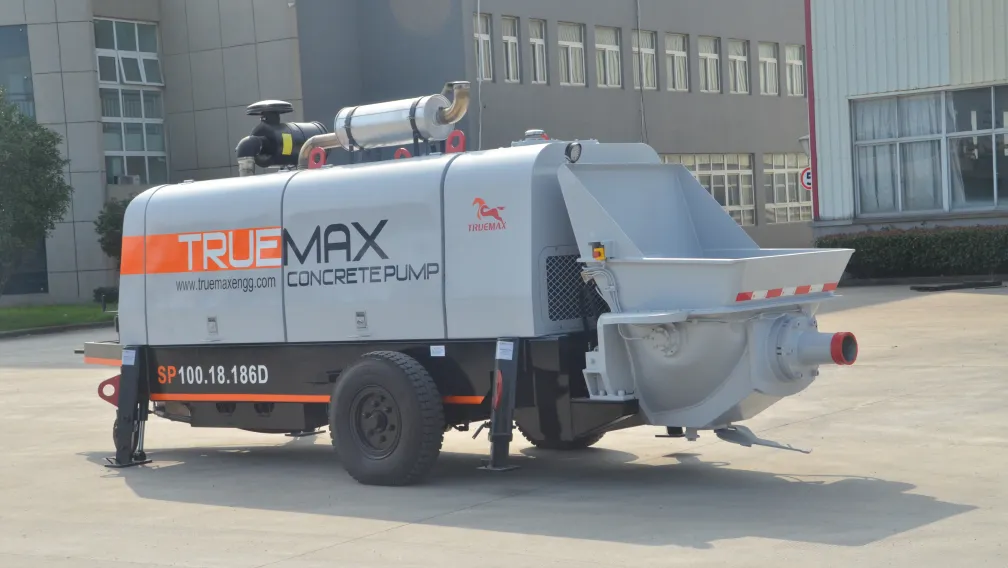
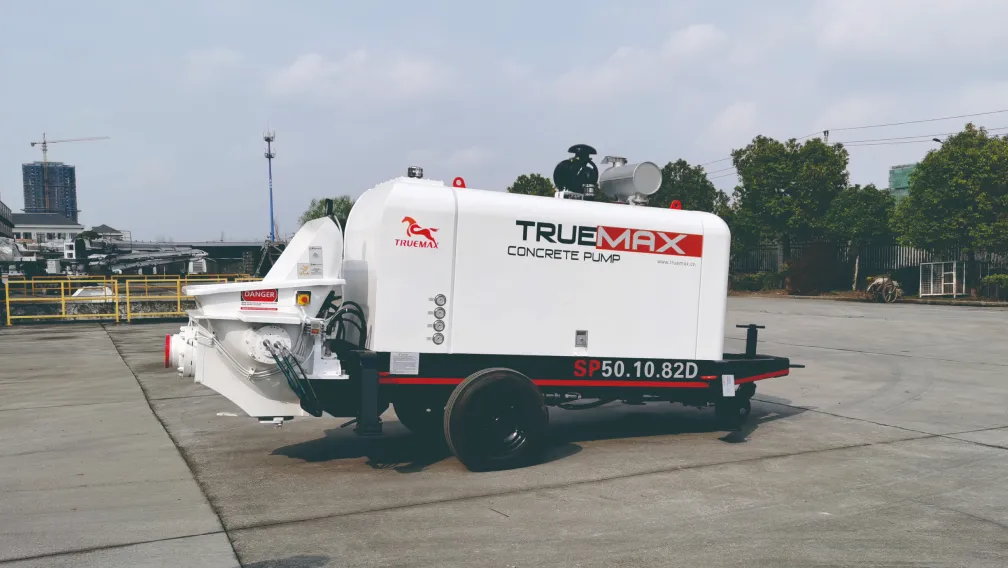
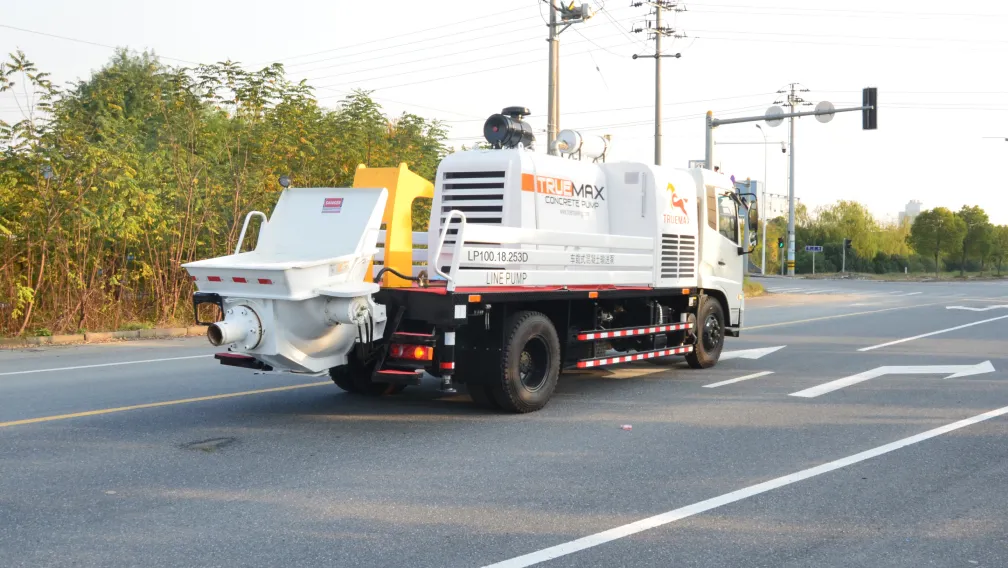
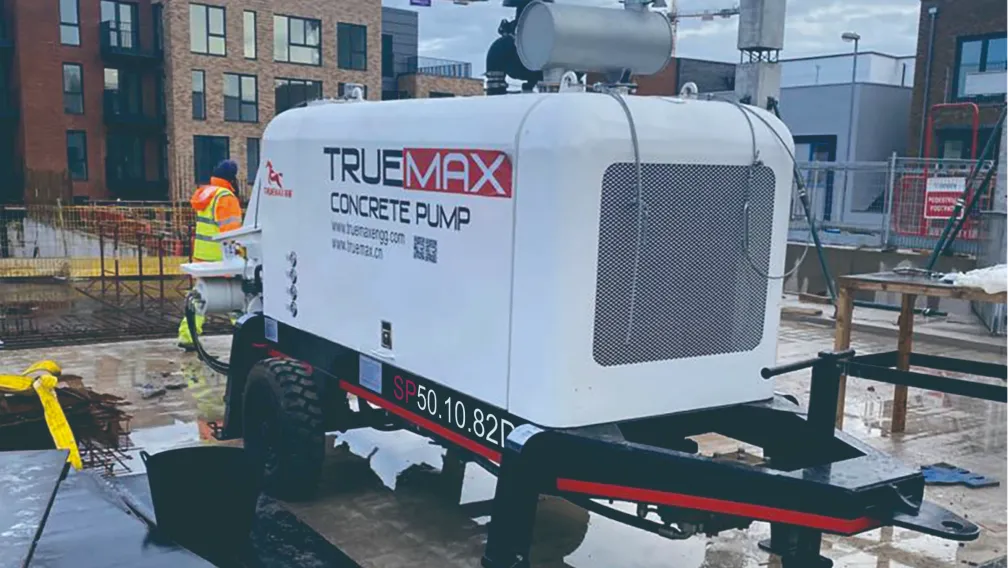
Modern precast operations focusing on wet-cast elements, complex architectural facades, and modular volumetric construction are increasingly shifting toward pump-based distribution. A central stationary concrete pump stationed directly beneath the batching plant discharge chute pushes the material through a fixed or articulated steel pipeline network directly into the molds. The primary engineering advantage of a pumping system is the continuous, uninterrupted flow of material. Unlike the stop-and-go cycle of a flying bucket, a pump delivers a steady volumetric extrusion, drastically reducing the total pour time for massive molds and completely eliminating the risk of cold joints.
Stationary pumps in a factory setting operate differently than those on open construction sites. Because horizontal distances in a plant rarely exceed 150 to 200 meters and vertical lifts are minimal, the extreme high-pressure capabilities required for high-rise pumping are unnecessary. Instead, precast plants utilize pumps optimized for smooth, low-pulsation flow. These pumps are equipped with advanced closed-loop hydraulic systems and precision-machined S-valves designed to minimize the hydraulic shock transferred to the pipeline. This low-pulsation extrusion is critical when filling intricate molds, as aggressive pressure spikes can displace carefully positioned rebar cages, shift embedded mounting hardware, or blow out delicate formwork joints.
4. Mix Design Rheology: Zero-Slump vs. Self-Consolidating Concrete (SCC)
The decision between a pump and a bucket system is ultimately governed by concrete rheology. As previously established, zero-slump dry-cast concrete mandates an overhead bucket or a specialized conveyor belt system. Attempting to pump zero-slump concrete will result in an immediate friction blockage, destroying the pump's cutting ring and requiring a manual tear-down of the pipeline.
Conversely, the modern precast industry is dominated by Self-Consolidating Concrete (SCC). SCC utilizes heavy doses of polycarboxylate ether (PCE) superplasticizers and fine powders to create a highly fluid, self-leveling mix that easily fills complex geometries without requiring mechanical vibration. SCC is highly cohesive but extremely flowable, making it the ideal candidate for pipeline pumping. A stationary pump keeps the SCC agitated within the hopper and moving smoothly through the line, preventing the rapid skinning or crusting that can occur when highly modified SCC sits idle in an exposed overhead bucket. For factories producing architectural precast panels, tunnel lining segments, or modular bathroom pods using SCC, a stationary pump connected to a precise robotic placing boom provides unmatched distribution efficiency and surface finish quality.
5. Factory Layout, Spatial Utilization, and Crane Interference
Spatial utilization is a critical metric in precast factory management. Overhead bucket systems consume a significant amount of vertical airspace. The track network must be routed above the casting beds but below the factory roof. Crucially, the travel path of a flying bucket frequently intersects with the operating envelope of the heavy overhead bridge cranes used to lift and transport the cured concrete elements. This creates a severe logistical conflict. Factory dispatchers must constantly halt crane operations to allow the concrete bucket to pass, or vice versa. In a high-throughput factory, these micro-delays accumulate into hours of lost productivity per week, disrupting the entire manufacturing rhythm.
Pump pipelines offer superior spatial flexibility. A standard 5-inch (DN125) steel delivery pipe can be routed along the factory floor, secured to the perimeter walls, or buried in shallow floor trenches, completely removing the concrete distribution system from the overhead airspace. This leaves the bridge cranes free to operate continuously without interference. Furthermore, pipeline networks can be easily extended, branched using heavy-duty diverter valves, or re-routed as the factory layout evolves, offering a degree of modularity that fixed steel monorails cannot match.
6. Capital Expenditure (CapEx) and Operational Expense (OpEx) Analysis
The financial modeling for these two systems reveals inverse profiles. Overhead bucket systems demand high initial CapEx. The engineering, fabrication, and installation of the heavy steel track network, automated switches, and the motorized buckets themselves require a substantial upfront investment. However, the operational expense (OpEx) is relatively low. Maintenance is largely confined to inspecting track alignment, lubricating hoist motors, and replacing the rubber seals on the bucket discharge gates. The system does not suffer from abrasive internal wear.
Stationary pump systems require significantly lower initial CapEx. A high-quality electric-drive pump and a complete factory pipeline network cost a fraction of a heavy-duty monorail system. However, the OpEx is notably higher. Concrete pumping relies on the friction of abrasive aggregates moving against steel and rubber. Wear parts inside the pump, specifically the spectacle plate, cutting ring, and polyurethane piston rams, are consumables that must be replaced regularly based on the pumped volume and aggregate abrasiveness. Additionally, the steel elbows and bends in the pipeline will erode and require periodic replacement. Washout operations also add to the OpEx; the pipeline must be cleaned out with sponge balls and water at the end of each shift, requiring a dedicated water recycling system to manage the heavily alkaline washout slurry.
7. Frequently Asked Questions
Q1: Can an overhead bucket system transport Self-Consolidating Concrete (SCC)?
A: Yes, buckets can transport SCC, but they must be equipped with specialized leak-proof discharge gates. SCC is highly fluid and will leak profusely from the standard clamshell gates used for stiffer mixes. However, pumping remains the preferred method for SCC due to the continuous flow and prevention of surface crusting.
Q2: Why is pumping zero-slump concrete impossible?
A: Pumping requires a lubrication layer of cement paste to form against the inner wall of the steel pipe, allowing the aggregate core to slide through. Zero-slump concrete lacks the free moisture necessary to form this lubrication layer, causing the dry aggregates to lock together and instantly plug the pipeline.
Q3: How do stationary pumps integrate with multiple casting beds in a large factory?
A: A single stationary pump can feed multiple casting beds using a branched pipeline network equipped with hydraulic diverter valves. The operator can instantly switch the flow of concrete from Line A to Line B without halting the pump, allowing continuous production across different factory zones.
Q4: Does pipeline pumping cause concrete mix segregation?
A: Properly engineered mixes will not segregate during horizontal pumping. Segregation usually occurs when the pipeline is oversized for the pump output, or during vertical free-fall at the discharge point. Using the correct pipe diameter (typically DN125) and maintaining a full pipe prevents segregation.
Q5: How is crane interference managed in factories with flying bucket systems?
A: It requires complex PLC-based collision avoidance software and strict zoning rules. The factory airspace is digitally divided, and the system automatically halts the bucket if an overhead bridge crane enters its travel path. This safety requirement inevitably slows down overall factory logistics.
Q6: What is the daily maintenance requirement for a factory concrete pump?
A: The primary daily maintenance is the washout procedure. The entire pipeline must be purged using compressed air or water to drive a dense sponge ball through the line, scrubbing out residual cement paste. The pump hopper must be washed, and the automated greasing system must be checked to ensure the S-valve bearings are lubricated.
8. Engineering Support for Precast Automation
Selecting the optimal concrete distribution architecture requires a rigorous analysis of your facility's spatial constraints, target throughput, and specific mix designs. TRUEMAX provides turnkey equipment solutions for modern precast operations. We engineer and supply electric-drive stationary pumps featuring low-pulsation closed-loop hydraulics, automated heavy-duty diverter valves, and custom pipeline networks designed explicitly for precast facility integration. To analyze the cost-benefit ratio of transitioning your plant to a continuous pump-based distribution model, submit your factory floorplan and mix design parameters to our engineering division via the contact page for a comprehensive technical evaluation.
-

TrueMax
Concrete & Construction Equipment ManufacturerEstablished in 2003, Truemax designs, manufactures, and delivers concrete pumping equipment, crushing machinery, and construction hoisting systems from our own factory in Haining, China to jobsites in over 120 countries.