

 LANGUAGE
A concrete pump moves fresh concrete from the mixer truck to the pour point through a sealed pipeline. Two hydraulic cylinders alternate as concrete pistons: one draws concrete out of the hopper while the other pushes its charge into the delivery line. A switching valve at the hopper outlet connects the loaded cylinder to the pipeline at the exact moment the stroke changes, so the flow in the line never stops.
This working principle is shared by every machine in the category — the trailer-mounted stationary concrete pump, the truck-mounted line pump, and the truck-mounted boom pump. What changes between them is how the concrete reaches the final placement point: ground pipelines, or an articulated boom. Understanding the core cycle makes it easier to read a specification sheet, diagnose a blockage, and choose the right machine for a pour.
1. The Basic Pumping Cycle: Two Cylinders, One Valve
The pumping group consists of a hopper with an internal agitator, two concrete cylinders, and a distribution valve. The agitator keeps the concrete in the hopper homogeneous and pushes it toward the cylinder openings. Each concrete cylinder is paired with a hydraulic drive cylinder, and the two pistons are linked so they move as one unit.
The cycle works in four steps:
- Suction stroke: one concrete piston retracts and draws concrete from the hopper into its cylinder. At the same time, the second piston extends and pushes its concrete charge through the distribution valve into the delivery line.
- Stroke signal: when the retracting piston reaches the end of its travel, a proximity sensor inside the water box at the rear of the cylinders sends a signal to the control system.
- Valve shift: the distribution valve — on most modern pumps an S-shaped tube inside the hopper — swings across to seal against the cylinder that has just been filled.
- Direction change: the hydraulic cylinders reverse, the newly filled cylinder starts its discharge stroke, and pumping continues without interruption.
The two cylinders alternate like this 15 to 30 times per minute, depending on the output setting. Reversing the hydraulic flow produces reverse pumping, which pulls concrete back from the line into the hopper; operators use this to relieve pressure when the line begins to block.
2. The Hydraulic System Behind the Pistons
Three hydraulic circuits run the machine. The main circuit drives the concrete cylinders. Because only one drive cylinder is pressurized at a time, the rod sides of the two cylinders are connected in a closed loop: oil displaced by the extending cylinder pushes the other cylinder into retraction. This arrangement keeps the two pistons synchronized without a second metered oil supply.
The swing circuit moves the distribution valve. It draws stored energy from a nitrogen-charged accumulator, which releases its pressure instantly at each stroke change. The S-tube must complete its swing in a fraction of a second — a slow valve shift lets concrete bleed pressure back into the hopper and shows up at the discharge end as pulsing flow.
The auxiliary circuit runs the hopper agitator and any cooling or lubrication functions. On modern machines a PLC coordinates all three circuits, monitors proximity sensors and pressure switches, and logs fault codes for the service team.
3. Output vs. Pressure: Reading a Pump Specification
Two numbers define a concrete pump's capability: maximum theoretical output in cubic meters per hour, and maximum concrete pressure in MPa. They trade against each other. Most pumps offer two working ranges — a high-output range at lower pressure for slab and foundation work, and a high-pressure range at reduced output for long-distance or high-rise lines. TRUEMAX model designations state both figures directly: the SP100.23.360D stationary pump is rated at 100 m³/h output and 23 MPa concrete pressure with a 360 kW diesel engine.
| Pump Type | Typical Output | Typical Concrete Pressure | Common Duty |
|---|---|---|---|
| Stationary (trailer) pump | 20–100 m³/h | 8–23 MPa | High-rise cores, tunnels, long ground lines |
| Truck-mounted line pump | 60–100 m³/h | 8–23 MPa | Frequent site changes with pipeline placement |
| Truck-mounted boom pump | 90–180 m³/h | 6–12 MPa | Fast placement over formwork without ground line |
4. How Far Can a Concrete Pump Push Concrete?
A standard trailer or line pump delivers concrete roughly 150 m vertically or 600–1,000 m horizontally with a pumpable mix design. As a working rule on site, one meter of vertical lift costs about the same pressure as four to eight meters of horizontal pipe, and every 90-degree elbow adds the equivalent of three to five meters of straight pipe.
High-pressure machines go much further. During construction of the Burj Khalifa in Dubai, a specially reinforced trailer pump set the vertical pumping record at 606 m, working at nearly 200 bar of concrete pressure with about 11 m³ of concrete sitting in the delivery line. Inside the pipe, concrete travels as a plug: a thin lubricating layer of cement paste coats the pipe wall and the core of the column slides through it. Mixes that cannot form this layer — too little paste, harsh crushed aggregate, excessive bleeding — are the mixes that block.
5. The Three Pump Types and Where Each Fits
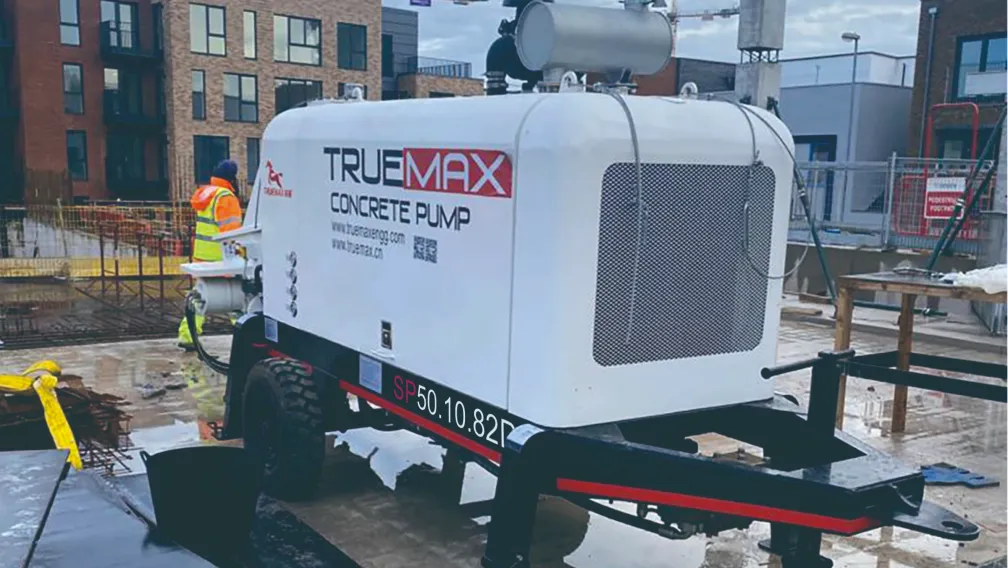
Stationary Concrete Pump
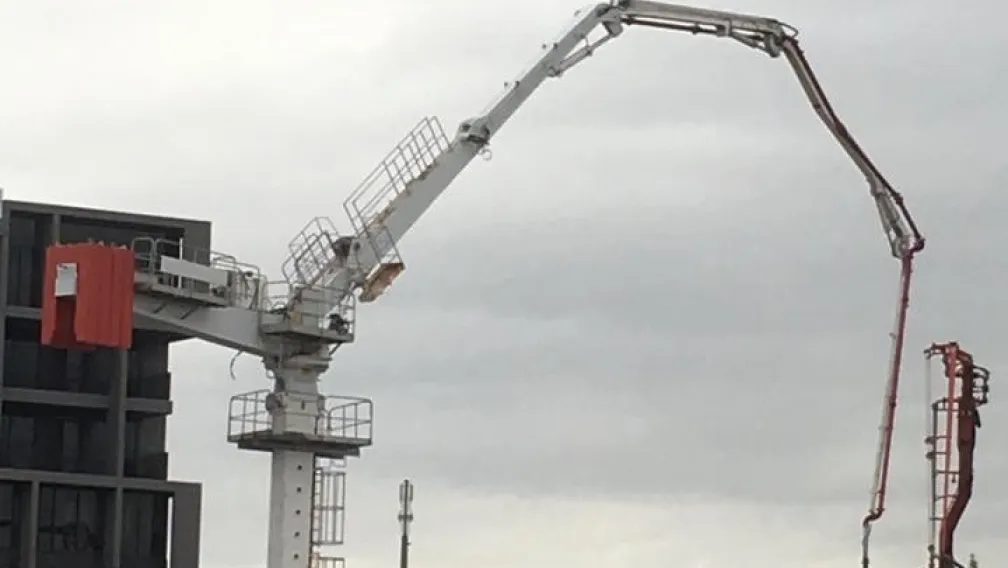
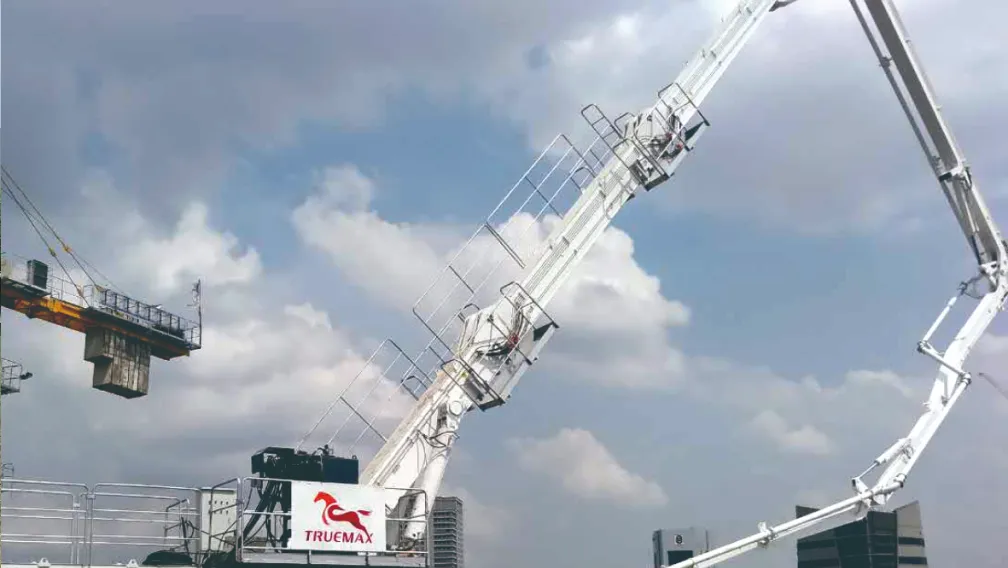
A trailer-mounted pump that stays at one position and feeds a ground pipeline. It is the standard answer for high-rise cores, tunnel linings, and any pour where the line runs further than a boom can reach. On tall buildings it is usually paired with a concrete placing boom climbing the structure, so the pipeline ends at a movable distribution mast on the working deck.
Truck-Mounted Line Pump
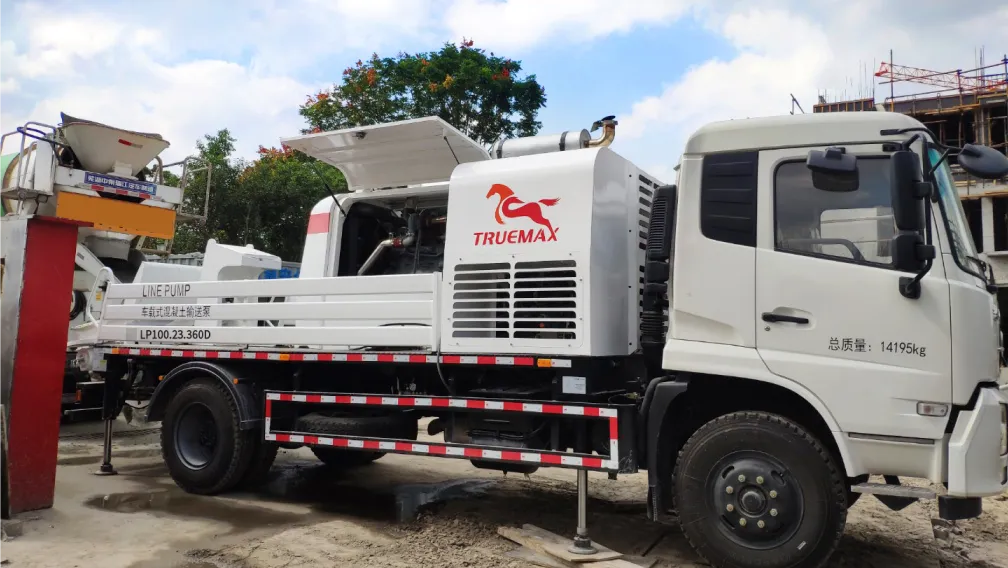
The same pumping group mounted on a truck chassis, carrying its own pipes and hoses. It drives to the site, connects to a ground line, pumps, and leaves. For contractors running several small or mid-size pours per week at different addresses, the line pump removes the transport and setup cost of a trailer unit.
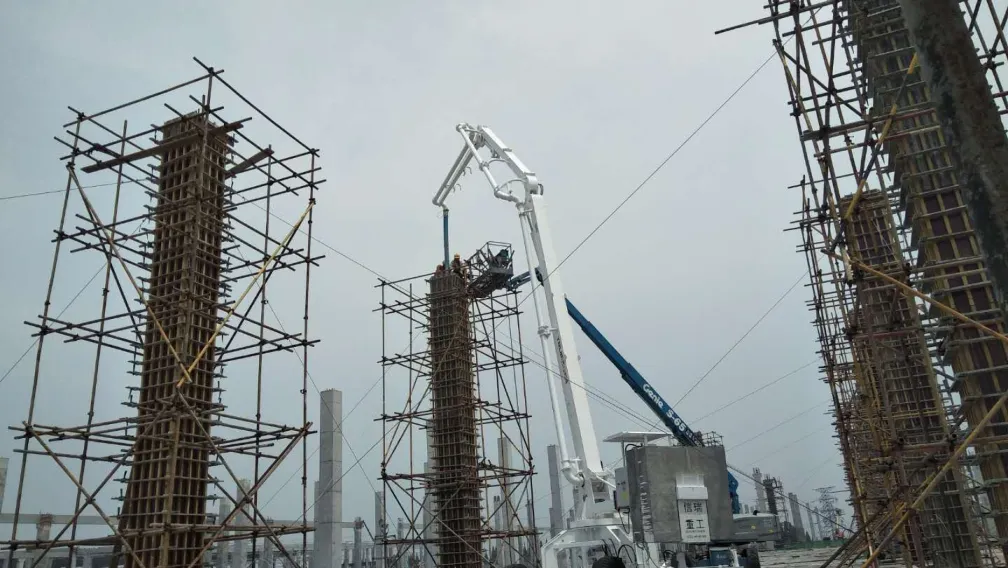
Truck-Mounted Boom Pump
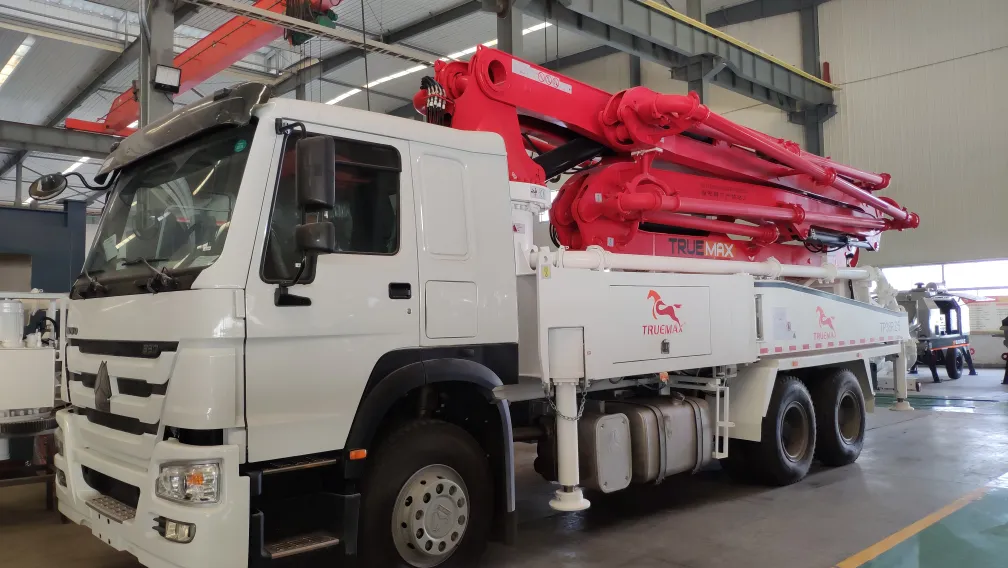
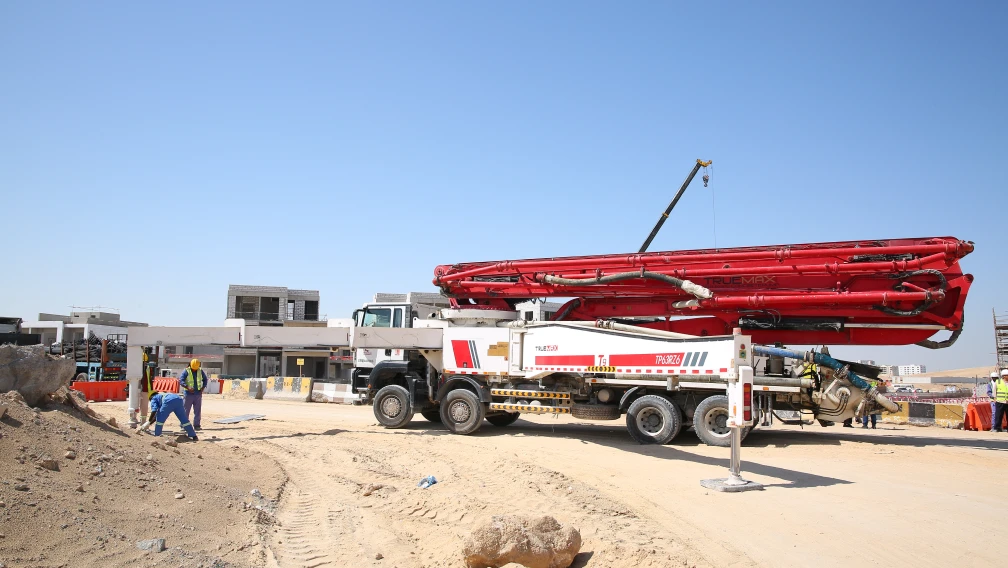
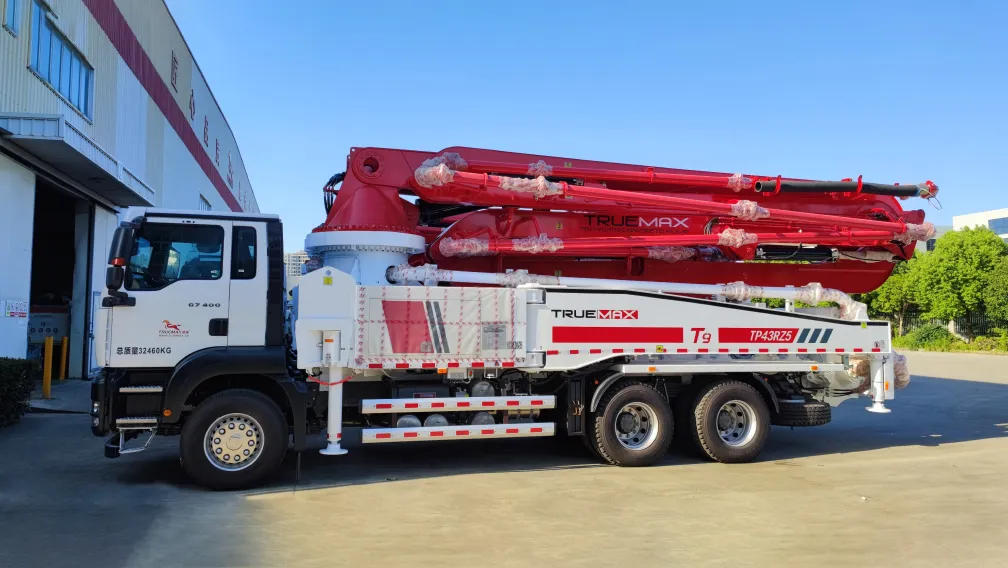
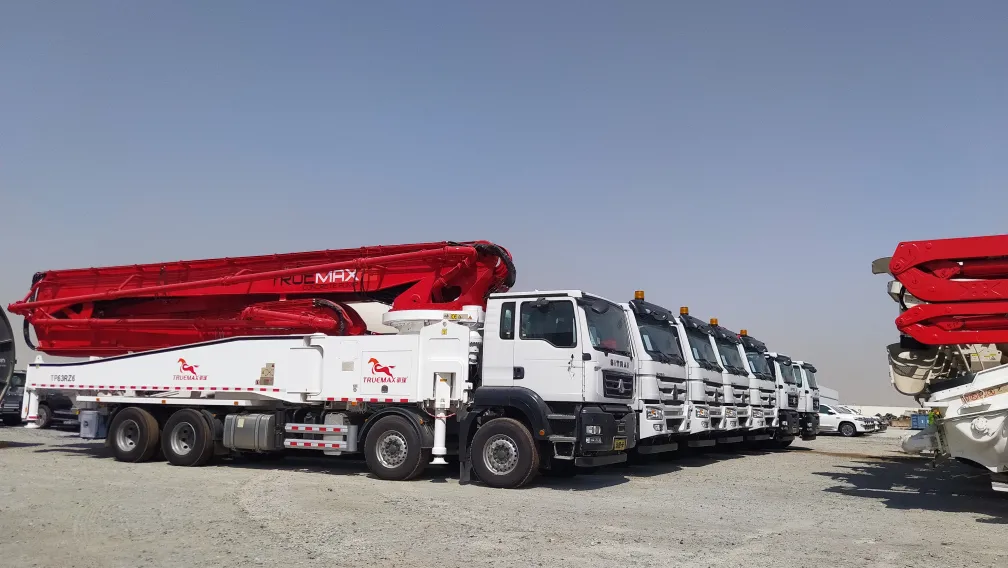
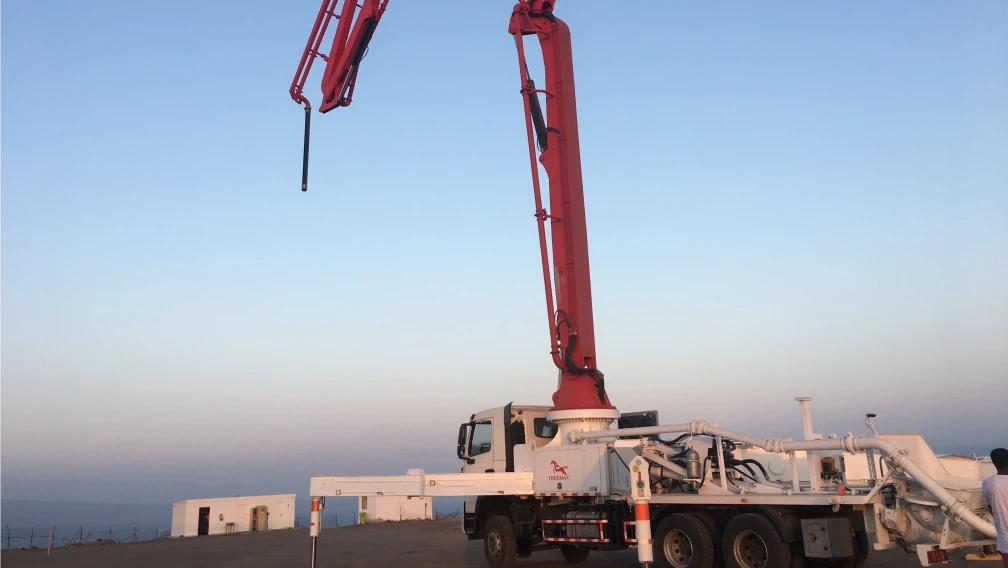
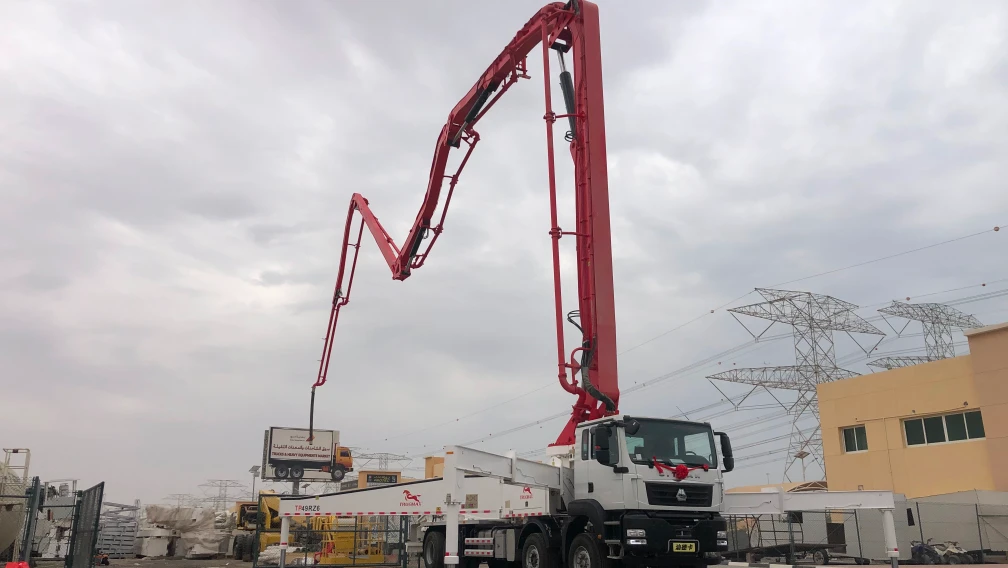
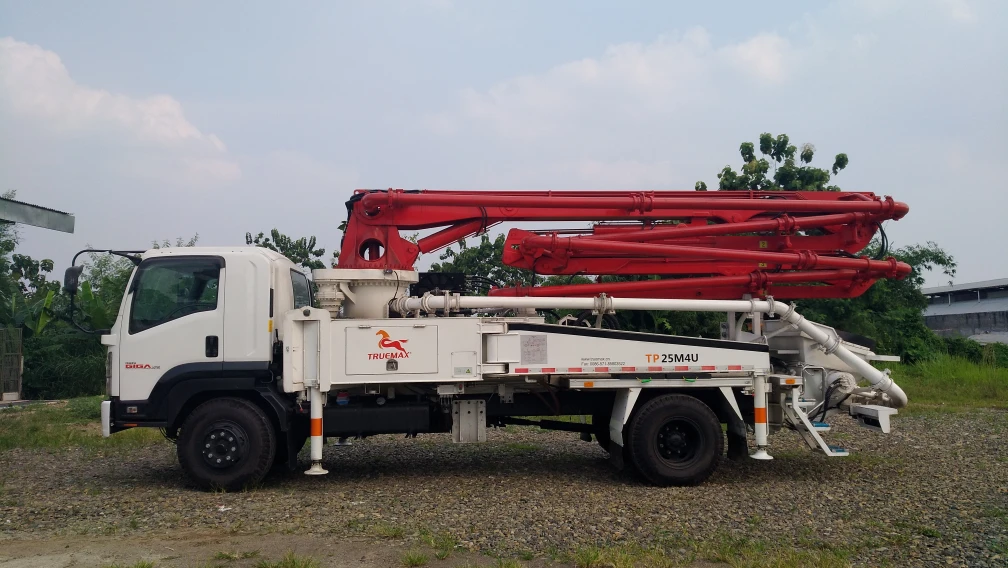
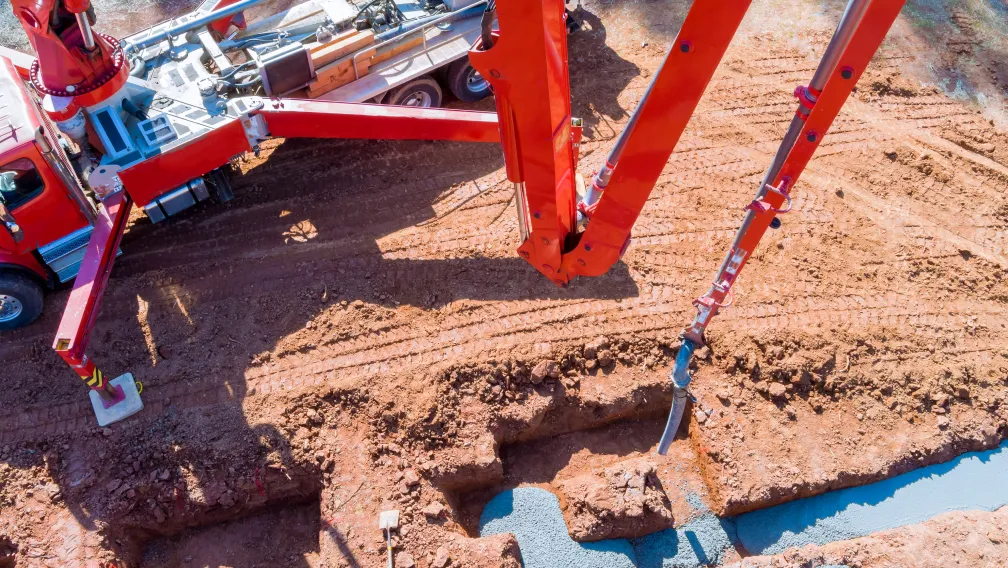
A pump with a folding steel boom that places concrete directly from the truck, with no ground pipeline to assemble. Setup takes minutes instead of hours, which makes the boom pump the default for large slab, foundation, and frame pours where the truck can stand within reach of the formwork.
6. Operation Points That Prevent Blockages and Wear
Most line blockages trace back to a short list of operating errors rather than machine faults:
- Prime the line: start every pour by pumping cement grout or mortar ahead of the first concrete. The grout coats the pipe wall and forms the lubricating layer the first plug of concrete needs.
- Keep the hopper covered: if the concrete level falls below the cylinder openings, the pump draws air, the line loses pressure continuity, and the next stroke slams a compressed air pocket into the column.
- Respect restart discipline: after any stop longer than a few minutes, stroke the pump in short, slow cycles before resuming full output. Most blockages happen during priming and restarting, not during steady pumping.
- Watch the aggregate: maximum aggregate size should stay at or below one third of the smallest pipe diameter in the line, and a graded curve beats a single-size fraction every time.
- Maintain the wear set: the wear plate and cutting ring at the valve seal the concrete cylinders against the hopper. Gaps here let paste escape, drop pumping efficiency, and accelerate wear on the S-tube itself.
- Clean after every pour: push a sponge ball through the line with water pressure, flush the hopper, and check the water box behind the pistons. Cement paste in the water box means piston seals are passing and need replacement.
7. Matching the Pump to Your Project
Output and pressure requirements, site access, and pour frequency determine which configuration pays back fastest. Send us your pour volumes, distances, and site layout and our engineers will return a machine and pipeline recommendation within 24 hours — including boom reach calculations or ground-line routing where the pour demands it. Contact our team to discuss your project.
8. Frequently Asked Questions
Q1: How does a concrete pump work in simple terms?
A: Two hydraulic cylinders work as pistons behind a hopper. One piston sucks concrete in while the other pushes concrete out into a pipeline. An S-shaped valve inside the hopper swings between the two cylinders at each stroke change, so one cylinder always feeds the line and the flow stays continuous.
Q2: What is the S-valve on a concrete pump?
A: The S-valve is a curved steel tube mounted inside the hopper. Its outlet connects permanently to the delivery line, while its inlet swings between the two concrete cylinders. A hydraulic swing cylinder powered by an accumulator snaps it across at each stroke change. Hard-faced sealing surfaces at the valve and a matching wear plate keep the connection pressure-tight against abrasive concrete.
Q3: How far can a concrete pump deliver concrete?
A: Standard machines handle about 150 m vertically or 600–1,000 m horizontally with a well-graded, pumpable mix. High-pressure trailer pumps exceed these figures by a wide margin: the verified vertical record stands at 606 m, set during construction of the Burj Khalifa at nearly 200 bar of concrete pressure. Horizontal capability follows the pressure budget — roughly four to eight meters of level pipe for every meter of vertical lift.
Q4: What concrete pressure does a pump produce?
A: Boom pumps typically work between 6 and 12 MPa, because boom pipelines are short. Stationary and truck-mounted line pumps run from about 8 MPa up to 23 MPa on high-pressure models, since they must push concrete through hundreds of meters of ground line or up a high-rise core. Most machines switch between a high-output/low-pressure range and a low-output/high-pressure range.
Q5: What is the maximum aggregate size a concrete pump can handle?
A: Keep the largest aggregate at or below one third of the smallest pipe diameter in the delivery line. For a standard 125 mm (5-inch) line, that limits aggregate to about 40 mm, and most pump mixes use 20–25 mm stone for margin. A continuous grading curve with adequate sand and paste content matters as much as the top size.
Q6: Why must a concrete pump be primed before the first concrete?
A: Dry steel pipe creates too much friction for the first plug of concrete, and the coarse aggregate jams against the wall. Pumping cement grout or mortar first coats the pipe with a lubricating paste layer. Skipping this step is the single most common cause of a first-stroke blockage, especially on long or vertical lines.
Q7: How do you clean a concrete pump after a pour?
A: Empty the hopper, then push a rubber sponge ball through the delivery line using water pressure or reverse pumping until it exits at the far end. Flush the hopper and valve area with water, and drain the water box behind the pistons to check for cement contamination. Any paste in the water box indicates worn piston seals that should be replaced before the next shift.
-

TrueMax
Concrete & Construction Equipment ManufacturerEstablished in 2003, Truemax designs, manufactures, and delivers concrete pumping equipment, crushing machinery, and construction hoisting systems from our own factory in Haining, China to jobsites in over 120 countries.