

 LANGUAGE

1. The Control System Is the Quality Department That Never Sleeps
Ask experienced ready-mix producers what separates a profitable plant from a troublesome one and the answer is rarely the mixer or the silos. It is the control system. The steel structure of a concrete batching plant determines capacity, but the control system determines whether every one of the day's hundreds of batches meets its mix design, and whether you can prove it to a client's auditor six months later.
This article explains how a modern plant control system works: the PLC and weighing hardware, moisture probes and automatic water correction, recipe and batch-record management, and remote monitoring. The goal is practical. When you specify or upgrade a plant, you should know which automation features pay back and which are decoration.
2. Core Architecture: PLC, HMI and Weighing Electronics
A modern plant runs on a programmable logic controller paired with an industrial PC or touchscreen HMI. The PLC executes the batching sequence deterministically: opening aggregate gates, starting screw conveyors, dosing water and admixtures, timing the mixing cycle and opening the discharge door. The HMI above it handles recipe selection, production reporting, alarms and manual override.
Weighing is the system's sensory layer. Aggregate bins or weigh belts, the cement and powder scale, the water scale or flowmeter and the admixture scales each feed the controller continuously. Typical working tolerances are ±2% for aggregates and ±1% for cement, water and admixtures, achieved through two-speed feeding: fast coarse dosing, then a slow dribble feed with automatic in-flight compensation for the material still falling when the gate closes. The controller learns the falling material constant for each gate and corrects it batch by batch. This self-tuning is what holds accuracy steady as material flowability changes through the day.
3. Moisture Probes and Automatic Water Correction
Sand moisture is the largest uncontrolled variable in daily production. A sand stockpile can shift by several percentage points of moisture overnight after rain, and every point of uncompensated moisture changes the effective water-cement ratio of every batch. Manual moisture checks once per shift cannot keep up.
Microwave moisture probes solve this at the source. Installed at aggregate bin gates, the sensor reads moisture roughly 25 times per second through a penetration depth of about 75 to 100 mm, with accuracy around ±0.2% when calibrated to the material. The control system uses the readings twice per batch: first to correct the aggregate target so the dry weight loaded is right, then to subtract the water arriving with the aggregates from the batch water. The result is that the water-cement ratio on the batch ticket is the one actually achieved, rather than the one assumed at the morning moisture test.
Calibration discipline still matters. Probes are calibrated per material, should be re-verified when the aggregate source changes, and read surface-zone moisture in the flowing stream. Plants that skip calibration see drift and lose trust in the system; plants that maintain it typically cut rejected loads and cement over-consumption measurably within the first quarter.
4. Recipes, Permissions and Batch Records
Production-grade control software stores the full recipe library, commonly a hundred mix designs or more, each recalled with one selection and protected by permission levels. Operators batch from approved recipes; only quality staff can edit them. Every change is logged with user, time and old value, which closes the door on quiet field adjustments that later appear as low strength results.
Every batch generates a record: recipe code, target and actual weights for each material, moisture readings and water correction applied, mixing time, discharge time, truck number and operator. This record is the plant's evidence base. When a client queries a load from three months ago, the answer is a printed or exported batch report, not a recollection. For projects under ISO 9001 or owner-specified QA plans, this traceability is a tender requirement, so confirm the data export formats before purchase.
| Batch record field | What it proves |
|---|---|
| Target vs actual weight per material | Dosing accuracy within tolerance |
| Moisture readings and water correction | Effective water-cement ratio achieved |
| Mixing start/end and discharge time | Mixing time compliance per spec |
| Recipe code and revision | Correct approved mix used |
| Truck and order reference | Load-level traceability to the pour |
5. Mixer Monitoring and Discharge Control
The mixing cycle is controlled by time, but time alone cannot see the concrete. Modern systems add motor current or power monitoring on the mixer drive. As a batch homogenizes, the power draw curve stabilizes; an abnormal curve, whether from wrong aggregate grading, a dosing fault or a dry batch, shows immediately. Operators see the deviation before discharge rather than at the slump stand on site.
Discharge is likewise interlocked: door position, truck presence or hopper readiness, and wash-water systems are sequenced by the PLC so a batch cannot leave early or into the wrong place. These interlocks attract little attention, yet they remove the most expensive operator errors.
6. Alarms, Interlocks and Self-Diagnostics
A useful alarm system is specific. Tolerance alarms fire when a weighing step misses its window; fault alarms name the device, such as a failed solenoid, a tripped motor or a scale reading that does not settle. Safety interlocks are hardwired and non-negotiable: access doors on the mixer stop the drives, the skip or belt cannot start against an obstruction, and emergency stops override everything.
Current-generation systems extend this into self-diagnostics, trending motor current, hydraulic pressures and sensor health to flag a bearing or load cell that is drifting before it fails mid-pour. When evaluating suppliers, ask for the alarm list and the diagnostic screens. A system that shows you where the fault is saves hours per incident against one that reports only that a fault exists.
7. Remote Monitoring and Multi-Plant Management
With an industrial Ethernet interface, the control system stops being a control-room appliance. Production managers watch live batching status, daily output and alarm history from the office; owners of several plants compare utilization and material consumption across sites; and the equipment supplier's service team can connect for diagnosis and software support without a flight. For fleets, batch data feeds dispatch so the truck mixer schedule reflects real plant output rather than phone calls.
Two cautions apply. First, remote access must be secured with user authentication and a VPN or equivalent; an exposed industrial controller is an invitation. Second, remote monitoring supplements the operator rather than replacing them. Plants still need a trained person who understands the material side, because no sensor yet judges a contaminated stockpile.
8. Frequently Asked Questions
Q1: What does a PLC do in a concrete batching plant?
A: The PLC executes the production sequence: it opens and closes gates, starts conveyors and screws, doses water and admixtures, times mixing, and controls discharge, all to stored tolerances. The HMI above it provides recipes, reports and alarms. Together they replace manual lever operation with repeatable, recorded batching.
Q2: How accurate are microwave moisture sensors for sand?
A: Properly calibrated microwave probes achieve about ±0.2% moisture accuracy, reading around 25 times per second through roughly 75 to 100 mm of material. Accuracy depends on per-material calibration and re-verification when the aggregate source changes.
Q3: Can the control system automatically correct water for wet sand?
A: Yes. The system reads aggregate moisture during batching, corrects the aggregate target to achieve the designed dry weight, and subtracts the incoming moisture from the batch water so the effective water-cement ratio stays on design. This is the single most valuable automation feature in daily operation.
Q4: What batching accuracy should I expect from a modern plant?
A: Typical working tolerances are ±2% for aggregates and ±1% for cement, water and admixtures, held by two-speed dosing and automatic in-flight compensation. Verify performance with a witnessed accuracy test over several batches during commissioning rather than accepting nameplate figures.
Q5: Do I need batch records if my clients never ask for them?
A: Yes, for two reasons. Internal quality control uses the records to find the source of any strength problem, and the day a dispute or audit arrives, the record archive is your defense. Storage is cheap; reconstructing history is impossible.
Q6: Can an older plant be retrofitted with a modern control system?
A: In most cases yes. Scales, gates, motors and sensors are interfaced to a new PLC and HMI cabinet, and moisture probes are added at the bins. The retrofit cost is a fraction of a new plant and typically pays back through reduced cement variance, fewer rejected loads and lower operator demand. Confirm that the mechanical weighing equipment is in sound condition first.
9. Automation Specified With the Plant
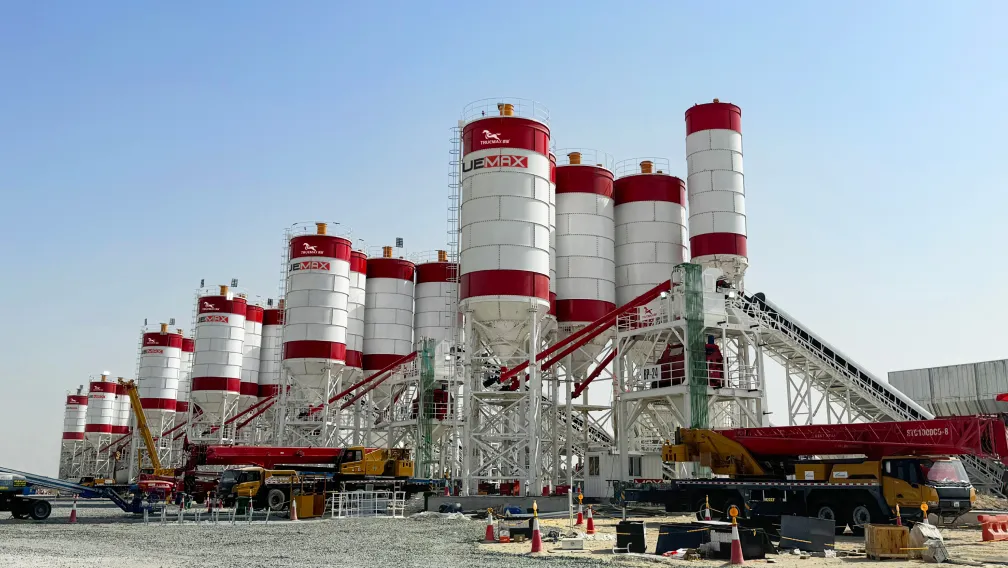
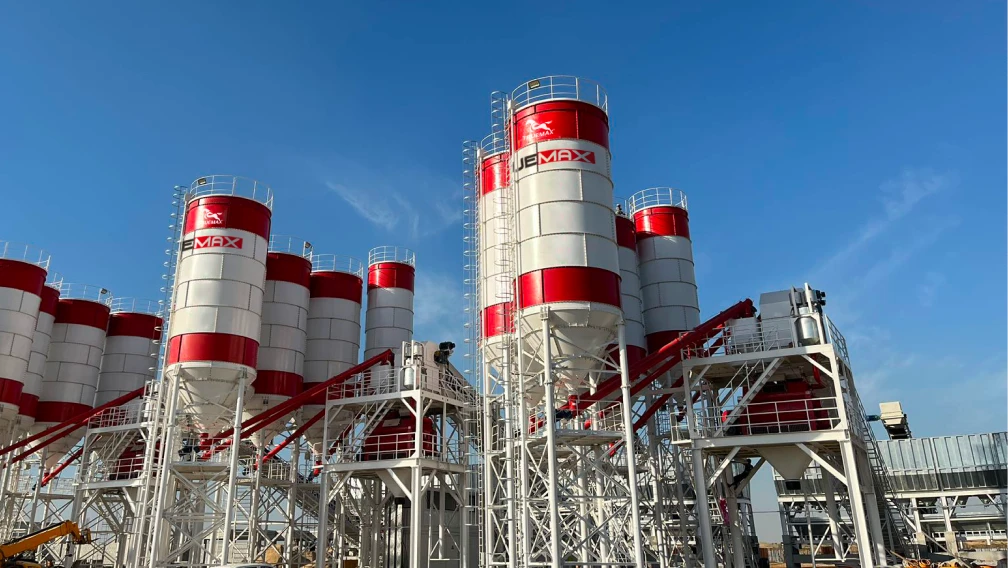
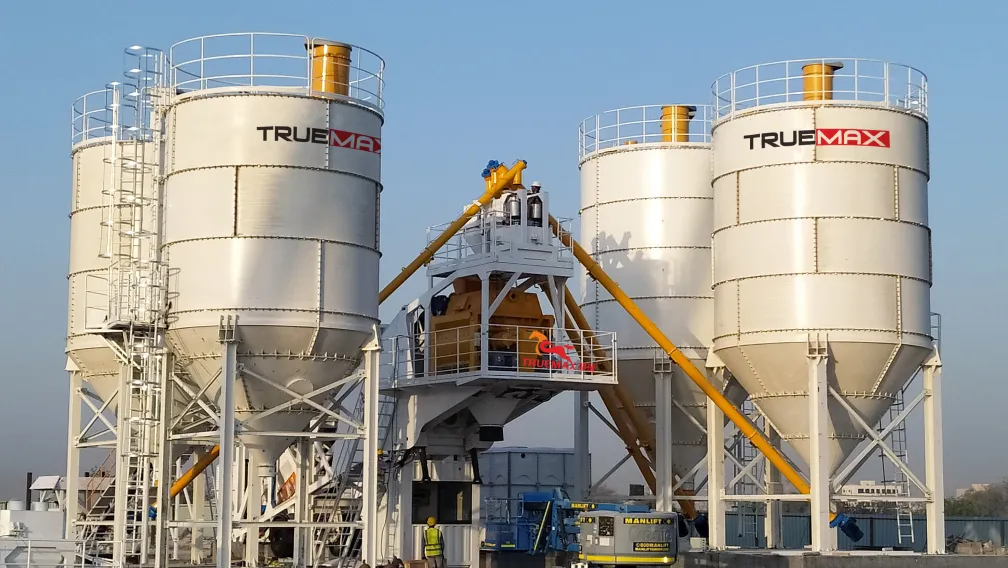
TRUEMAX supplies its concrete batching plants with PLC control, touchscreen HMI, recipe and batch-record management as standard, and configures microwave moisture correction, remote monitoring and reporting formats to each project's QA requirements. The same engineering team supports commissioning, calibration training and remote diagnostics after delivery.
To specify the control level for your plant, send your capacity target, mix list and QA reporting requirements through the contact page; you will receive a configuration covering the PLC platform, sensors, software functions and any integration with dispatch or ERP you plan. Existing installations can also be reviewed for a control-system retrofit as part of a broader project solution.
-

TrueMax
Concrete & Construction Equipment Manufacturer
Established in 2003, Truemax designs, manufactures, and delivers concrete pumping equipment, crushing machinery, and construction hoisting systems from our own factory in Haining, China to jobsites in over 120 countries.