

 LANGUAGE

1. Wear Parts Decide Uptime, Not the Nameplate
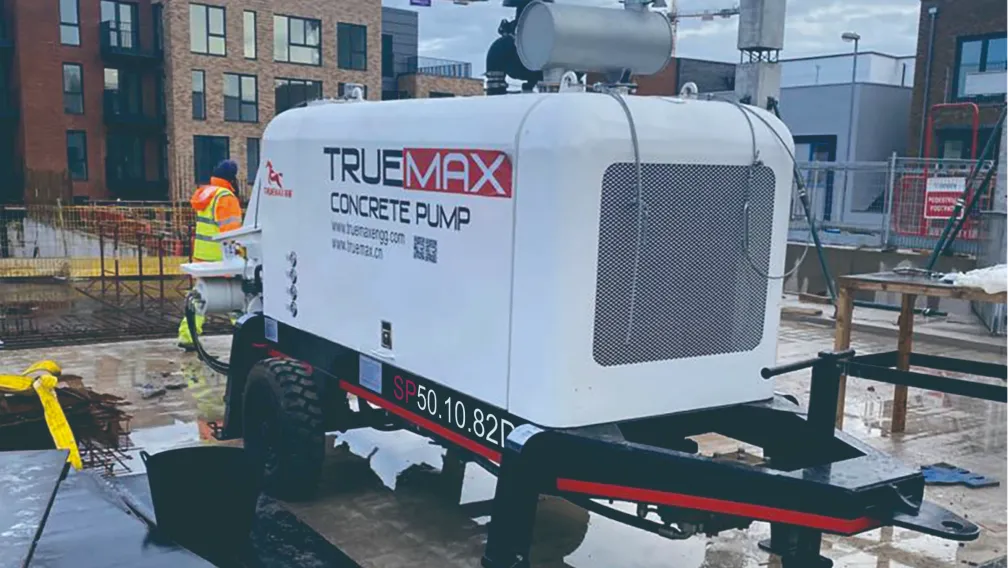
A concrete pump's purchase price is paid once. Wear parts are paid every month the machine works. On a typical stationary concrete pump running 15,000 to 25,000 m³ per year, the cutting ring, spectacle plate, pistons, delivery cylinders and pipeline together account for the largest share of controllable operating cost after fuel and labor. Contractors who track these parts by pumped volume keep their availability high; those who replace parts only after failure lose pour days and pay emergency freight.
The practical approach is simple: know the expected service life of each wear part in cubic meters, log the actual volume pumped, and schedule replacement before the wear limit. This article gives working life ranges from field data, a maintenance schedule you can adapt, and the checks that extend each part's life. The figures assume standard structural concrete with natural aggregates; recycled aggregate, crushed stone with high flakiness, and silica-rich mixes shorten every interval.
2. The Sealing Pair: Cutting Ring and Spectacle Plate
The cutting ring and spectacle plate form the sealing pair at the hopper outlet. The S-valve swings the ring across the plate with every stroke, cutting through the concrete column while the rubber spring behind the ring holds the two faces tight. Once a gap opens, cement paste is forced between the faces under full pumping pressure, and wear accelerates fast.
Service life depends on material and mix. Hard-faced steel sets typically deliver 20,000 to 30,000 m³. Tungsten carbide sets cost roughly two to three times more and reach 40,000 m³ and beyond in standard mixes. Two field practices extend life at no cost:
- Rotate the cutting ring 90° when the first wear marks appear at the two upper positions. Wear concentrates at two symmetrical points, and rotation presents fresh edge, which can nearly double ring life.
- Keep the gap at zero. Check the sealing gap weekly and retighten the adjusting nut at the first sign of paste leakage. Replace the rubber spring when it loses tension; a weak spring ruins a new ring within weeks.
3. Pistons and Delivery Cylinders
Concrete pistons work inside the delivery cylinders under full line pressure, cooled and lubricated by the water box. Piston life ranges from about 300 to 800 operating hours depending on mix abrasiveness, stroke rate and water-box discipline. Grit in the water box is the main piston killer: change the water daily, flush the box at every washout, and keep the piston lubrication system metering grease on every stroke.
Delivery cylinders with a hard-chrome bore typically last 1,500 to 2,000 operating hours, sometimes far more with disciplined lubrication. Measure bore wear during piston changes. A worn, oval bore destroys new pistons quickly, so replacing pistons into a worn cylinder is wasted money. When bore wear passes the maker's limit, budget for the cylinder pair rather than another piston set.
4. Pipeline: Wear by Position and Material Grade
Pipeline life varies more than any other wear item because it depends on position, material grade and wall thickness. Representative ranges for DN125 line under standard mixes:
| Pipe type | Typical life | Best use |
|---|---|---|
| ST52 single-wall, 4.5 mm | 12,000–20,000 m³ | Ground line, low-pressure work |
| Hardened 45Mn2 single-wall | around 30,000 m³ | Deck and boom pipe below 40 m booms |
| Twin-wall (hardened inner liner) | 50,000–80,000 m³ | Boom pipe above 40 m, high-rise risers, first sections after the pump |
| Rubber end hose | 10,000–12,000 m³ | Flexible placement at the pour point |
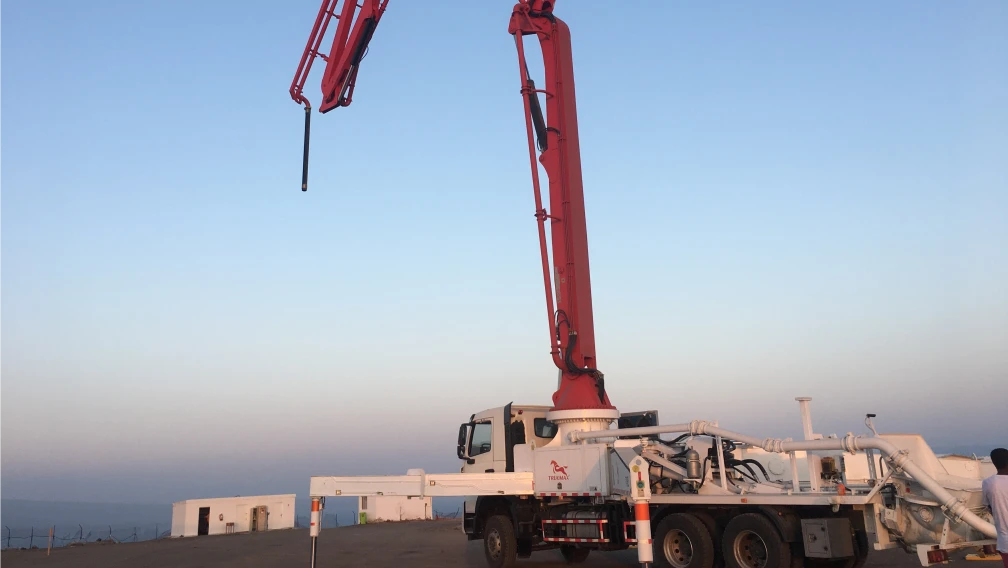
Wear is positional. The first straight sections and the first elbow after the pump outlet see the highest velocity and wear fastest; boom tip elbows follow. Log volume per section, rotate ground-line sections between high-wear and low-wear positions, and move each section one position down the line at set intervals. This rotation practice alone spreads wear so evenly that total pipe cost per cubic meter drops noticeably. For high-rise work with a truck-mounted boom pump or a stationary pump feeding a riser, specify twin-wall pipe for the riser and the first 20 to 30 meters of ground line.
Safety sets the replacement limit. Measure wall thickness with an ultrasonic gauge at elbow extrados and straight-section wear zones. Single-wall line below its safe minimum thickness must come out of service, because a burst under pressure is a serious injury risk, not an inconvenience.
5. Lubrication and Hydraulic Oil Discipline
Two cheap consumables protect expensive parts. The centralized grease system feeding the S-valve bearing, agitator shaft and piston lubrication points must deliver on every stroke; an empty reservoir or blocked metering line shows up later as a seized bearing or scored cylinder. Check reservoir level daily and purge the lines weekly.
Hydraulic oil condition decides the life of pumps, valves and seals. Follow the maker's grade, typically ISO VG 46 in temperate climates, keep the breather and filler clean, and change oil and filters at the specified hour interval, commonly 1,000 to 2,000 hours for the first years of service. Oil analysis once or twice a year costs little and catches water ingress and particle contamination before they become a main-pump failure. Overheating shortens oil life fast, so keep cooler fins clean and verify the fan cycle in hot climates.
6. A Practical Maintenance Schedule
The schedule below works for a fleet pump or a site-based stationary unit. Adjust hour-based items to your actual duty cycle.
| Interval | Tasks |
|---|---|
| Daily | Change water-box water; check grease reservoir; inspect cutting-ring gap and paste leakage; check hoses and clamps; full washout including S-valve |
| Weekly | Purge lubrication lines; inspect pistons through water box; check hydraulic oil level and cooler cleanliness; torque check on pipeline clamps and mounting bolts |
| 250–300 hours | Inspect pistons and measure against wear limit; rotate cutting ring if wear marks appear; inspect first-elbow wall thickness |
| 500–1,000 hours | Measure pipeline wall thickness at marked points; inspect hopper wear parts and agitator shaft seals; check S-valve bearing play |
| 1,000–2,000 hours | Change hydraulic oil and filters per maker spec; measure delivery cylinder bore; replace wear plates and cutting rings approaching limit; pressure-test relief settings |
| By volume | Replace pipes at their grade limit from the life table; replace end hose at 10,000–12,000 m³ or first sign of carcass damage |
7. Genuine Parts, Copy Parts and the Real Cost Equation
Copy parts cost less per piece and more per cubic meter when they fail early. The failure modes are consistent: cutting rings with shallow hard-facing, pistons with the wrong rubber compound, pipes with under-thickness walls or no heat treatment. A ring that lasts half as long at sixty percent of the price raises cost per cubic meter and doubles the labor and downtime of each change.
Judge suppliers on documentation: hardness values for hard-faced parts, material certificates for pipe steel, and wall-thickness tolerance. A supplier who states a service-life range in cubic meters and accepts warranty claims against it carries risk with you. Build a minimum stock on site: one cutting ring and spectacle plate set, one piston set, one end hose, clamps and seals per pump, plus pipe sections for the high-wear positions. This stock costs less than a single lost pour day.
8. Frequently Asked Questions
Q1: How long does a cutting ring last on a concrete pump?
A: A hard-faced steel cutting ring typically lasts 20,000 to 30,000 m³ of standard concrete, and tungsten carbide versions reach 40,000 m³ or more. Keeping the sealing gap at zero and rotating the ring 90° at first wear marks can nearly double the interval.
Q2: What wears out first on a concrete pump?
A: Pistons and the cutting ring usually wear first, followed by end hoses and the first pipeline sections after the pump outlet. Pistons may need replacement every 300 to 800 operating hours depending on the mix and water-box maintenance.
Q3: How do I know when pump pipeline must be replaced?
A: Measure wall thickness with an ultrasonic gauge at elbows and the first straight sections, and compare against the maker's safe minimum. Track pumped volume per section as a planning tool: ST52 line typically reaches its limit at 12,000 to 20,000 m³, twin-wall at 50,000 to 80,000 m³.
Q4: Is twin-wall pipe worth the higher price?
A: For high-wear positions, yes. Twin-wall pipe costs more per meter but lasts three to four times longer than ST52, so cost per cubic meter drops and change-outs halve. For low-volume ground line on short projects, ST52 remains the economical choice.
Q5: How much should I budget for wear parts per cubic meter?
A: With scheduled maintenance and quality parts, wear parts typically represent a single-digit percentage of total pumping cost per cubic meter, varying with mix abrasiveness and pumping pressure. Track your own cost per m³ by part family for one quarter; the data will show where the money goes and which upgrade pays back first.
Q6: Can I mix genuine and aftermarket parts on the same pump?
A: Yes, provided each part meets the original specification. Verify dimensions, hardness and material certificates. A worn or out-of-tolerance mating part shortens the life of the genuine part it works against, so replace sealing pairs as sets rather than mixing new and worn components.
9. Parts Support From the Equipment Manufacturer
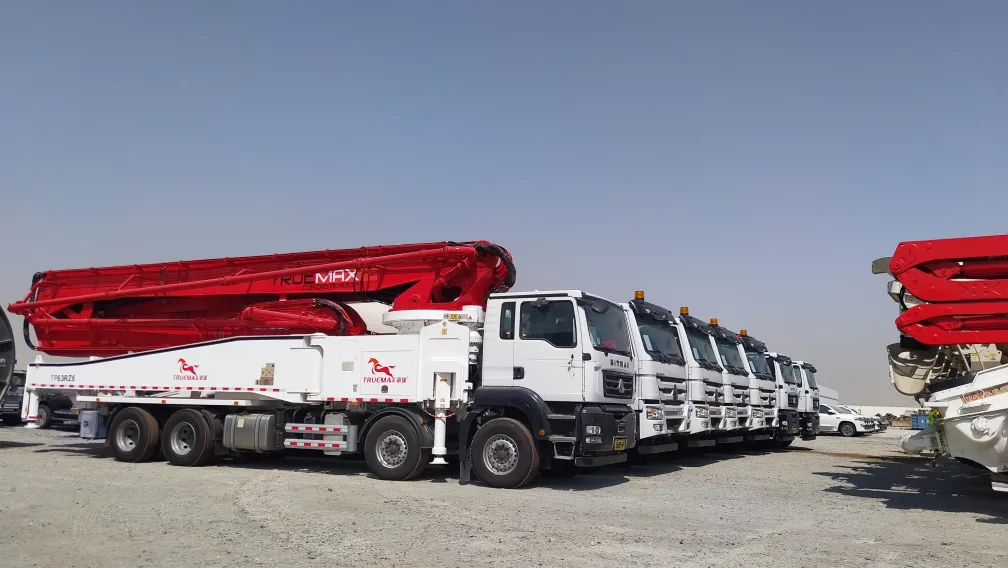
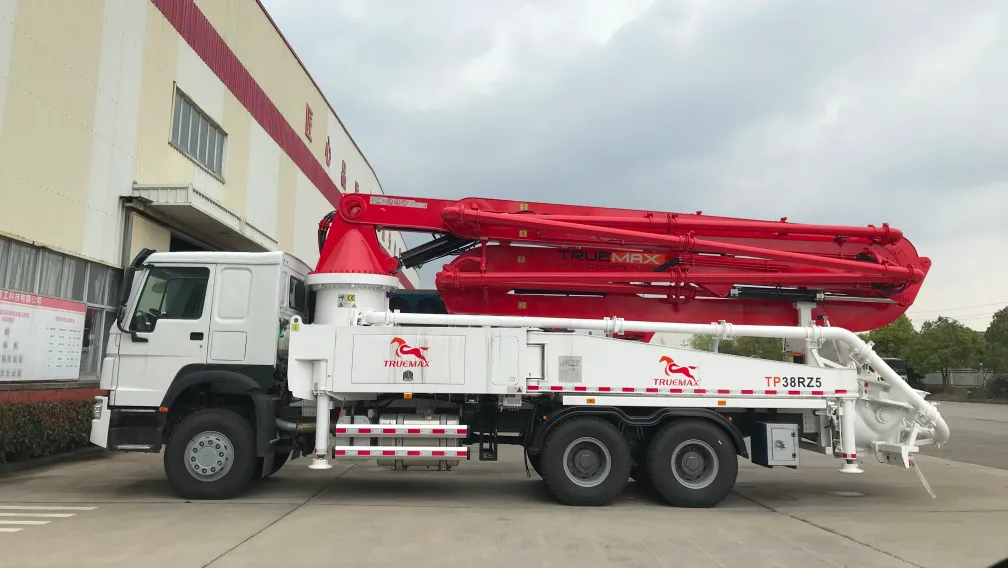
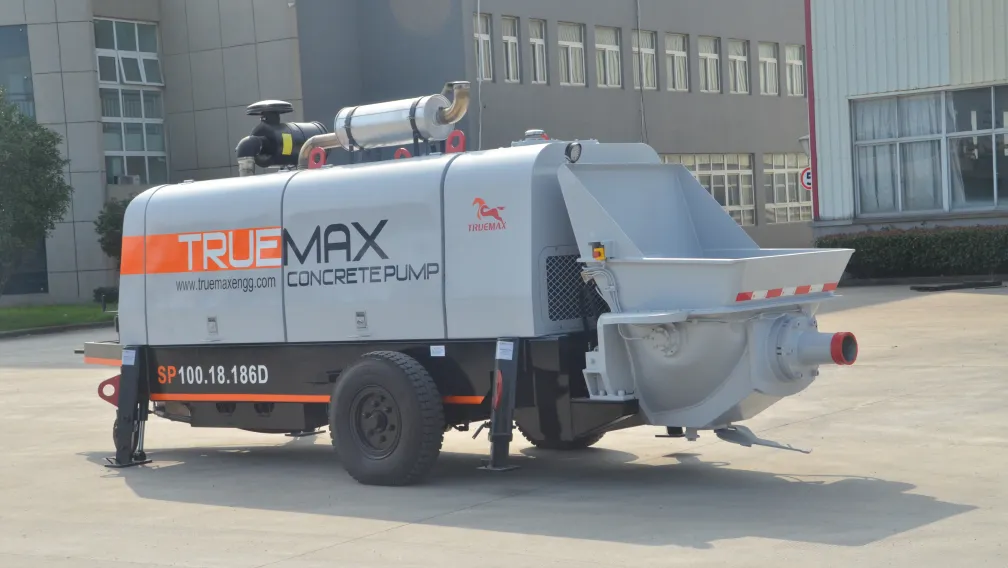
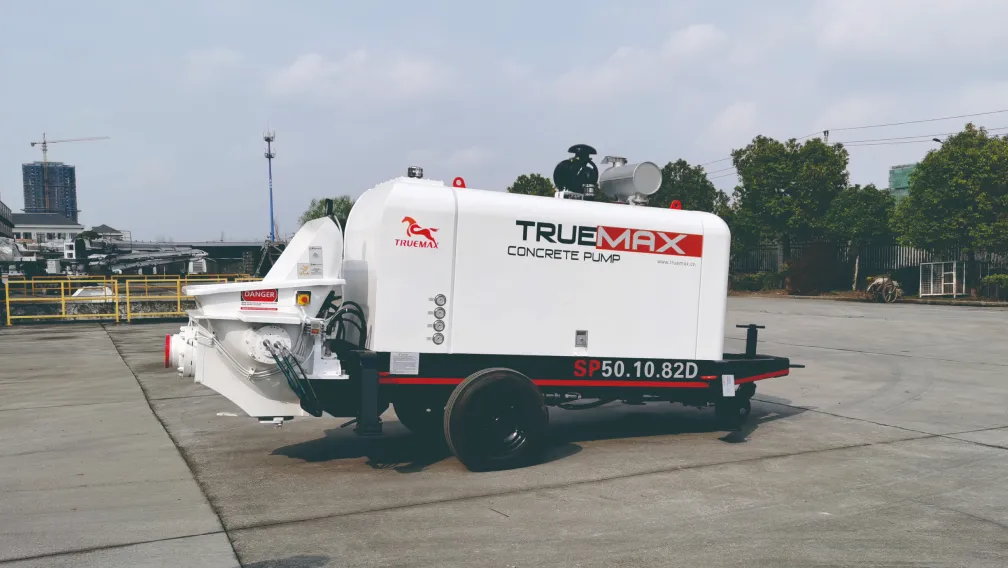
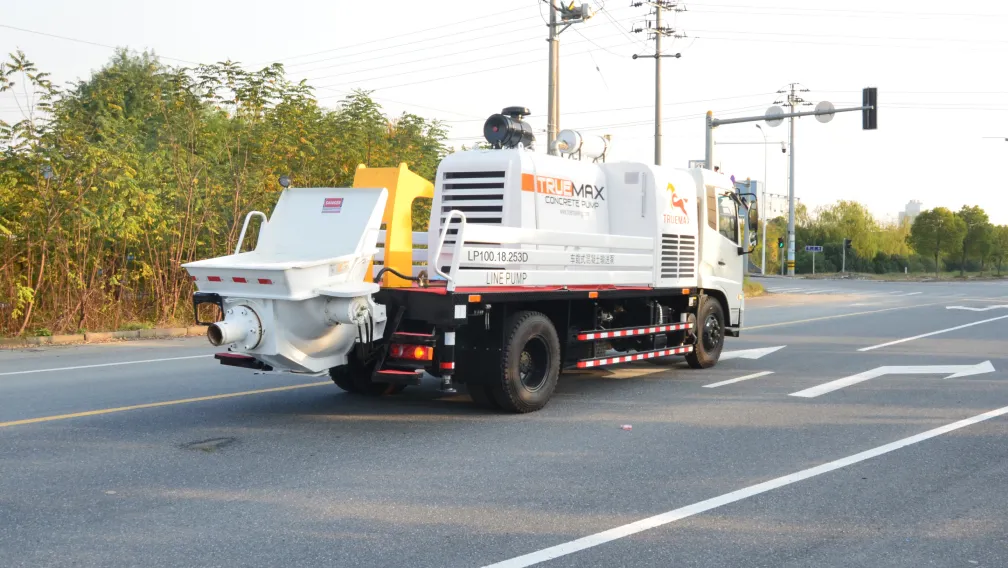
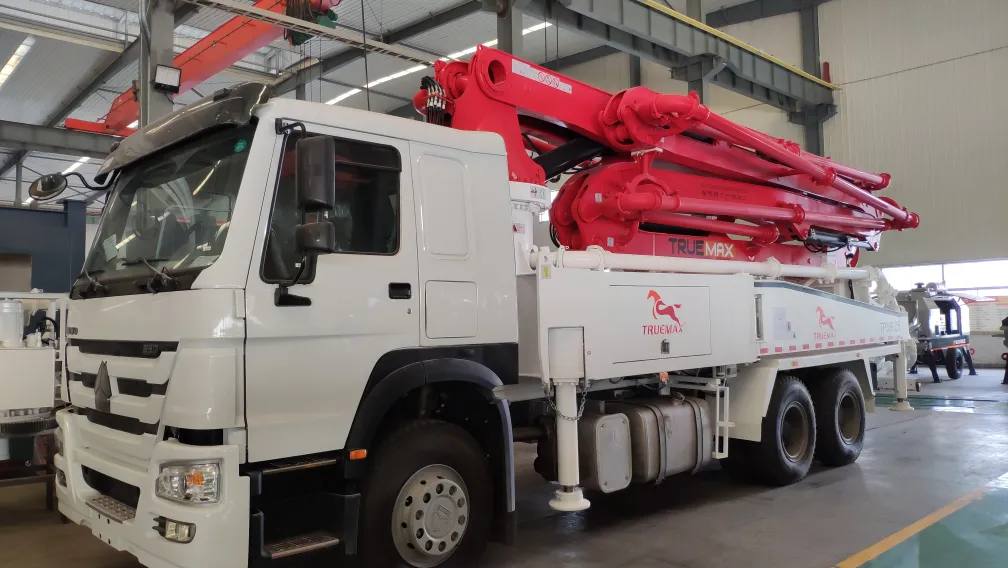
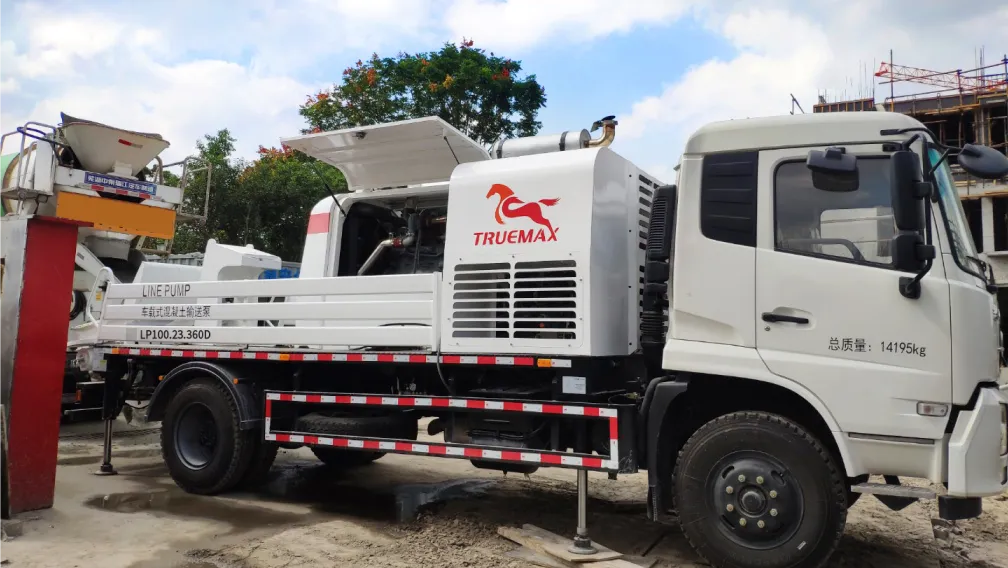
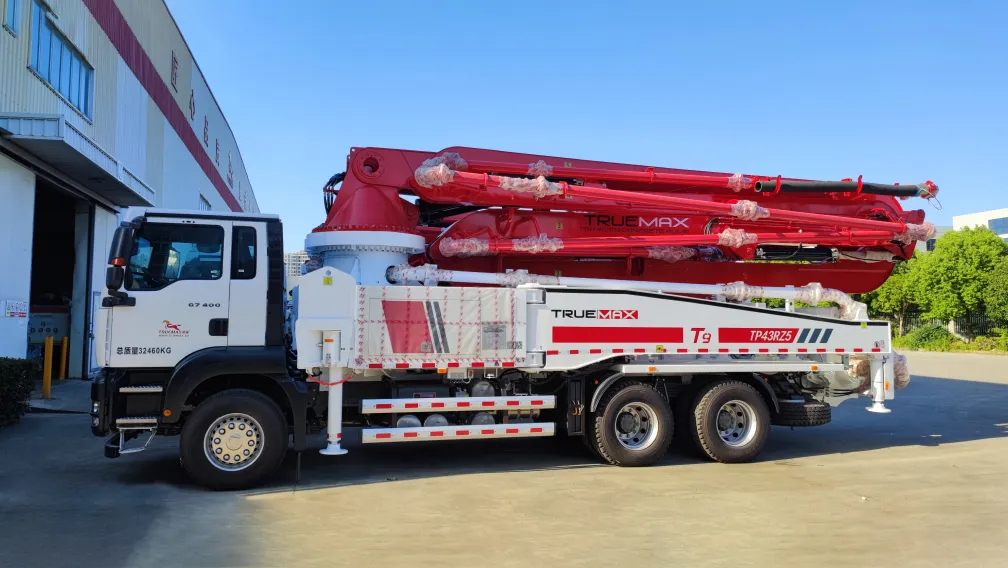
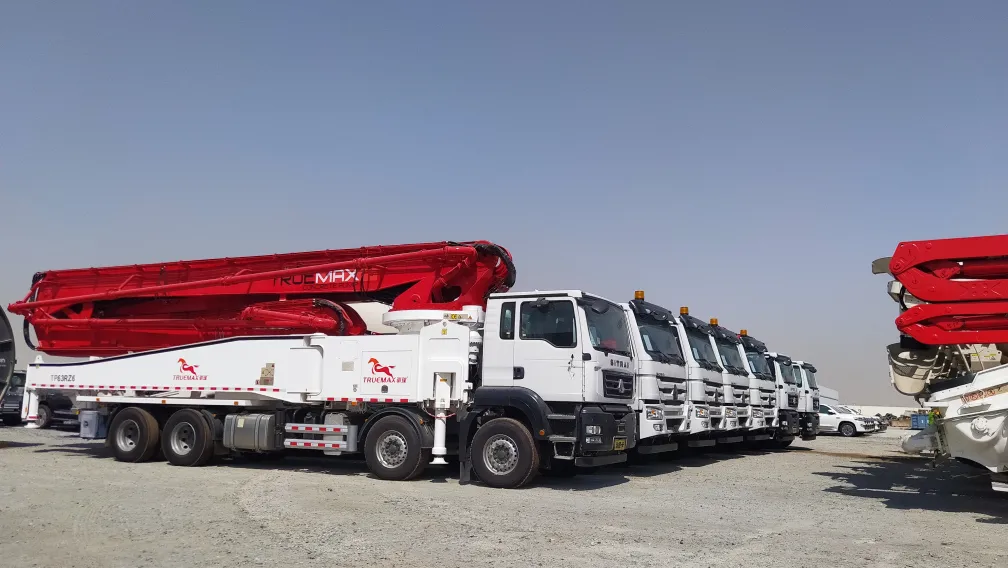
TRUEMAX supplies the full wear-parts range for its stationary concrete pumps, truck-mounted line pumps and boom pumps, including cutting rings, spectacle plates, pistons, cylinders, S-valves and pipeline in ST52, hardened and twin-wall grades. Parts are manufactured to the original drawings, which keeps fit and service life consistent across orders.
Send your pump model, serial number and a photo of the worn part through the contact page, and the parts team will confirm the correct part number, quote current stock, and suggest a site stock list matched to your annual volume. For maintenance planning on a complete pumping package, the project solutions page shows how equipment and parts support are bundled.
-

TrueMax
Concrete & Construction Equipment Manufacturer
Established in 2003, Truemax designs, manufactures, and delivers concrete pumping equipment, crushing machinery, and construction hoisting systems from our own factory in Haining, China to jobsites in over 120 countries.