

 LANGUAGE

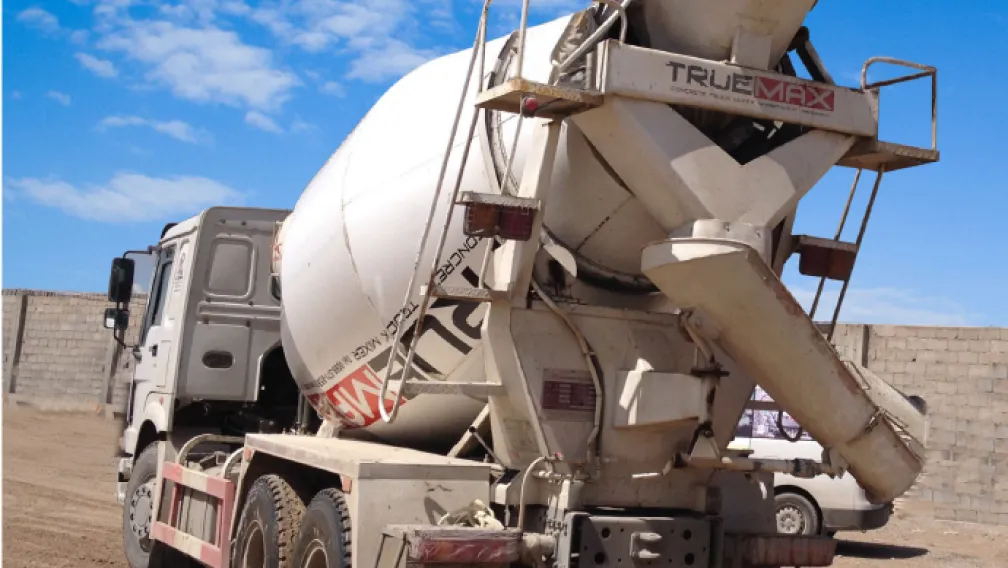
Selecting a concrete truck mixer requires matching two distinct mechanical systems: the rotating mixing assembly and the heavy-duty truck chassis underneath it. Unlike standard dry-freight haulers that carry static, low-centre-of-gravity cargo on paved highways, a transit mixer hauls a shifting, high-density liquid mass across steep grades, unpaved quarry tracks and rutted jobsite access roads. Every cubic metre of fresh structural concrete weighs roughly 2,400 kg, and the rotating drum shifts that mass laterally during cornering. Specifying an under-engineered chassis leads to twisted frame rails, premature clutch or planetary gearbox failure, brake fade on long descents and bogged vehicles at the pour point.
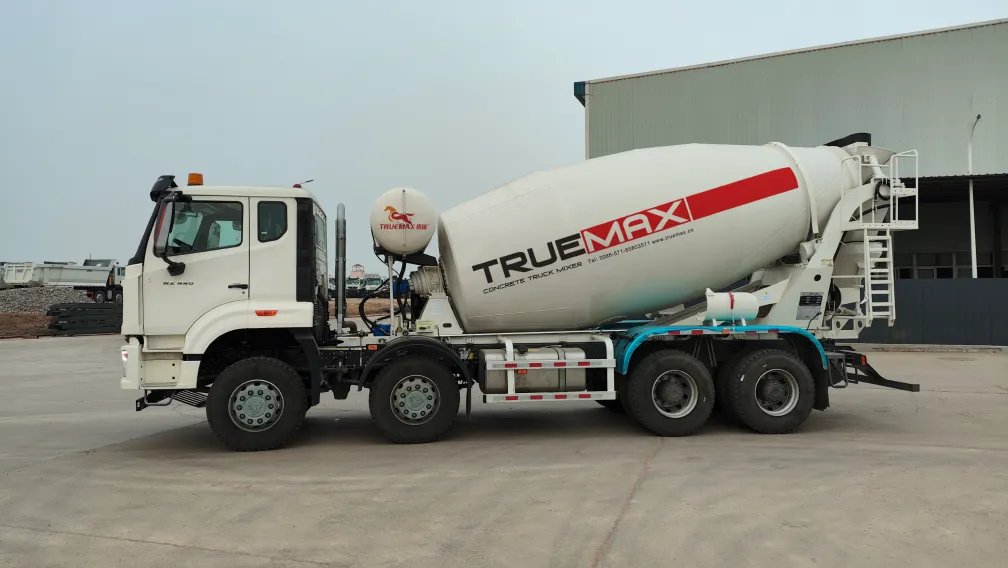
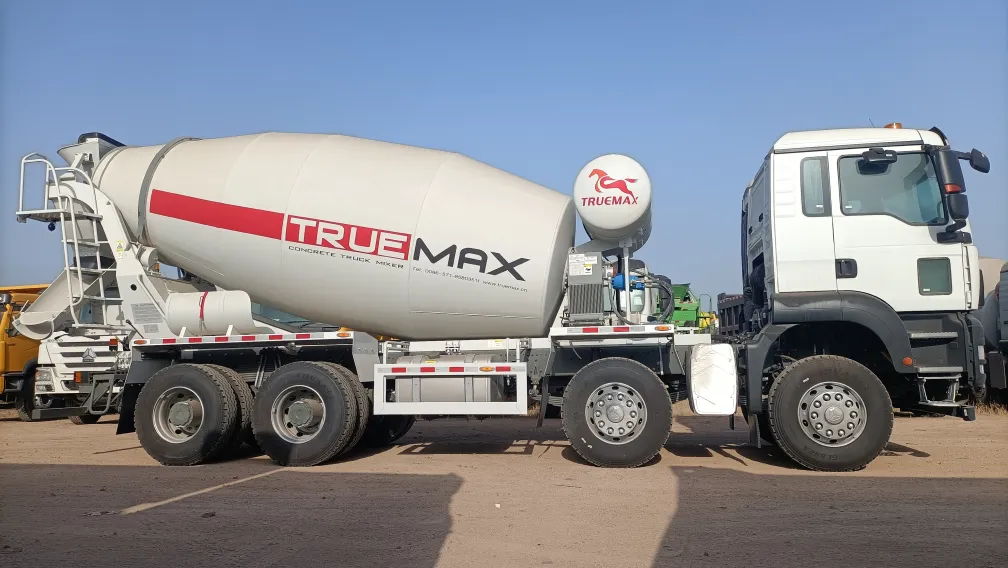
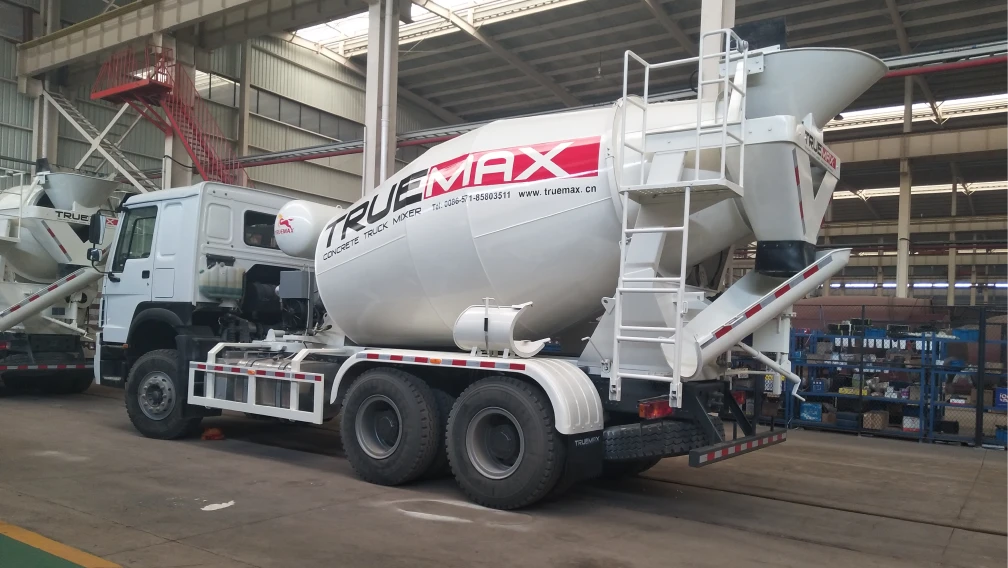
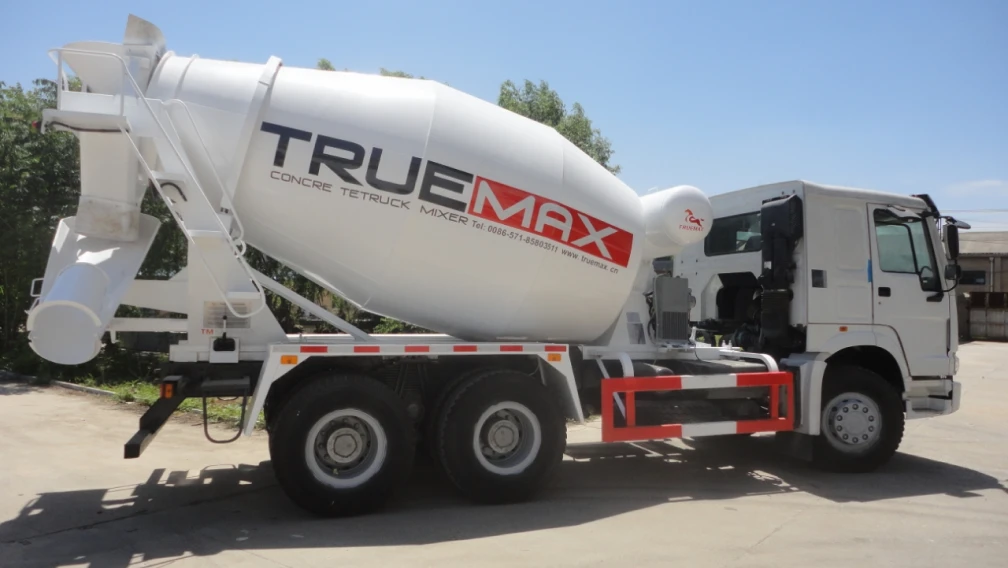
A heavy-duty concrete mixer chassis requires a double-layer reinforced ladder frame, a high-torque engine driving a rear-engine Power Take-Off (REPTO) for continuous drum rotation, hub-reduction axles with inter-wheel and inter-axle differential locks for unpaved site traction, and a hydrodynamic or eddy-current retarder to prevent service brake fade under full load.
1. Engine Torque Reserve and Power Take-Off (PTO) Architecture
A mixer truck engine performs two simultaneous duties: propelling a 30-to-42-metric-ton vehicle and driving the hydraulic pump that turns the drum. When climbing a 12% to 15% haul road out of a valley batching plant with 10 to 12 m³ of low-slump concrete, the hydraulic drum drive alone consumes 35 to 55 kW of continuous power during agitation and peak charging cycles.
Engine selection should focus on flat low-end torque curves (typically 1,500 to 2,100 Nm between 1,000 and 1,400 rpm) rather than peak highway horsepower. Equally important is the PTO configuration:
- Rear-Engine Power Take-Off (REPTO): Driven directly from the engine flywheel housing, REPTO maintains uninterrupted hydraulic power to the drum regardless of transmission gear changes or clutch actuation. This is the mandatory standard for 8 m³ to 14 m³ mixers operating in hilly terrain or congested urban stop-and-go traffic.
- Transmission-Mounted PTO: Suitable only for smaller 3 m³ to 6 m³ mixers on flat routes, as depressing the clutch interrupts drum rotation during gear shifts.
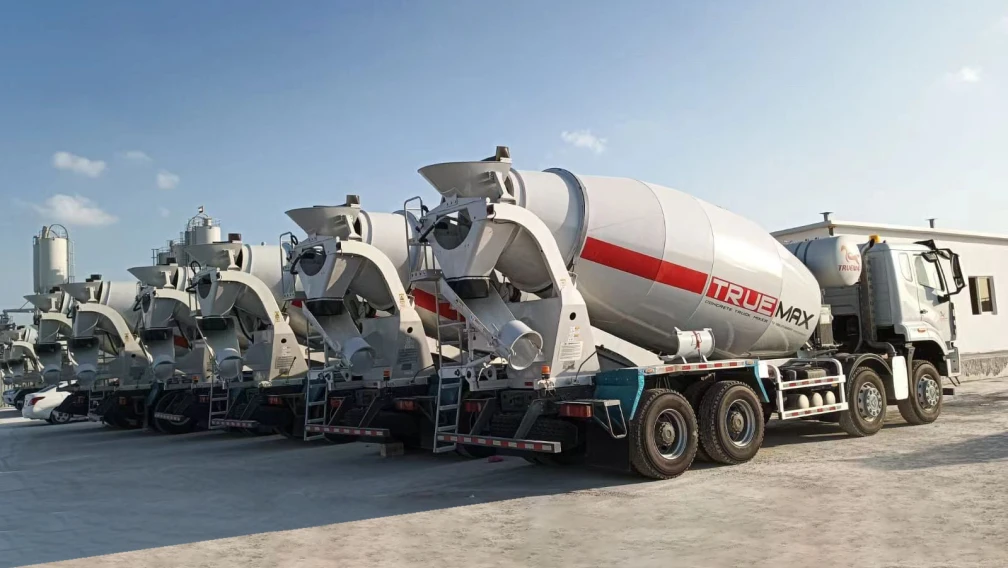
For large-volume fleets running units such as the CTM3–CTM14 concrete mixer series, pairing a 340 to 400 hp high-torque diesel engine with a manual 10- or 12-speed overdrive or direct-drive gearbox provides the gear-step density needed to keep the engine inside its peak torque band on steep grades.
2. Axle Configurations, Frame Strength, and Payload Balance
Chassis axle layout determines both legal road payload and off-road maneuverability. Matching the chassis rating to drum volume prevents chronic axle overloading:
| Chassis drive layout | Typical GVW rating | Recommended drum capacity | Primary operating environment |
|---|---|---|---|
| 4×2 | 16–18 t | 3–4 m³ | Narrow rural roads, municipal patching and small residential pours |
| 6×4 | 25–31 t | 6–9 m³ | Urban ready-mix delivery with tight turning radii and moderate site access |
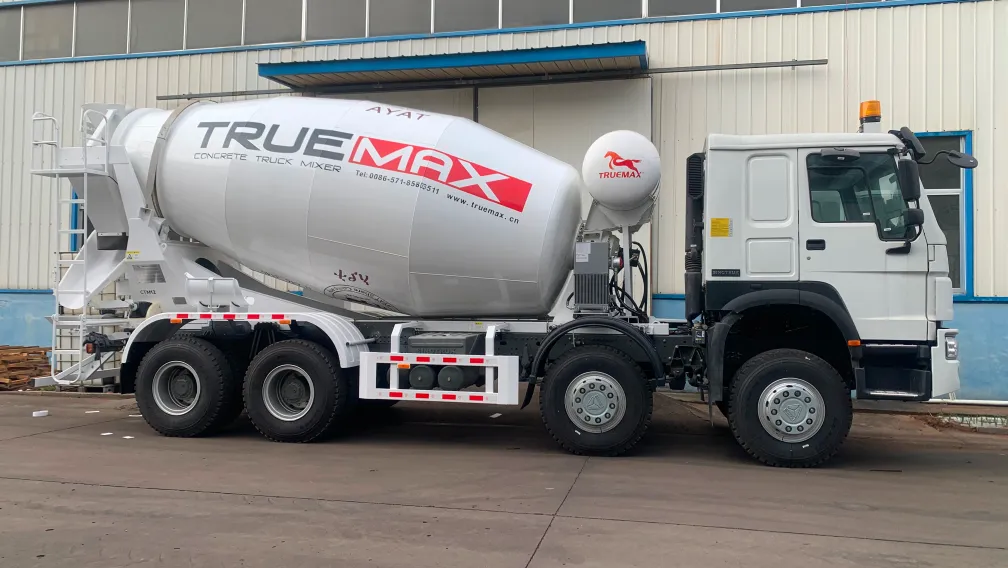
| 8×4 | 35–44 t | 10–14 m³ | High-volume infrastructure, batch plant shuttle fleets and mega-projects |
| 6×6 / 8×8 all-wheel drive | 28–42 t | 8–12 m³ | Hydroelectric dams, mountain tunnels, desert sand and ungraded mining tracks |
Because the mixer subframe concentrates torsional stress where the front pedestal and rear roller brackets bolt to the truck, the chassis must use a high-tensile double-channel ladder frame (for example, 8+5 mm or 8+8 mm alloy steel rails) with a full-length subframe integrated via flexible shear plates at the front and rigid brackets at the rear. Single-wall highway frames crack behind the cab within months of off-road jobsite twisting.
3. Hub-Reduction Axles and Differential Locks for Unpaved Sites
Jobsite delivery rarely ends on paved asphalt. A fully loaded mixer must reverse over soft clay, wet gravel ramps and deep wheel ruts to reach the pump hopper. Standard single-reduction highway axles lack the ground clearance and final-drive torque multiplication needed in these conditions, causing axle-shaft shear when one wheel spins and suddenly regains traction.
Heavy off-road mixer specifications rely on planetary hub-reduction rear axles with a high final drive ratio (typically 4.76 to 5.73). Placing the final gear reduction inside the wheel hubs reduces torque stress on the axle half-shafts and raises the differential housing clearance above deep ruts. Combine hub-reduction axles with both inter-axle and inter-wheel differential locks so the driver can lock all driven wheels together before entering mud or loose aggregate.
4. Auxiliary Braking: Preventing Brake Fade on Long Descents
When a 40-ton loaded mixer descends a mountain haul road or steep quarry ramp, relying solely on wheel drum or disc brakes overheats the friction linings rapidly. Once brake drum temperatures exceed 350°C to 400°C, thermal expansion and lining glazing cause severe brake fade—leaving the driver with minimal stopping power while carrying a live concrete load that cannot be jettisoned.
An auxiliary braking package is essential for any fleet operating on grades exceeding 5%:
- Engine compression brake (Jake brake): Absorbs 60% to 75% of engine rated power at higher rpm, handling routine speed control on moderate grades without touching the service brakes.
- Hydrodynamic or eddy-current retarder: Mounted on the transmission output, a retarder delivers continuous, wear-free braking torque across long descents, keeping service brakes cool for emergency stops and doubling brake lining life.
Specify an integrated cooling radiator capacity matched to the retarder's heat-rejection load so engine coolant temperatures stay within normal operating limits during prolonged downhill braking.
5. Suspension, Tires, and Center-of-Gravity Control
The inclined axis of a mixer drum places the center of gravity higher than on a dump truck, and the clockwise rotation of the blades shifts concrete slightly toward one side of the drum. On uneven ground or cambered turns, high-center-of-gravity roll moments can tip a poorly suspended truck.
Multi-leaf parabolic or semi-elliptic heavy-duty springs (such as 10-leaf front and 12-leaf bogie rear packs) with reinforced anti-roll stabilizer bars resist lateral body roll far better than soft air-ride suspensions. Pair the suspension with deep-tread mixed-service radial tires (such as 12.00R20 or 315/80R22.5 with reinforced sidewalls) to prevent sidewall cuts from sharp crushed aggregate at the batch plant and jobsite.
6. Chassis-to-Upper-Structure Integration and Fleet Standardization
Procuring the chassis and mixer upper structure separately often creates installation delays, mismatched hydraulic flow rates and disputed warranty claims. Integrated factory mounting ensures that the subframe aligns with chassis crossmembers, hydraulic oil coolers have unobstructed airflow, and electrical harnesses for rear drum controls tie cleanly into the cab CAN bus.
For export contractors operating in Africa, the Middle East and Southeast Asia, standardizing on proven platforms—such as the Sinotruk HOWO N7 flagship chassis or Sinotruk HOWO 7 chassis—simplifies spare-parts inventory, local mechanic familiarity and engine diagnostic support across remote projects.
7. Frequently Asked Questions
Q1: Why is a Rear-Engine Power Take-Off (REPTO) recommended for concrete mixer trucks?
A: REPTO draws power directly from the engine flywheel housing rather than the gearbox. This keeps the mixer drum rotating continuously during gear shifts and clutch engagement, preventing concrete segregation or slump loss in traffic and on steep climbs.
Q2: When should a buyer choose an 8×4 chassis instead of a 6×4 chassis?
A: Choose a 6×4 chassis for 6 to 9 m³ drums on urban sites with tight turning radii and strict axle-weight limits. Choose an 8×4 chassis for 10 to 14 m³ drums on high-volume infrastructure projects where maximum payload per trip lowers hauling cost per cubic metre.
Q3: What is the advantage of hub-reduction axles on off-road construction sites?
A: Hub-reduction axles place final gear reduction inside the wheel hubs, which increases ground clearance under the differential housing and lowers torsional stress on the axle shafts when climbing steep, muddy or rutted jobsite tracks.
Q4: Why is a retarder important for loaded mixer trucks in hilly terrain?
A: A loaded 10 to 12 m³ mixer weighs around 38 to 44 tons. On long downhill grades, friction brakes overheat and suffer brake fade. A transmission retarder absorbs braking energy hydraulically or electromagnetically, keeping wheel brakes cool and safe.
Q5: How do mixer subframes attach to the truck chassis without cracking the frame rails?
A: Properly engineered mixers use flexible spring-loaded or shear-plate brackets at the front of the subframe to allow controlled chassis twist on uneven ground, combined with rigid bolted brackets at the rear to anchor the drive and roller loads.
Q6: What tire specification works best for mixed highway and jobsite concrete delivery?
A: Mixed-service heavy-duty radial tires (such as 12.00R20 or 315/80R22.5) with cut-resistant tread compounds and reinforced sidewalls offer the best balance between highway heat dissipation and jobsite puncture resistance.
8. Specify a Matched Mixer Truck Package
A durable transit mixer fleet depends on matching chassis torque, axle reduction, braking capacity and drum volume to your actual haul distance and terrain. TRUEMAX engineers complete concrete truck mixers from 3 m³ to 14 m³ mounted on proven heavy-duty chassis platforms, with custom PTO, retarder and tropical cooling options for demanding export sites. To review payload calculations and chassis configurations for your next project, contact our engineering team with your target drum capacity, road grades and local emission requirements.
-

TrueMax
Concrete & Construction Equipment Manufacturer
Established in 2003, Truemax designs, manufactures, and delivers concrete pumping equipment, crushing machinery, and construction hoisting systems from our own factory in Haining, China to jobsites in over 120 countries.