

 LANGUAGE
1. The Mechanical Dynamics of Underwater Concrete Placement
Marine civil engineering projects, such as bridge pier cofferdams, harbor quay walls, and offshore intake structures, require high-integrity underwater concrete placement. Unlike standard terrestrial pours where gravity and mechanical vibration consolidate the material, underwater placement operates within an active hydrostatic pressure environment. The fundamental operational priority is preventing wash-out—the complete dilution and loss of the cement paste matrix caused by dynamic contact with surrounding water.
Historically, underwater pours relied on crane-suspended passive drop pipes known as tremie pipes, which were fed in batches via drop hoppers. Modern infrastructure builds demand continuous, high-volume structural pours that exceed the productivity of passive systems. General contractors now integrate direct pumping delivery lines into specialized tremie pipes. This methodology couples the continuous output of a land- or barge-mounted concrete pump with the hydro-isolation mechanics of an underwater tremie assembly.
2. Tremie System Principles and Anti-Washout Concrete (AWC) Mix Rheology
Pumping concrete underwater successfully depends on maintaining a continuous, uninterrupted seal between the moving fresh concrete mass and the surrounding water. The discharge mouth of the delivery pipe must remain submerged inside the previously placed concrete mass at all times.
As fresh concrete is pumped down the central pipe, it emerges from the submerged pipe bottom and forces the existing concrete mass upward and outward. This radial displacement mechanism ensures that only the initial surface layer of concrete makes direct boundary contact with the water. The core concrete inside the structural formwork remains completely isolated from dilution, achieving high structural density and uniform compressive strength.
To guarantee placement success, the concrete mix design must be modified into Anti-Washout Concrete (AWC) through advanced chemical admixtures:
- Viscosity-Modifying Admixtures (VMAs): Synthetic polymers or cellulose ether compounds are dosed into the mix. These agents bind free mixing water into long-chain polymer structures, increasing the cohesion of the cement paste and preventing wash-out during unavoidable interfacial water movements.
- High-Range Water Reducers (HRWR): Polycarboxylate-based superplasticizers maintain extreme fluidity (slump flows of 500 mm to 600 mm) without requiring excess water. This high self-consolidating property eliminates the need for mechanical vibrators, which are strictly prohibited in underwater placement due to the risk of inducing severe mix dilution.
- Aggregate Gradation: Coarse aggregate is restricted to well-rounded gravel or cubical crushed stone with a maximum nominal size of 20 mm. Rounded stones reduce internal frictional resistance, allowing the concrete to self-level smoothly beneath the water surface.
3. Batching Plant Precision for Anti-Washout Concrete
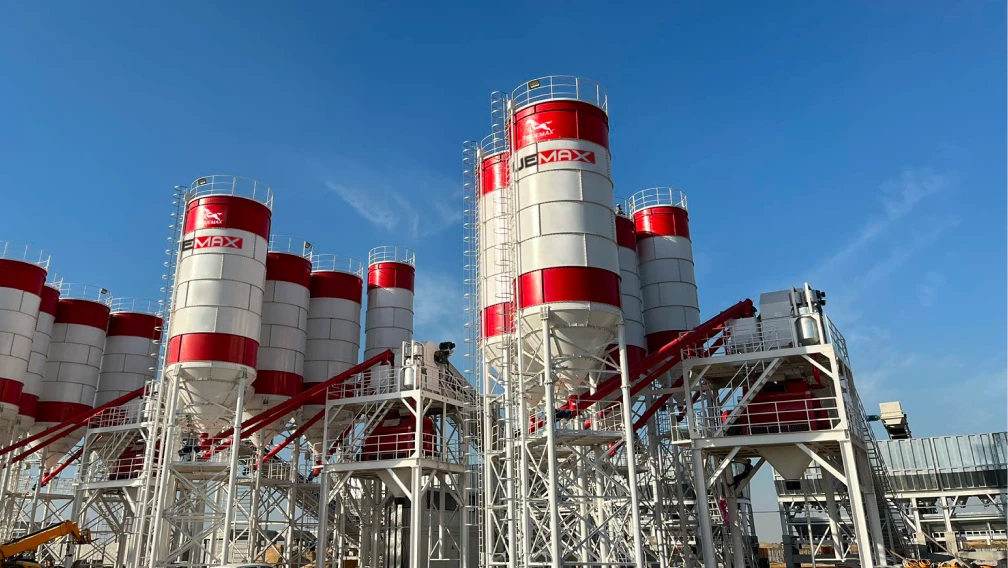
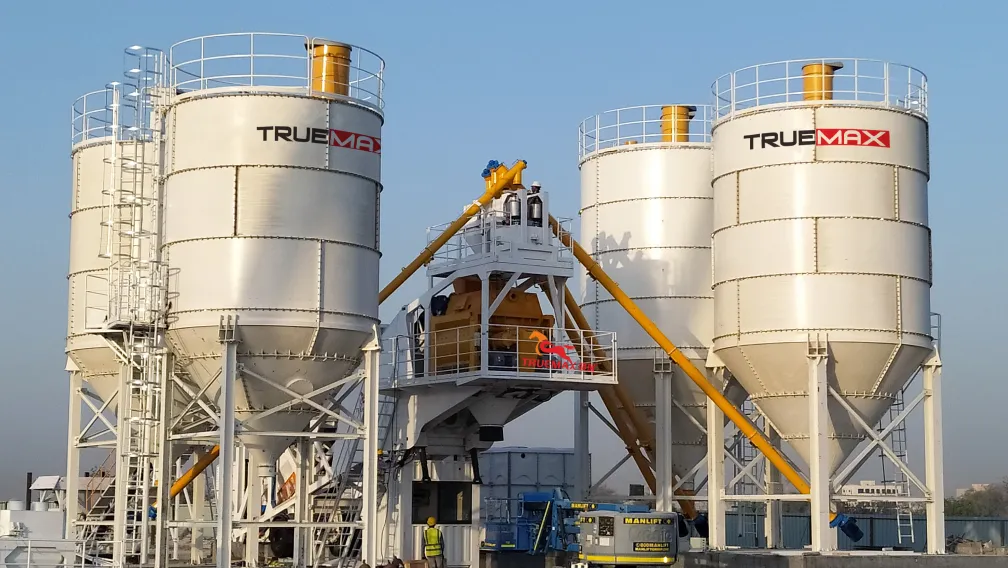
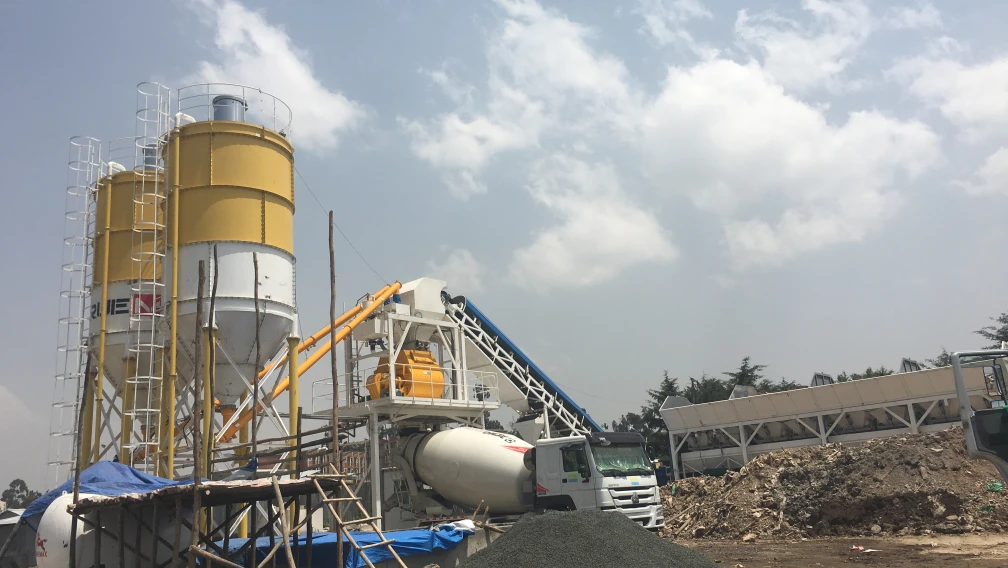
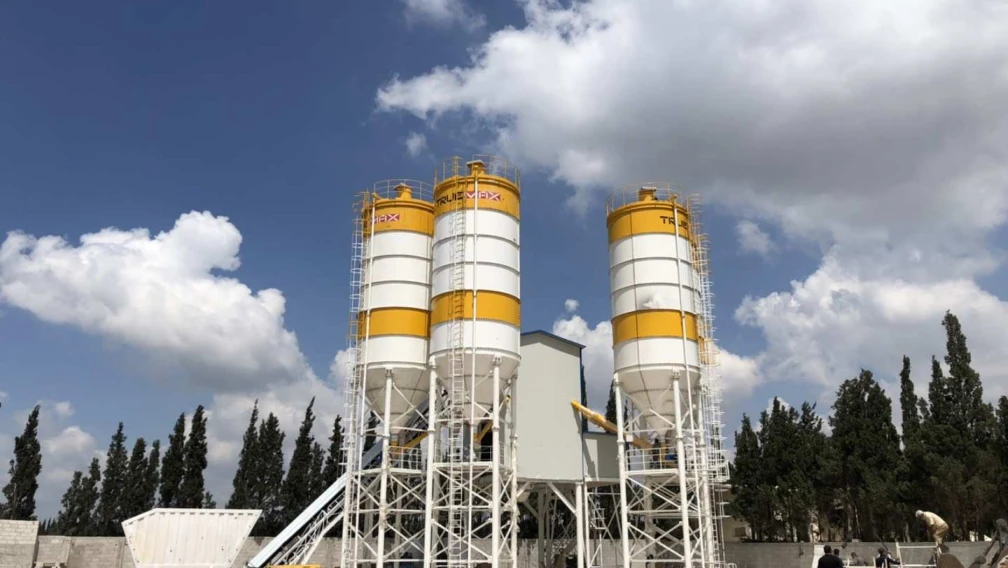
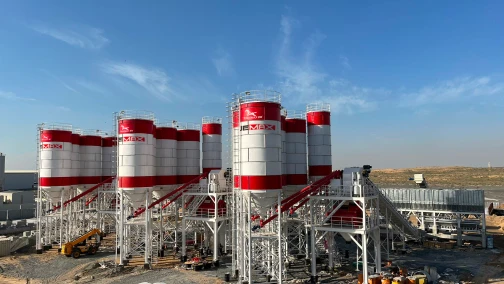
Producing AWC requires tight control over dosing sequences and mixing kinetics. The production parameters at the Concrete Batching Plant directly dictate whether the mix maintains adequate water resistance or separates during discharge.
Plant operators must program extended dry and wet mixing phases. When dosed with dry powder VMAs, the aggregates and cementitious materials require an initial dry-mix cycle of 20 to 30 seconds to disperse the polymer chains evenly before liquid water is injected. The wet mixing cycle must be extended to a minimum of 90 to 120 seconds in a dual horizontal twin-shaft mixer to activate the chemical chains fully. Because underwater concrete cannot be inspected visually once placed, batching tolerances must be controlled within 1 percent for all cementitious powders and liquid chemical additives.
4. Managing Hydrostatic Pressure and Initial Pipe Priming
The primary hydraulic challenge during deep marine pumping is managing the hydrostatic head pressure exerted by the external water column. Water exerts approximately 0.10 bar of external pressure per meter of depth in freshwater, and roughly 0.103 bar per meter in dense seawater.
Before pumping begins, the tremie pipeline is completely flooded with seawater. If concrete is discharged directly into a flooded vertical pipe, the descending aggregate mass will free-fall through the water column, washing away all cement paste and leaving a dry gravel plug at the bottom. To establish an initial hydraulic seal, operators deploy a sacrificial foam pig or sliding mechanical plug inside the pipe throat:
- A dense closed-cell polyurethane foam traveling ball is inserted into the top of the tremie pipeline above the water level.
- A heavy-cement starter grout is pumped behind the plug, pushing the foam ball down the pipeline.
- The weight of the moving concrete column forces the foam plug downward, expelling the seawater ahead of it while acting as a physical barrier between the concrete and the water.
- Once the foam plug reaches the seabed or formwork base, it is pushed out into the pile socket, allowing uncontaminated fresh concrete to form the initial mound around the pipe opening.
Engineering Solution Block: Hydrostatic Balancing Equation
To maintain continuous outward concrete flow without seawater back-siphoning into the delivery pipe, the downward hydraulic pressure inside the pipe ($P_{ ext{pipe}}$) must exceed the external hydrostatic water pressure ($P_{ ext{water}}$):
P_pipe = (Density_concrete * Gravity * Height_concrete) + P_pump
P_water = Density_water * Gravity * Depth_water
The mechanical pump pressure ($P_{ ext{pump}}$) supplied by the ground pump provides the positive pressure differential required to overcome both deep hydrostatic resistance and the shear drag of the surrounding concrete mound.
5. Marine Logistics: Synchronizing Barge Pumping Fleets
Underwater concrete placement operations cannot be stopped once the seal is established. If concrete delivery halts for more than 30 to 45 minutes, the concrete around the tremie pipe mouth begins its initial set. When pumping resumes, the pipe pressure will spike, and the incoming concrete may breach through the hardened crust, venting directly into the open water column and causing widespread material contamination.
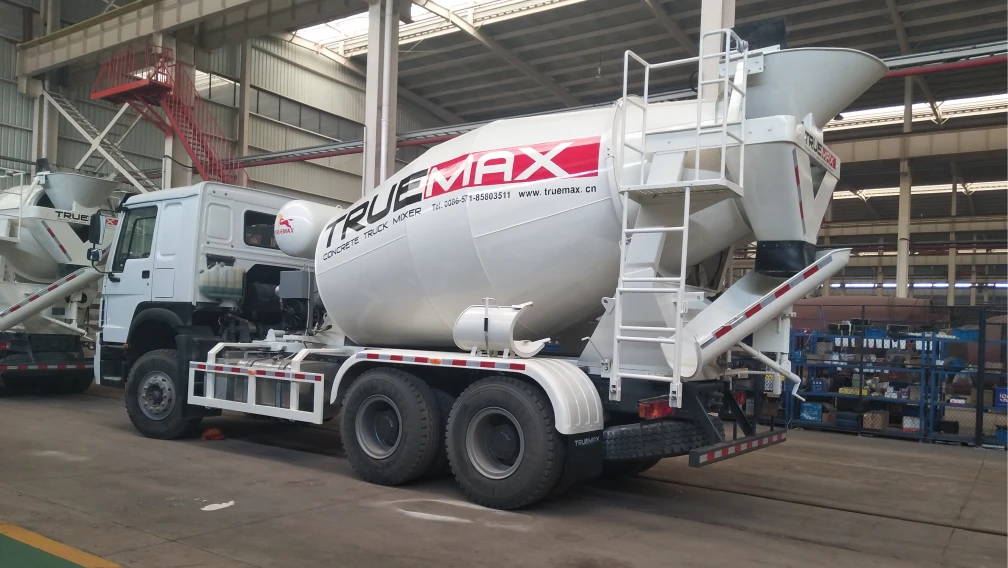
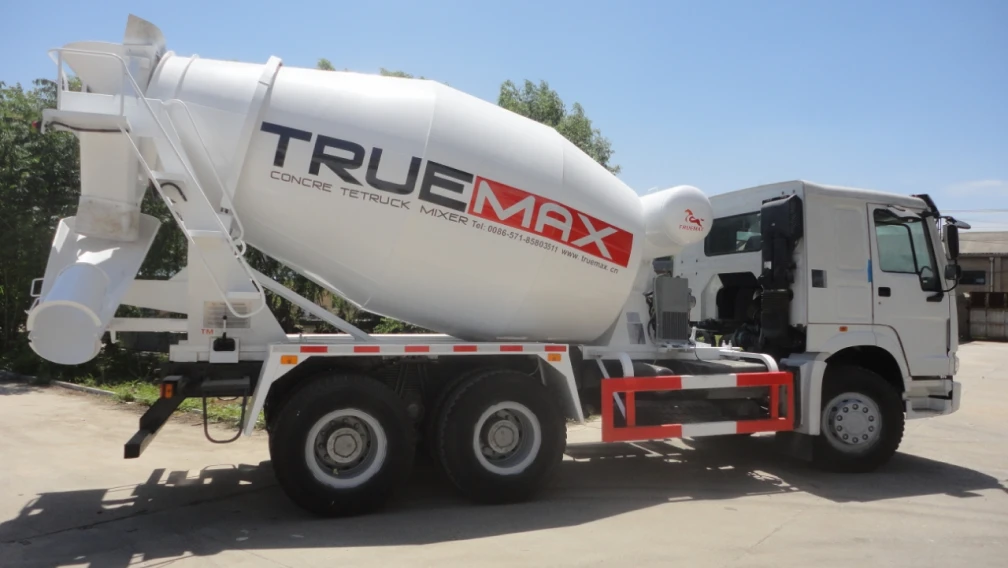
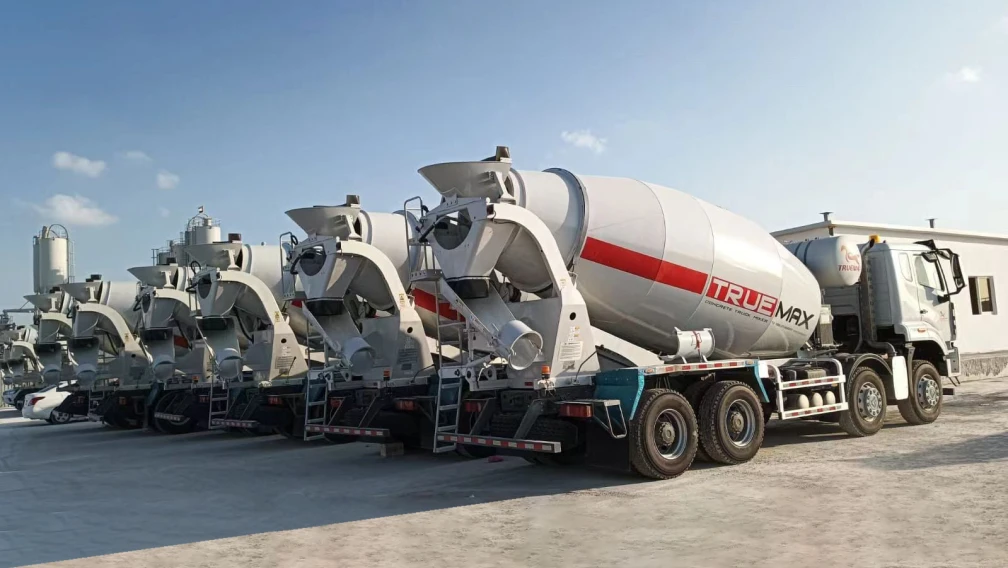
Maintaining continuous supply requires a structured maritime logistics chain. Ready-mix transit from the shore plant is handled by a rotating fleet of Concrete Truck Mixers driven directly onto roll-on/roll-off (Ro-Ro) supply barges. In offshore locations, dedicated barge-mounted batching facilities are anchored alongside the construction footprint to eliminate transit delays.
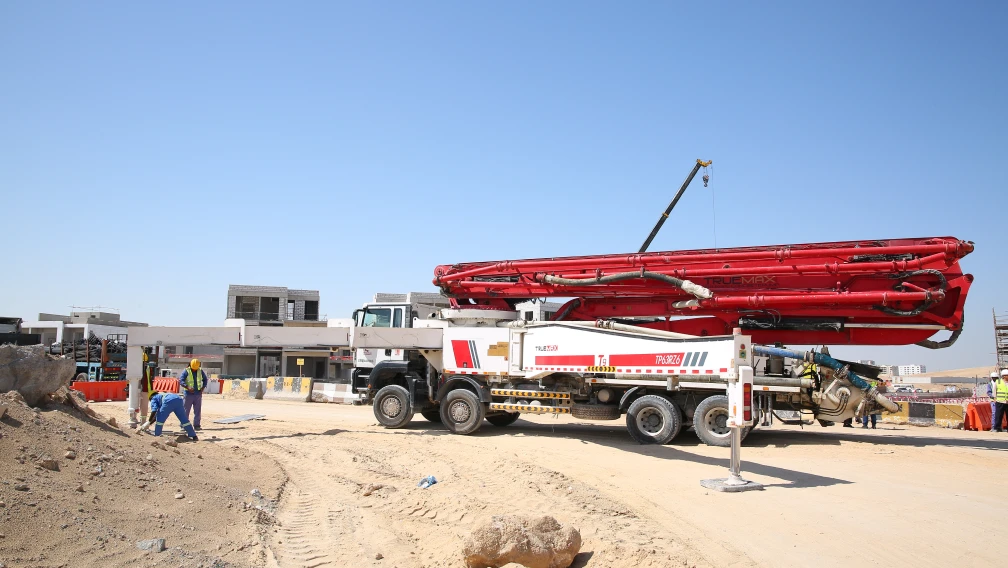
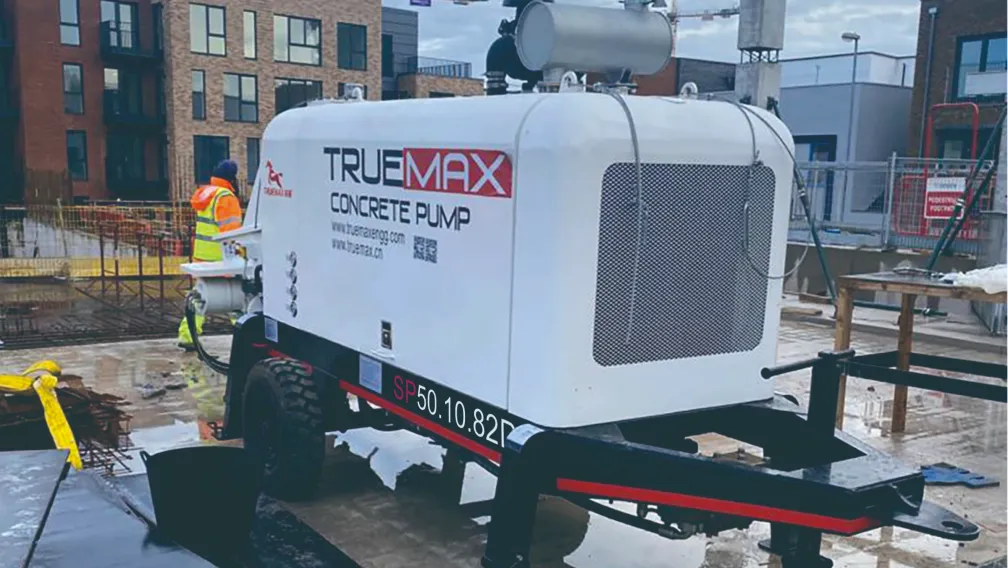
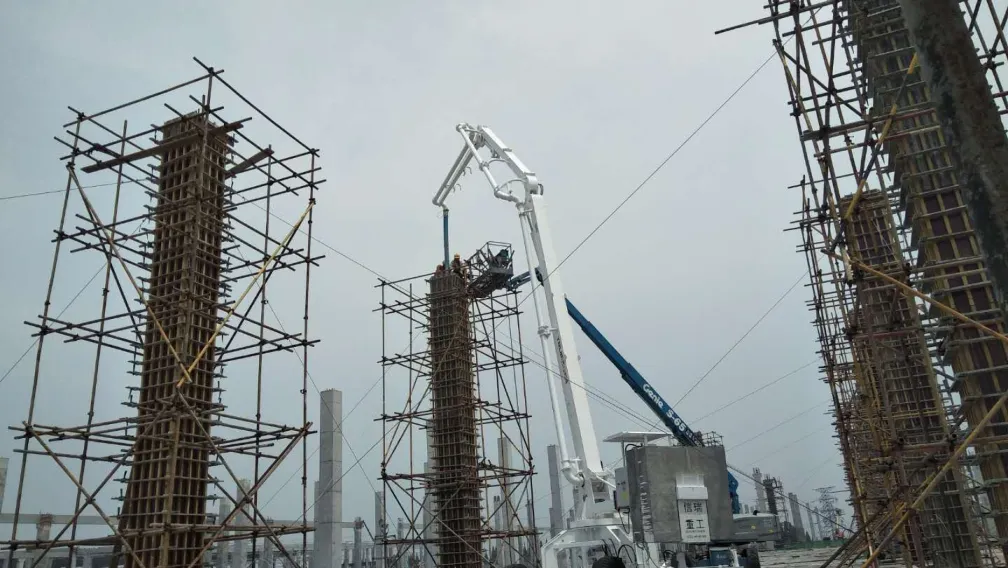
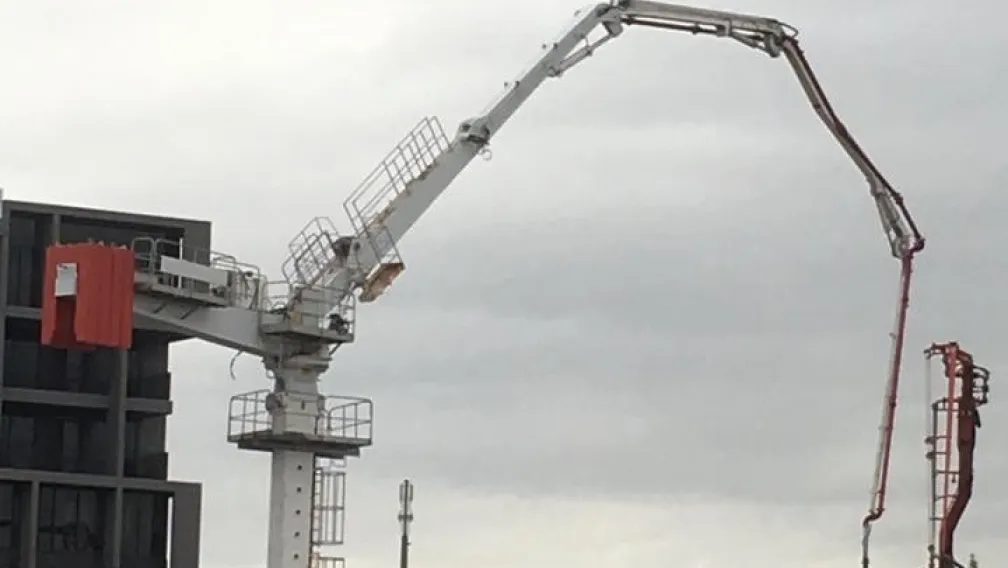
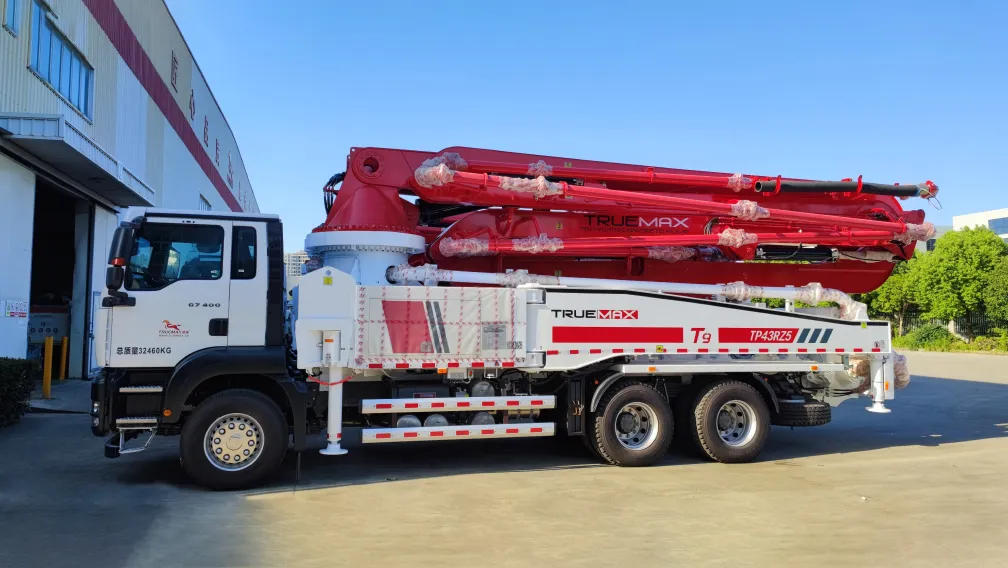
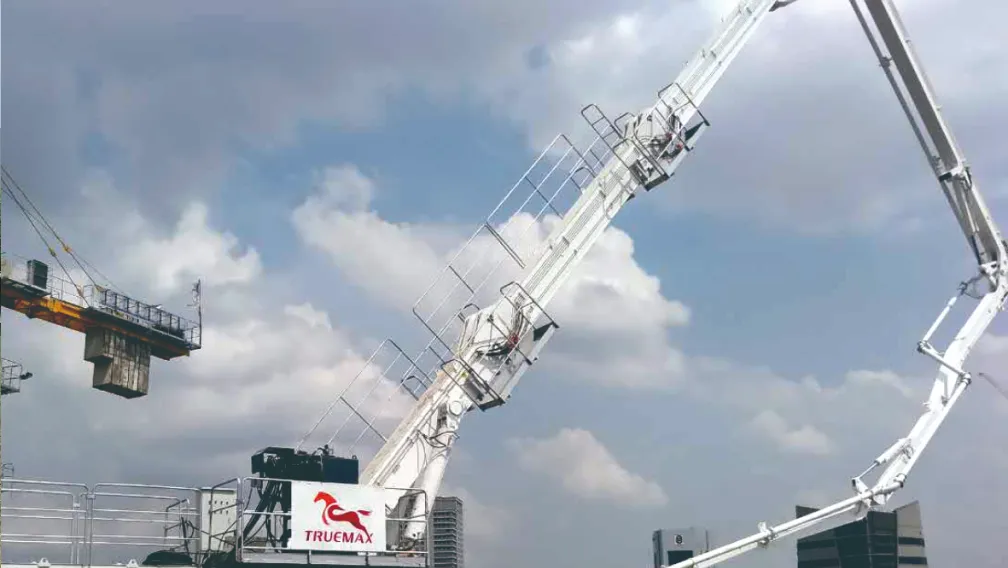
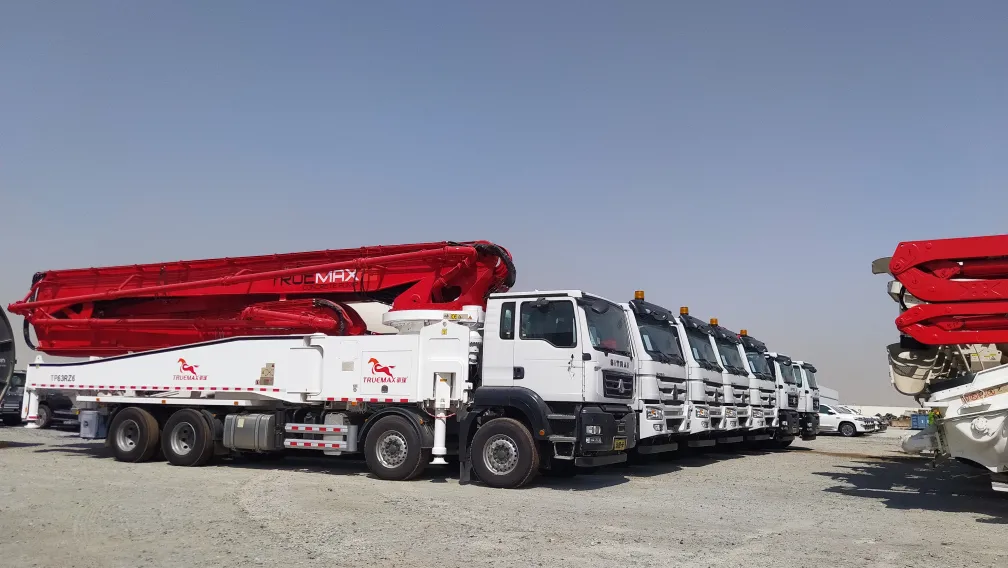
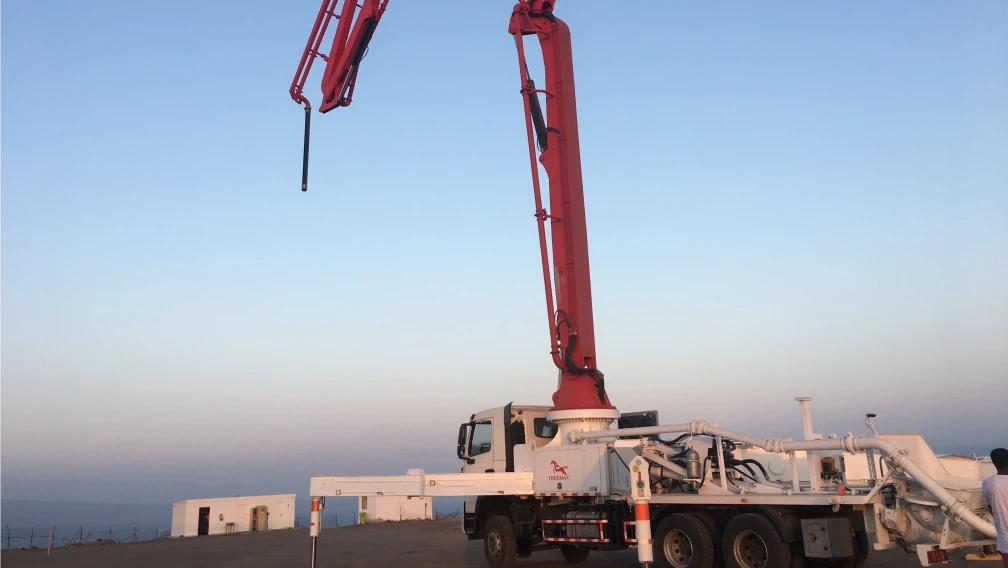
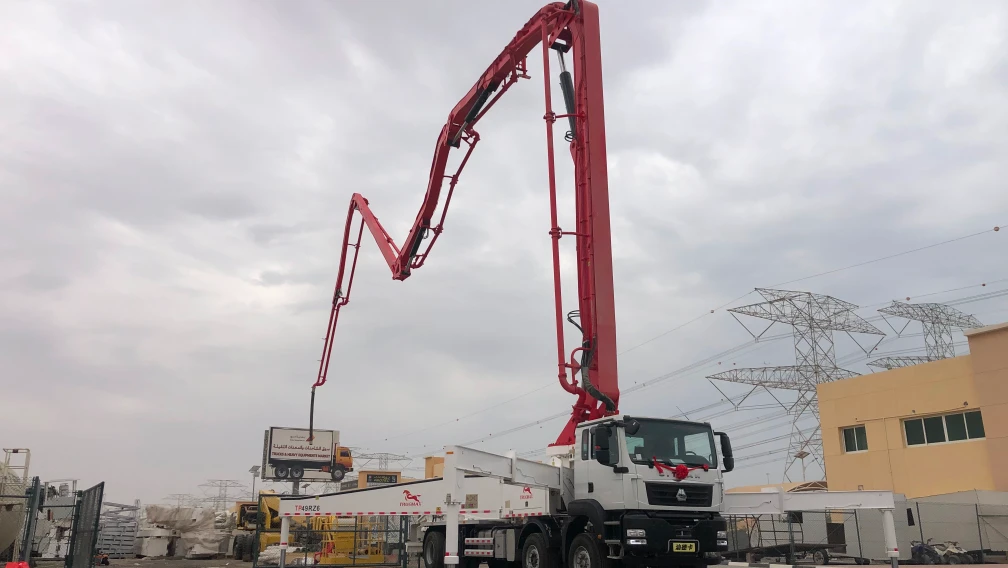
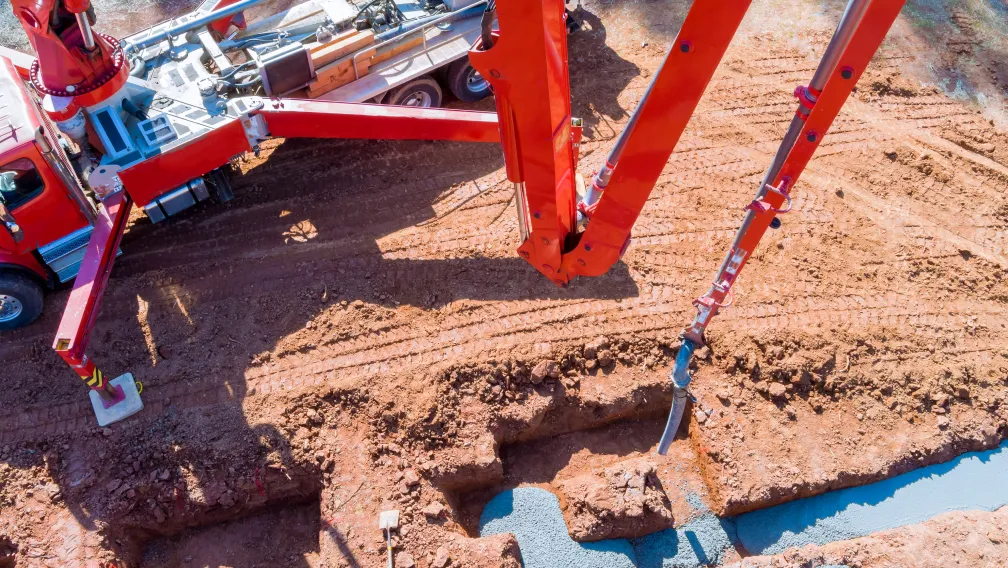
On the pumping deck, operators utilize a heavy-duty Stationary Concrete Pump mounted directly on the barge deck. This pump is configured in piston-side, high-pressure mode to ensure sufficient reserve hydraulic power is available to break static line inertia if minor supply delays occur. For expansive marine pile caps or wide quay wall layouts where the barge cannot reposition easily, contractors route the pump discharge line through an articulating marine-grade Concrete Placing Boom. The remote-controlled boom moves the vertical tremie pipe precisely across the underwater formwork grid while maintaining constant embedment depth.
6. Operational Rigor: Monitoring Embedment Depth
The single most common operational error in marine concrete pumping is accidentally pulling the tremie discharge pipe out of the concrete mound. This error breaches the seal and instantly ruins the pour.
Site engineers must maintain an active embedment depth of 2.0 to 5.0 meters of pipe inside the concrete mass at all times. During the pour, continuous sounding measurements are taken using weighted steel lines or ultrasonic depth sensors dropped from the surface to map the rising concrete profile. As the concrete level rises, the tremie pipe is raised vertically using crane hoists or hydraulic climbing winches in strictly controlled increments of 0.5 to 1.0 meters. At no point should the bottom of the pipe be lifted closer than 1.5 meters from the wet concrete interface.
Furthermore, the end-of-pour procedure requires structural over-pouring. Because the uppermost 300 mm to 500 mm of the placed concrete makes direct contact with sea water, it experiences slight aggregate wash-out and surface laitance. Once the pour cures, divers or mechanical hydro-demolition units chip away this over-poured surface layer down to sound, high-density concrete before reinforcing rebar is tied for the upper structural column.
7. Frequently Asked Questions
Q1: What is the primary difference between a conventional tremie pour and pumped tremie placement?
A: A conventional tremie pour relies purely on gravity to feed concrete down a large-diameter pipe through an open top hopper, requiring frequent crane repositions and limiting placement speed. Pumped tremie placement directly connects a high-pressure concrete pump line to the tremie pipe, providing continuous volumetric displacement, higher placement rates, and the ability to pump against deep hydrostatic water heads.
Q2: Why is mechanical vibration strictly prohibited during underwater concrete placement?
A: Mechanical vibration violently disrupts the boundary layer between the placed concrete and the surrounding water. The oscillatory movement forces water into the fresh concrete mass, stripping away the cementitious binder and creating internal voids. Underwater mixes are designed as self-compacting concrete (SCC) to consolidate entirely under their own self-weight.
Q3: How does Anti-Washout Concrete (AWC) behave differently from standard structural mix?
A: AWC contains specialized polymeric viscosity-modifying agents that increase the yield shear stress and cohesion of the cement paste. Even when briefly exposed to flowing water currents, the cement particles cling to the aggregates rather than dispersing into the water column, keeping turbidity low and preventing compressive strength loss.
Q4: What should an operator do if the tremie pipe seal is accidentally breached?
A: If the pipe mouth is pulled out of the concrete mound, pumping must stop immediately. The operator cannot simply push the pipe back down, as this would trap contaminated water inside the pipe line. The tremie pipe must be pulled to the surface, cleared, re-inserted with a fresh traveling foam pig plug to seal the line, and re-submerged into the concrete mass to restart the placement sequence.
Q5: What pipeline diameter is recommended for marine tremie pumping?
A: Standard marine pumping configurations utilize 125 mm (5-inch) or 150 mm (6-inch) delivery pipelines. For deep underwater bridge piles, 150 mm lines are preferred because the larger internal volume reduces flow velocity, dampens material exit turbulence into the water, and reduces overall pipeline friction losses over long vertical runs.
Q6: How do operators clean out marine delivery pipelines safely after a deep pour?
A: At the end of the pour, the pipe line must not be washed out directly into open marine waters due to environmental pollution rules. Operators run the concrete pump in reverse to draw as much residual concrete as possible back into the hopper. The remaining line volume is cleared using high-pressure water pushing a sponge ball into a containment box on the barge deck for proper onshore disposal.
8. Technical Equipment Consultation
Configuring marine and subsea concrete pumping networks requires precise coordination of pump line bar pressures, barge deck equipment footprints, and specialized Anti-Washout mix handling capabilities. For custom configurations involving heavy-duty barge-mounted stationary pumps, remote-controlled marine placing booms, and high-pressure twin-wall pipeline systems, submit your marine project parameters to the Truemax engineering team to receive a comprehensive technical proposal within 24 hours.
-

TrueMax
Concrete & Construction Equipment ManufacturerEstablished in 2003, Truemax designs, manufactures, and delivers concrete pumping equipment, crushing machinery, and construction hoisting systems from our own factory in Haining, China to jobsites in over 120 countries.