

 LANGUAGE

1. Start with Pour Geometry and Cycle Time
A concrete placing boom is selected from the pour outward. The correct inputs are floor plate dimensions, column and core layout, pour sequence, target m³ per cycle, tower crane availability, structural anchorage and the number of working levels above the riser connection. A boom chosen only by maximum radius often creates secondary problems: blocked set-up points, overloaded slabs, slow climbing, or an end hose that still cannot reach a congested corner.
On high-rise and large-deck work, the placing boom converts one pumped outlet into full coverage of the pour area. The pump and riser deliver pressure; the boom delivers geometry. Selection therefore starts with coverage and movement cycle, then checks the feed circuit and safety system. EN 12001:2012 and ISO 21573-1/2 provide the compliance frame, while the project structural engineer approves anchorage and floor loading.
2. Six Mounting Types and Where They Fit
| Mounting type | Typical radius | Movement method | Best application | Main constraint |
|---|---|---|---|---|
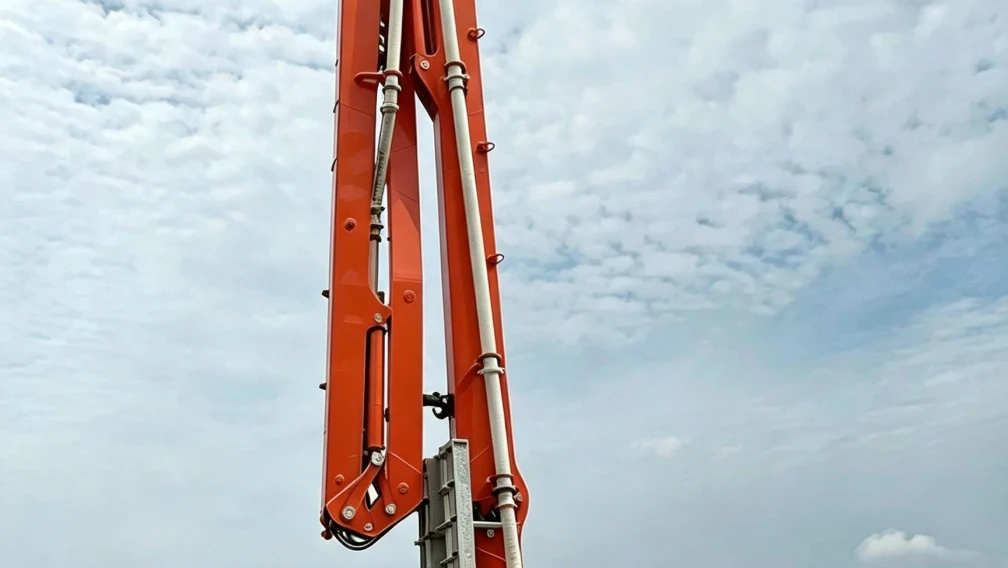
| Spider placing boom | 17–21 m | Lifted between floors by tower crane | Mid-rise slabs, podium decks, changing floor plates | Needs crane time and slab capacity for outrigger loads |
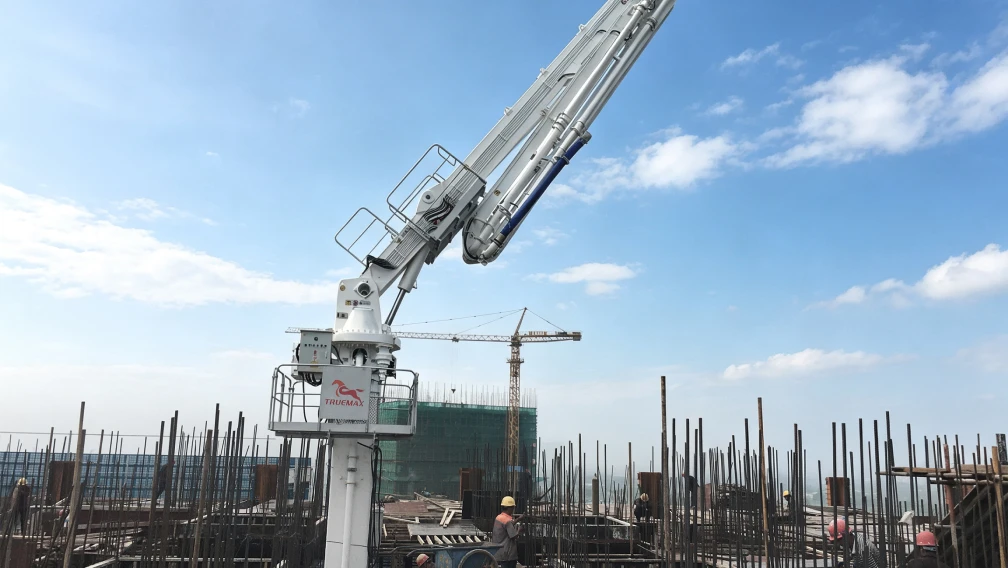
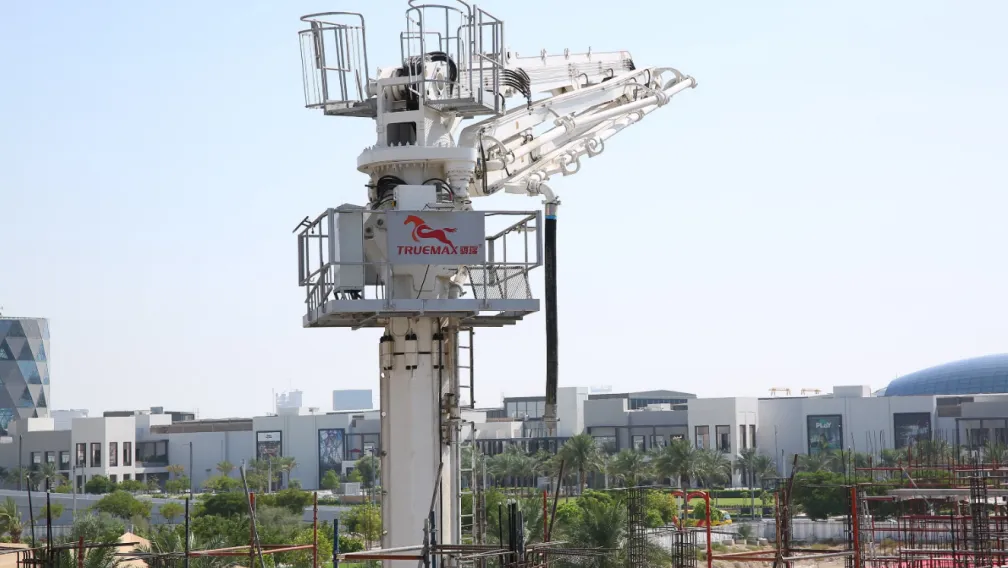
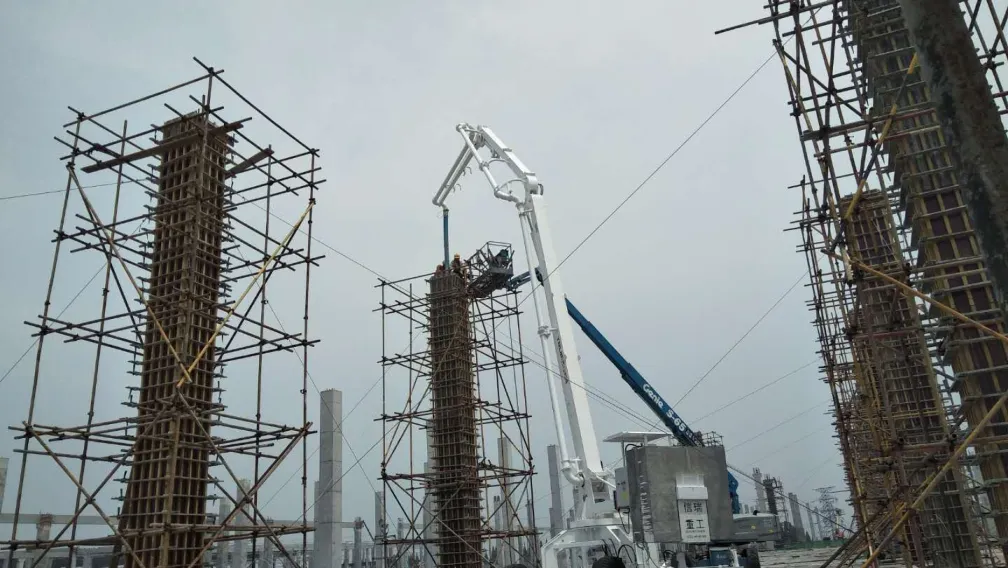
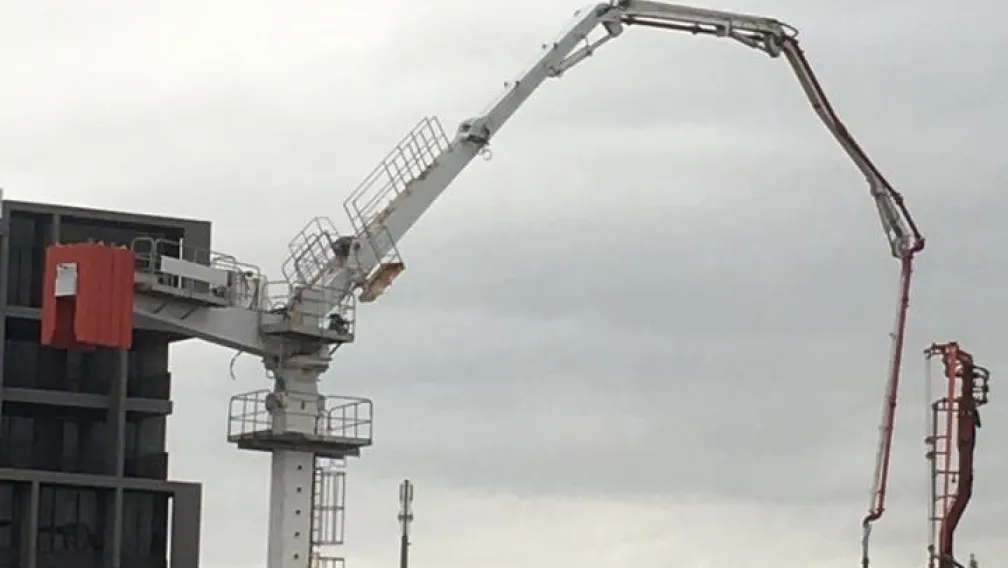
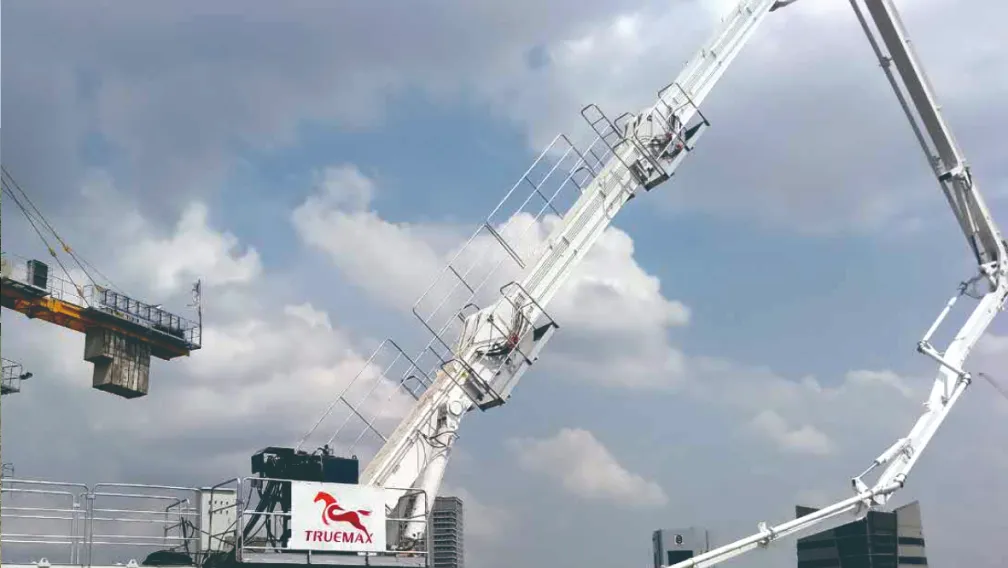
| Column-climbing boom | 27–35 m | Hydraulic climb along a mast anchored to columns | Repetitive high-rise typical floors | Requires approved column anchorage and climb planning |
| Formwork-climbing boom | About 21 m | Rises with jump-form or self-climbing formwork | Core walls and lift shafts formed by climbing systems | Boom movement is tied to the formwork cycle |
| Mobile wheeled boom | About 17 m | Trolley movement across the slab | Very large slab pours with open travel paths | Needs clear routes and slab strength for wheel loads |
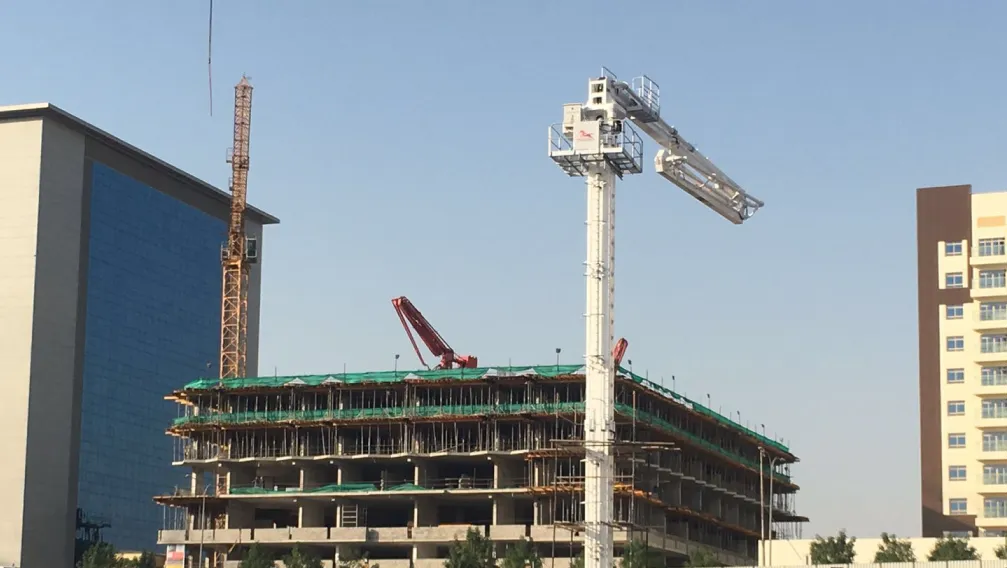
| Lattice tower boom | 38–51 m | Free-standing mast, tied to structure at height | Maximum reach, irregular structures, heavy civil decks | Foundation, tie-in design and installation time are larger |
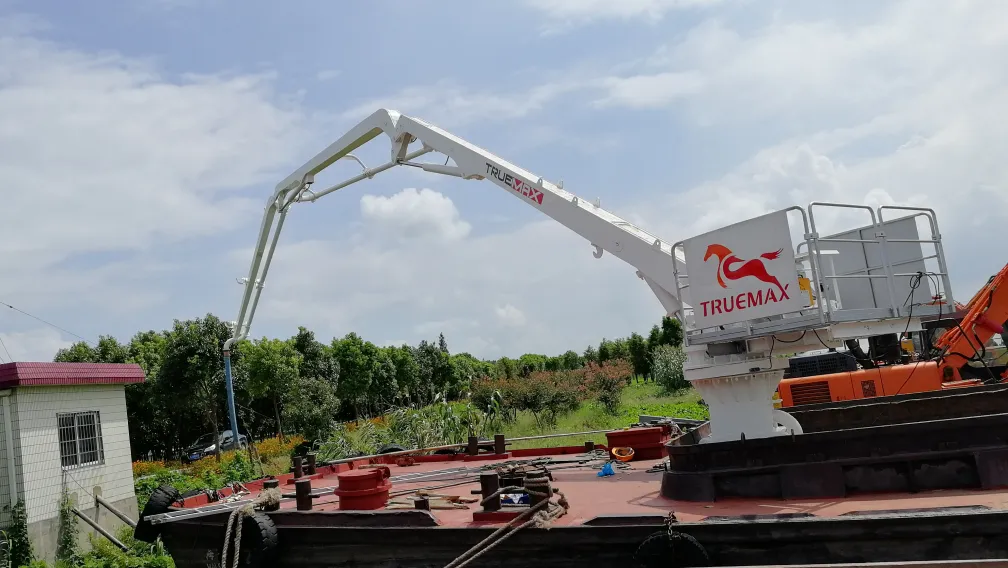
| Mobile boat-mounted boom | About 21 m | Barge or boat positioning | Marine bridges, over-water precast and quay works | Marine stability, access and weather windows govern |
Spider booms suit projects where the floor plan changes and the tower crane has spare lifting capacity. Column-climbing booms fit repetitive residential and commercial towers because one climb can serve two floors and the pour cycle stays predictable. Formwork-climbing booms belong inside core-wall systems where the placing equipment must move with the form. Lattice tower booms serve the largest radii and irregular structures, with foundations and ties engineered like a temporary tower crane.
3. Radius Coverage and Set-Up Point Planning
Model numbers normally state placing radius in metres: PB17 for about 17 m, PB28 for about 28 m, PB35 for 35 m and PB51 for 51 m. Radius must cover the farthest pour point from each approved set-up position with the boom working inside its load chart. Do not plan coverage by stretching the 5 inch end hose into a long horizontal cantilever; hose handling adds dynamic load and reduces placement accuracy.
Draw the boom positions on the structural plan before purchase. Check column lines, shear walls, edge distances, openings, rebar congestion and temporary works. For a large floor plate, compare one larger-radius boom against two smaller booms. A single PB35A-class unit reduces equipment count but concentrates outrigger or mast loads. Two PB21 or PB17 units can reduce individual loads and allow simultaneous pours, at the cost of more moves and coordination.
Leave working clearance for the operator, end hose and concrete crew. A boom that reaches a point geometrically can still fail operationally if the hose must cross dense reinforcement, edge formwork or a live access route. Plan exclusion zones under the boom and agree signal control between the boom operator, pump operator and pour supervisor.
4. Climbing Cycle, Floor Loading and Structural Interface
Climbing method decides pour rhythm. A column-climbing boom follows a fix-pour-lift sequence: complete the working floor, verify the next anchors, lift the mast, reconnect and resume. One hydraulic climb commonly covers two floors and takes roughly 30–60 minutes when anchors and access are prepared. The limiting factor is usually anchor readiness and concrete strength at the previous level, not the hydraulic cylinder speed.
A spider boom avoids a climbing mast, yet each relocation consumes tower-crane picks and rigging time. The PB17B main lift unit of about 1,520 kg is sized around common tower-crane capacity, but the lift plan still needs radius, hook height and wind limits checked. If the crane is already committed to formwork, precast or steel erection, a spider boom can lose its apparent simplicity.
Floor loading must be approved before the boom arrives. Outrigger reactions, mast anchor forces and lattice tower foundation loads are structural actions, and they change with boom extension, pipeline fill state and pumping pulse. Use load spreaders or grillage where required, keep outriggers away from slab edges and openings, and verify the concrete age and strength used in the approval. The same check applies to the riser connection and any horizontal pipe crossing the working floor.
5. Feed System: Pump, Riser and Boom as One Circuit
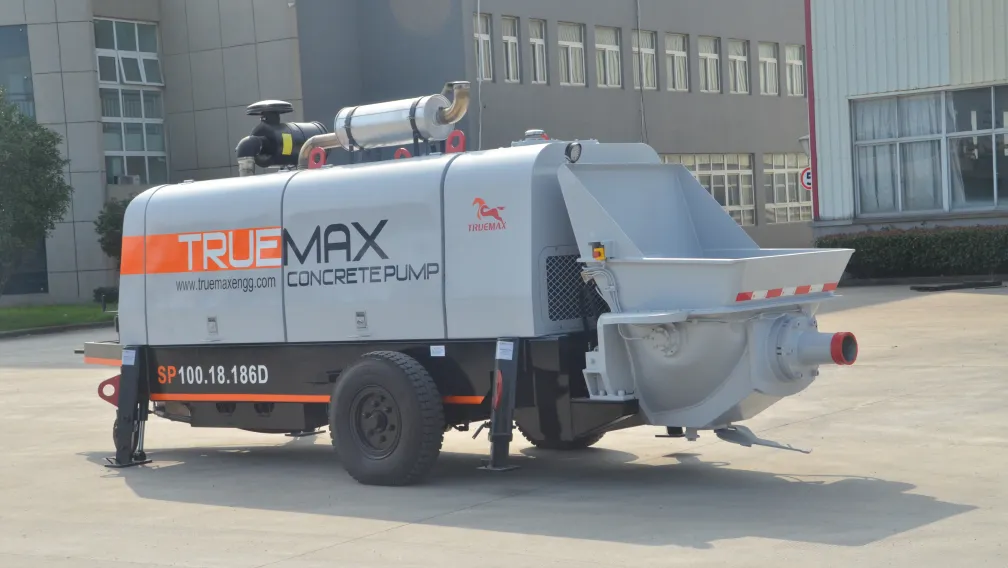
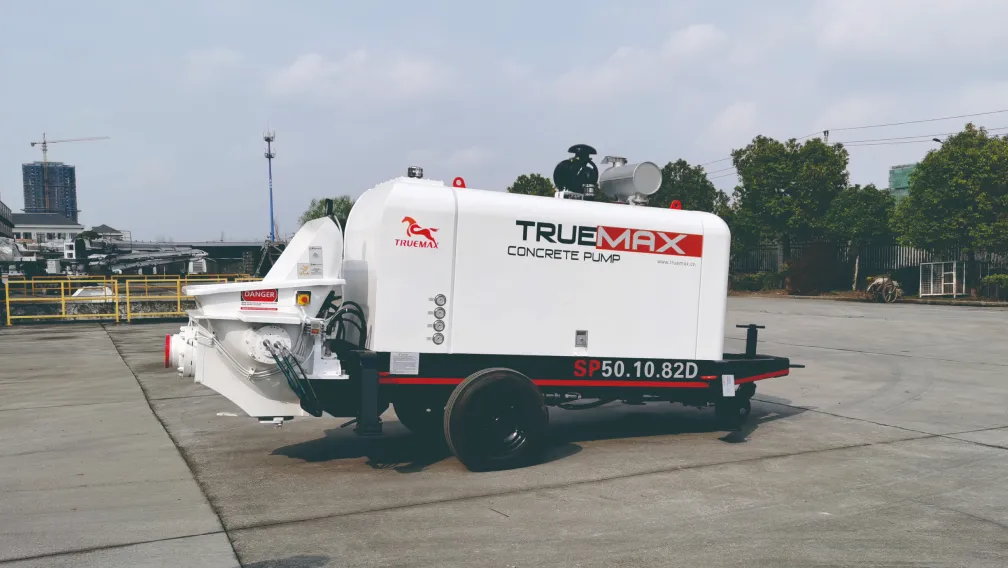
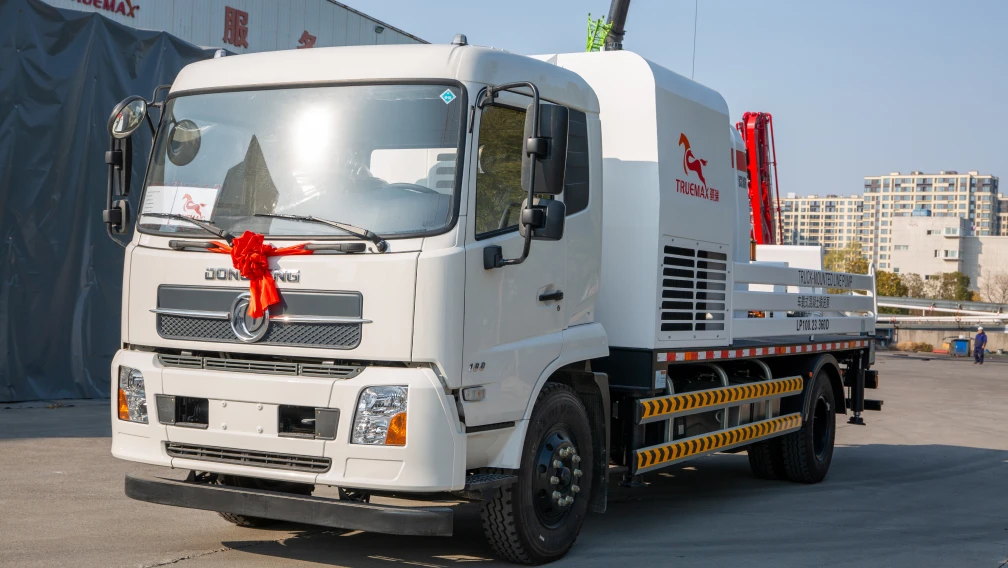
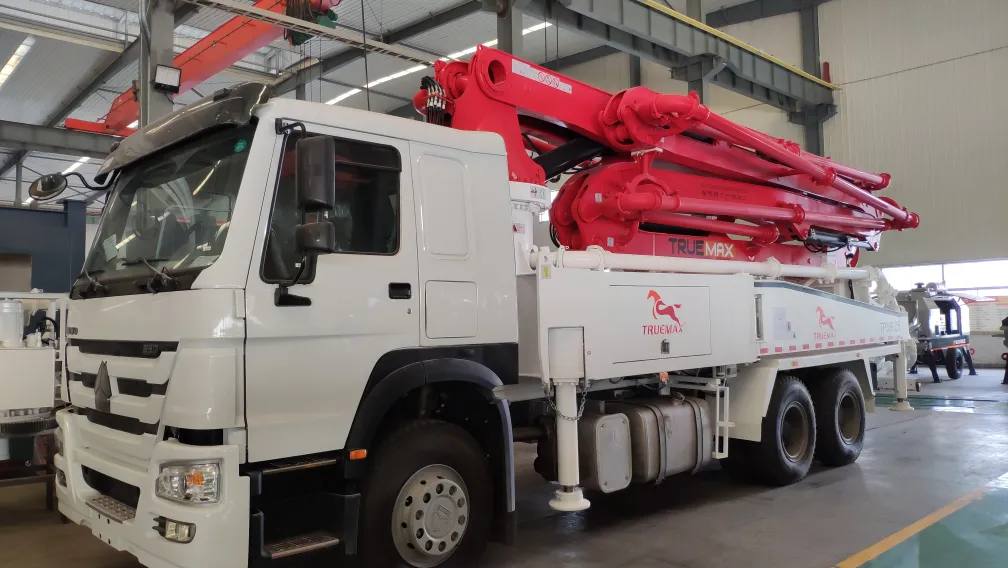
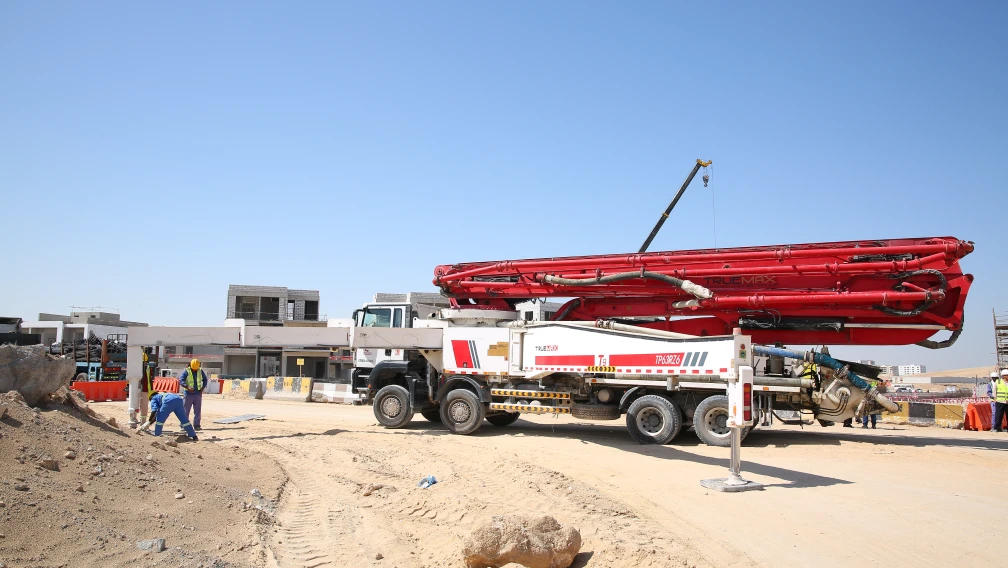
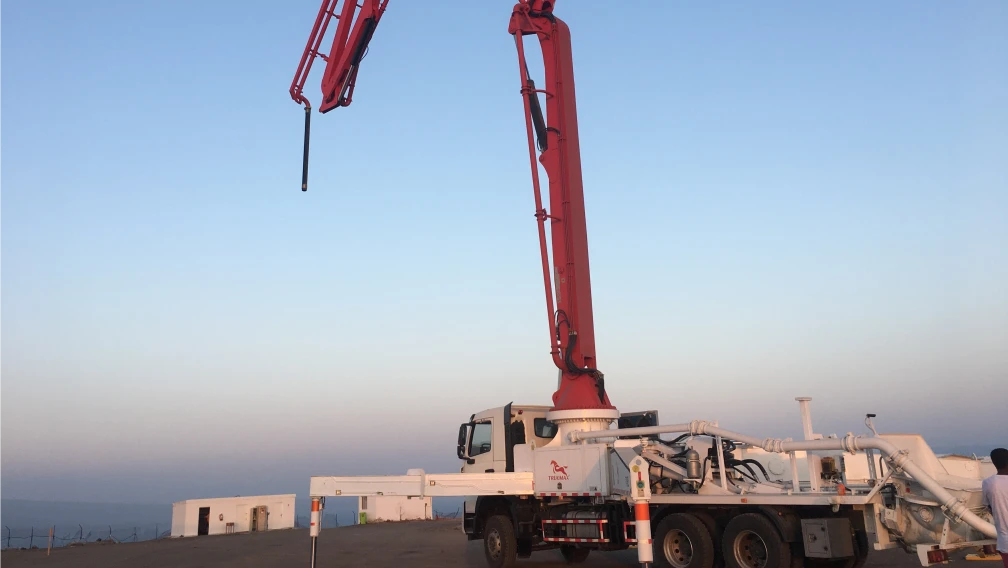
A placing boom conducts pressurised concrete; it does not create the pressure. The normal high-rise circuit is a stationary concrete pump at low level, a DN 125 hardened riser anchored to the structure, and the boom pipeline at the working floor. Lower podium levels may be served first by a truck-mounted boom pump, then the vertical circuit transfers to the fixed riser as the tower rises.
Size the pump and riser from the pressure budget before fixing the boom. Static head for fresh concrete is roughly 0.20–0.25 bar per metre, horizontal DN 125 line loses about 0.5–1.0 bar per 100 m, each 90° bend costs about 1–2 bar, and the boom internal pipeline commonly adds 5–10 bar. Keep a 30–40% reserve for start-up surges, slump drift and restart after a delay. If the calculation is close to the pump ceiling, reduce bends, increase radius planning margin or step to a higher pressure class rather than relying on maximum settings.
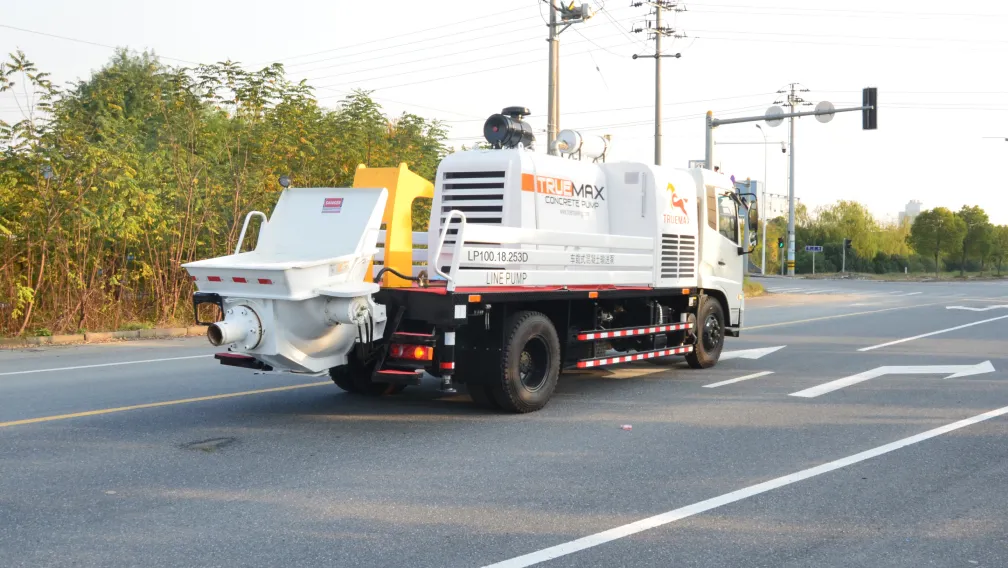
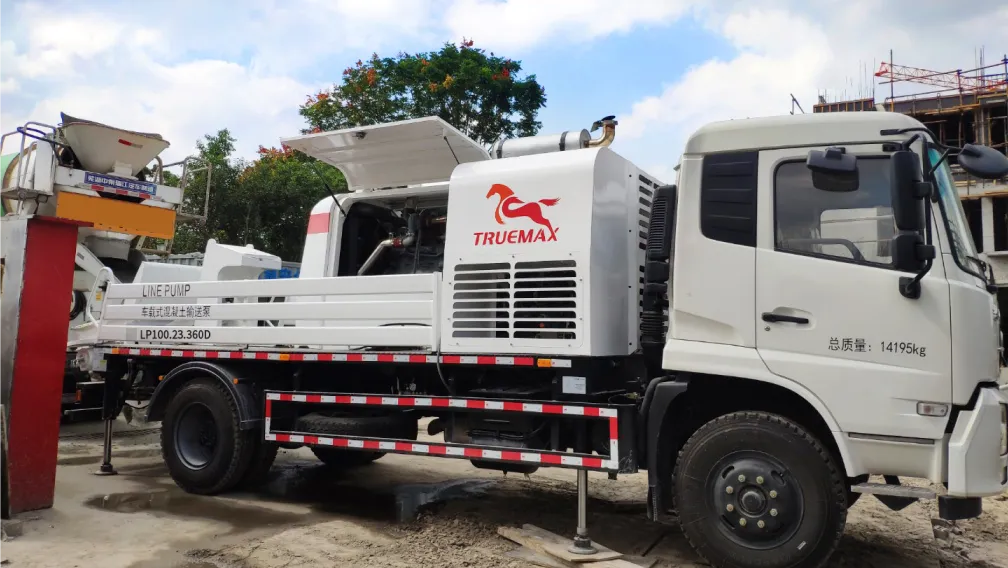
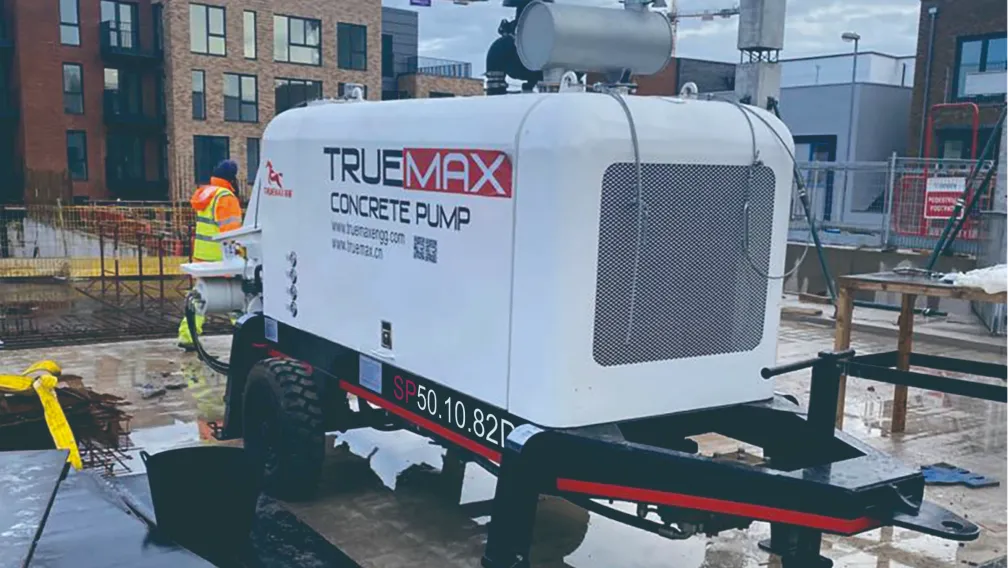
The riser-to-boom connection deserves detailing. Use a supported horizontal section at the working level, align the inlet without forcing the pipe, and keep a cleanout point accessible. A truck-mounted line pump can feed temporary deck lines during early works; once the repetitive floor cycle starts, the fixed riser and placing boom give better control and housekeeping.
6. Control, Safety Interlocks and Standards
Radio remote control with cable backup is the practical standard for placing booms. Proportional hydraulic control gives smoother movement at long reach, and load-sensing flow control reduces shock when the operator stops or changes direction. The control system should include outrigger or mast-anchor verification before deployment, slewing limits in transport configuration and clear fault indication for the hydraulic power pack.
Compliance starts with EN 12001:2012 for concrete placing equipment safety and ISO 21573-1/2 for terminology and test methods. CE marking supports EEA market entry, while ISO 9001:2015 covers the quality management system behind production. Structural steel for boom arms should be high-strength low-alloy material, commonly ≥900 MPa yield for long-reach sections, with 100% weld NDT before paint and final assembly. These items belong in the technical submittal, not as marketing claims after delivery.
Operational safety still depends on site discipline. Establish exclusion zones, control hose whip risk, keep communication in one language or agreed signals, and stop pumping before boom movement when the end hose is in a congested reinforcement zone. Wind limits, electrical clearance and lifting plans for relocation must be written into the method statement.
7. Procurement Checklist for Placing Boom Packages
- Floor plans and elevations showing pour areas, core walls, columns, openings and edge distances.
- Target pour volume, number of pours per week, concrete strength class, slump window and maximum aggregate size.
- Tower crane model, hook height, lifting radius and spare capacity if a spider boom is proposed.
- Structural approval basis for outrigger reactions, mast anchors, climbing sequence and lattice tower ties.
- Riser height, pipe diameter, bend count, pump pressure class and required placing rate in m³/h.
- Control preference: radio remote, cable backup, proportional hydraulics, data logging and remote diagnostics.
- Wear parts and service plan: delivery pipe, bend sleeves, end hose, seals, filters and local spare stock.
- Compliance documents: EN 12001, ISO 21573 test references, CE file, weld NDT records and load test certificate.
8. Frequently Asked Questions
Q1: How do I choose between a spider boom and a column-climbing boom?
A: Choose a spider boom when floor plates change often, anchorage is limited and the tower crane has spare lifting capacity. Choose a column-climbing boom for repetitive high-rise floors with approved column anchorage and a stable two-floor climb rhythm. Compare total cycle time, crane dependency and structural approval cost before deciding.
Q2: Does a larger placing radius always reduce equipment cost?
A: A larger radius can reduce the number of boom positions, yet it raises structural loads, transport size and hydraulic demand. On many floor plates, two smaller booms provide better redundancy and lower individual slab loads. The correct comparison is installed cost per completed floor cycle, including crane time and climbing labour.
Q3: What floor information is needed before ordering a placing boom?
A: Provide structural drawings, slab thickness and strength, column locations, core wall layout, openings, edge distances, temporary works and approved load zones. Add the riser position, pump location, pour sequence and access for installation. Without these inputs, radius selection and anchor design remain assumptions.
Q4: Can one pump feed two placing booms?
A: It is possible with a splitter or diverter valve and a pressure budget that covers both circuits, but simultaneous operation is rarely efficient on high-rise work. Pressure balance changes as one boom moves or one line restricts. Most projects use one pump per active placing line and keep a standby pump for critical pours.
Q5: What documents prove boom structural quality?
A: Request material certificates for high-strength steel, weld procedure and welder qualification records, 100% NDT reports, FEA summary for the operating envelope, load test certificate, EN 12001 compliance statement and ISO 9001:2015 certificate. These documents show controlled production rather than final inspection only.
Q6: How should wear parts be planned for a tower project?
A: Log pumped volume through delivery pipe, bends, reducers and end hoses, and keep replacement stock for the parts nearest the pump outlet and boom tip. Bend sleeves and end hoses usually wear first because turbulence and handling are highest there. Plan inspection at each climb or relocation so worn parts are changed before the next pour.
9. Placing Boom Configuration Consultation
Placing boom selection affects pour speed, labour demand, crane planning and structural safety. TRUEMAX has supplied concrete equipment packages to projects in more than 120 countries since 2003, with high-strength boom structures, 100% weld NDT, CE and ISO 9001:2015 certification, and service teams across the Middle East, Africa and Southeast Asia. Send floor plans, target pour rate, concrete class, crane data and riser height through the contact page to receive a mounting type, radius and feed-circuit proposal within 24 hours. For complete tall-building packages, the high-rise concrete pumping solution combines pump, riser, boom and batching supply planning.
-

TrueMax
Concrete & Construction Equipment ManufacturerEstablished in 2003, Truemax designs, manufactures, and delivers concrete pumping equipment, crushing machinery, and construction hoisting systems from our own factory in Haining, China to jobsites in over 120 countries.