

 LANGUAGE

1. The Mechanics of Continuous Vertical Extrusion
Slipform and jumpform construction methods transform concrete placement from a discrete batching process into a continuous vertical extrusion operation. Utilized primarily for tall, uniform structures such as silos, bridge pylons, LNG containment tanks, cooling towers, and high-rise elevator cores, these techniques require the formwork to move vertically at a highly controlled, uninterrupted rate. In slipforming, the formwork moves continuously, typically at a rate of 150 to 300 millimeters per hour. In jumpforming (or climbing formwork), the process occurs in discrete lifts, but the logistical demands remain remarkably similar.
The critical path in these methodologies is the concrete delivery system. The mechanical lifting of the slipform deck is entirely dictated by the setting time of the concrete. If the concrete is pumped and placed too slowly, the formwork will drag, tearing the setting concrete and causing severe structural defects. Conversely, if the placement exceeds the designated lifting speed, the concrete emerging from the bottom of the slipform will lack the early compressive strength required to support its own weight, leading to a blowout. Managing this delicate balance requires exact synchronization between the pumping hardware, the distribution booms, and the batching facility.
2. High-Pressure Pumping Architecture
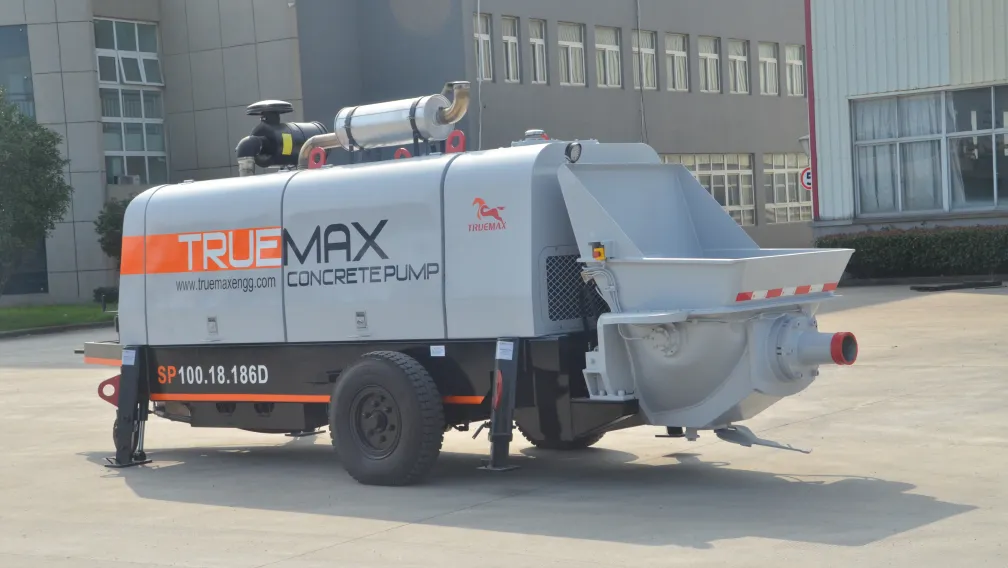
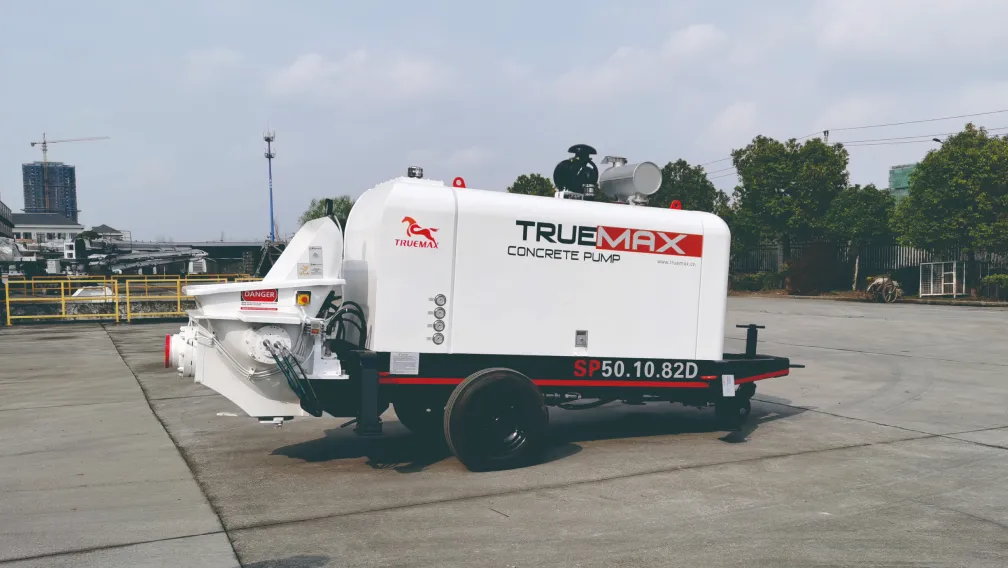
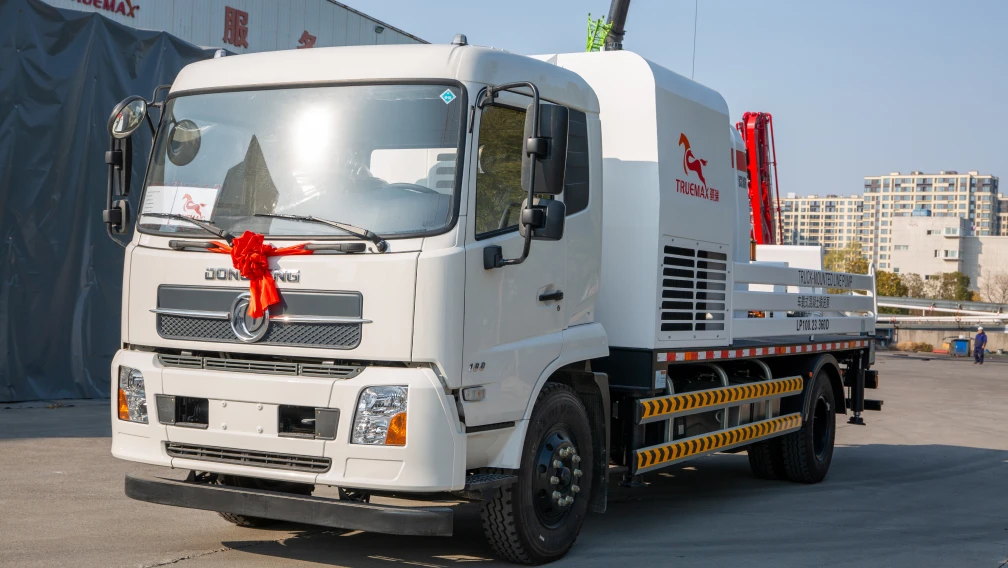
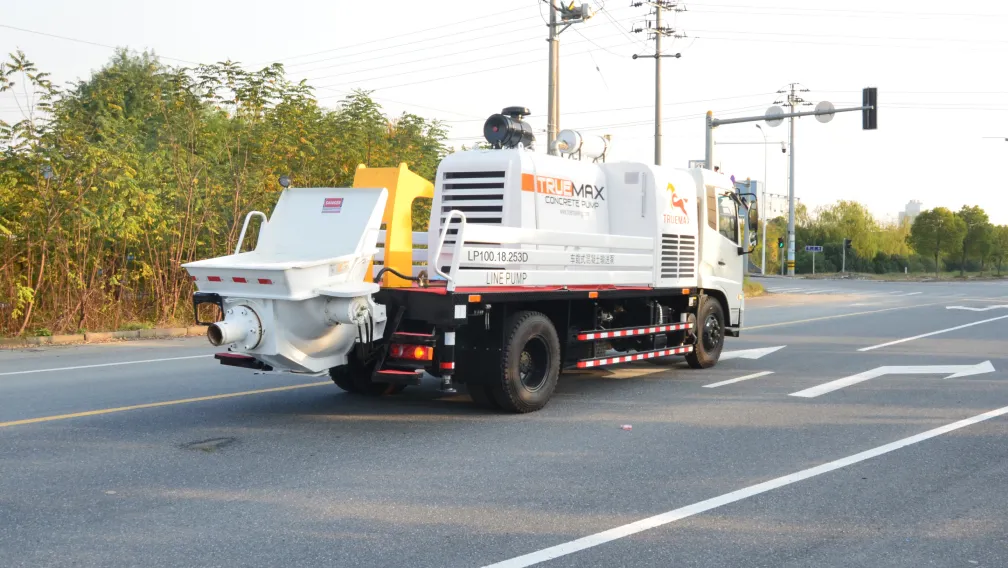
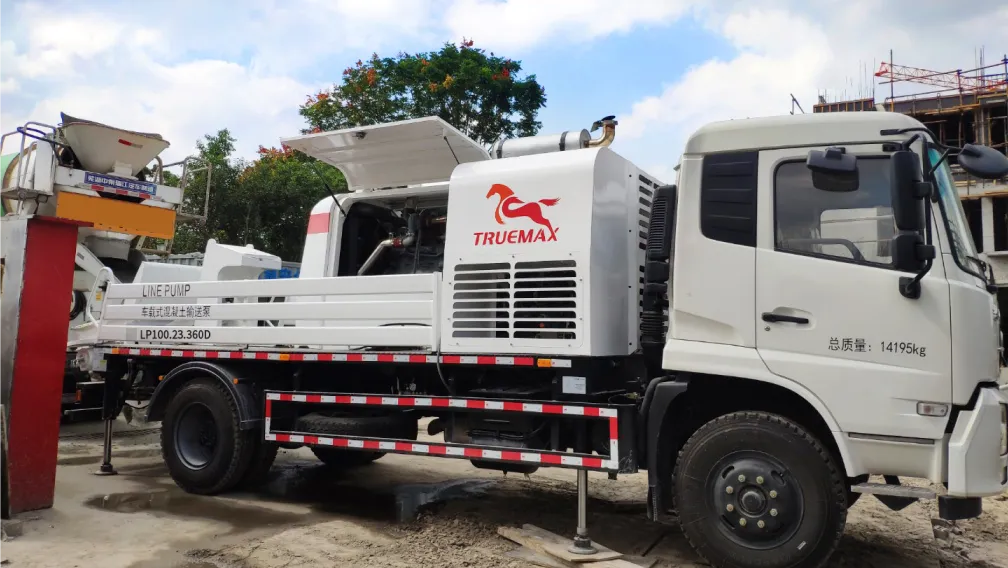
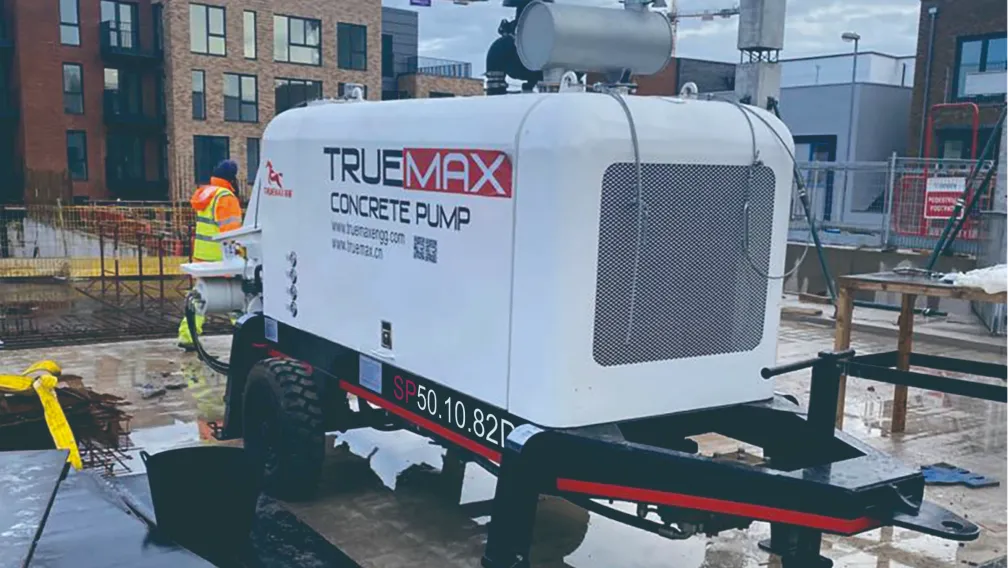
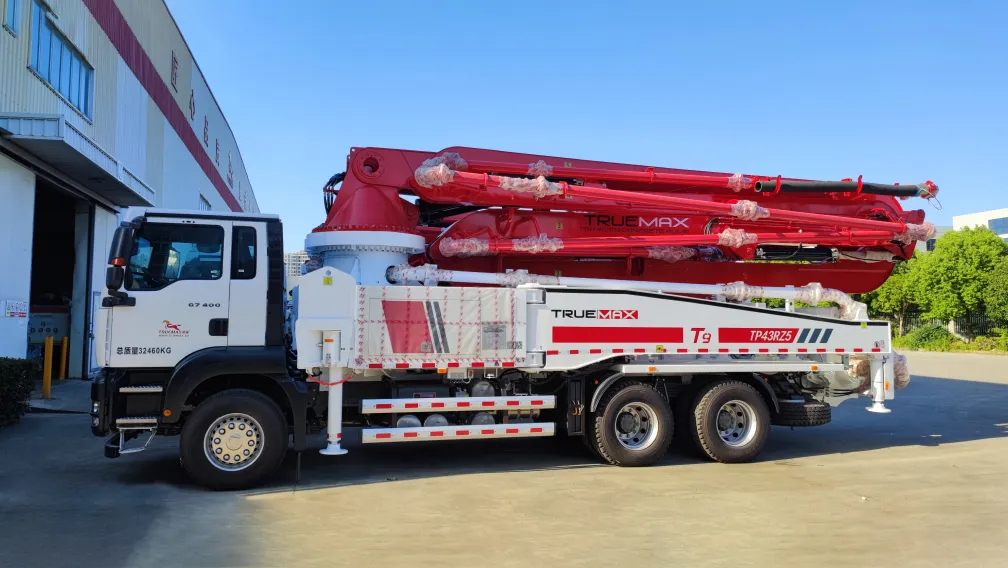
The foundation of a slipform operation is the continuous, measured delivery of material. A high-pressure stationary concrete pump is the standard requirement for these operations. Unlike standard flatwork pours where maximum volumetric output is prioritized, slipform pumping prioritizes consistent low-volume, high-pressure extrusion. The pump must operate smoothly at a fraction of its maximum capacity without stalling or causing excessive pulsation in the delivery line.
Pulsation is a significant threat in slipform operations. The hydraulic shock generated by the S-valve shifting under high pressure can transfer kinetic energy into the vertical riser pipeline. If this pipeline is rigidly attached to the moving slipform deck rather than the cured structure below, the vibration will disrupt the setting concrete inside the moving forms. Therefore, the pump specified for the project must feature advanced hydraulic dampening or closed-loop circuitry to ensure a continuous, low-shock material flow. For structures exceeding 100 meters, pumps in the 18 to 25 MPa pressure class are mandatory to overcome the extreme static head pressure while maintaining a slow, steady stroke rate.
3. Concrete Batching and Rheology Control
The concrete mix design for continuous vertical extrusion requires an exact balance between workability during pumping and rapid early strength development. The material must remain fluid enough to be pumped over long vertical distances and easily consolidated around dense reinforcement within the narrow slipform annulus. Simultaneously, it must achieve an initial set rapidly enough to support the structure as the formwork slides upward.
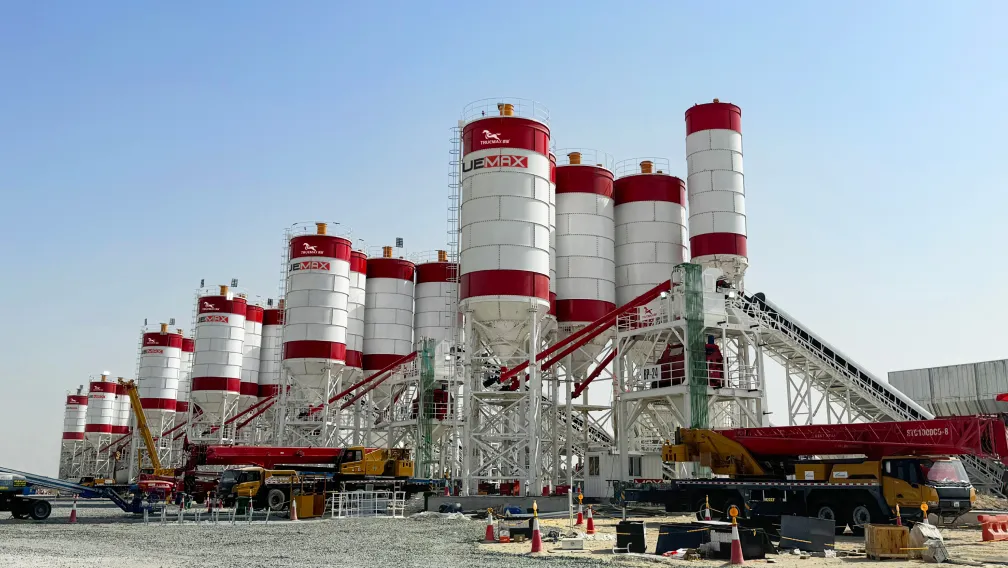
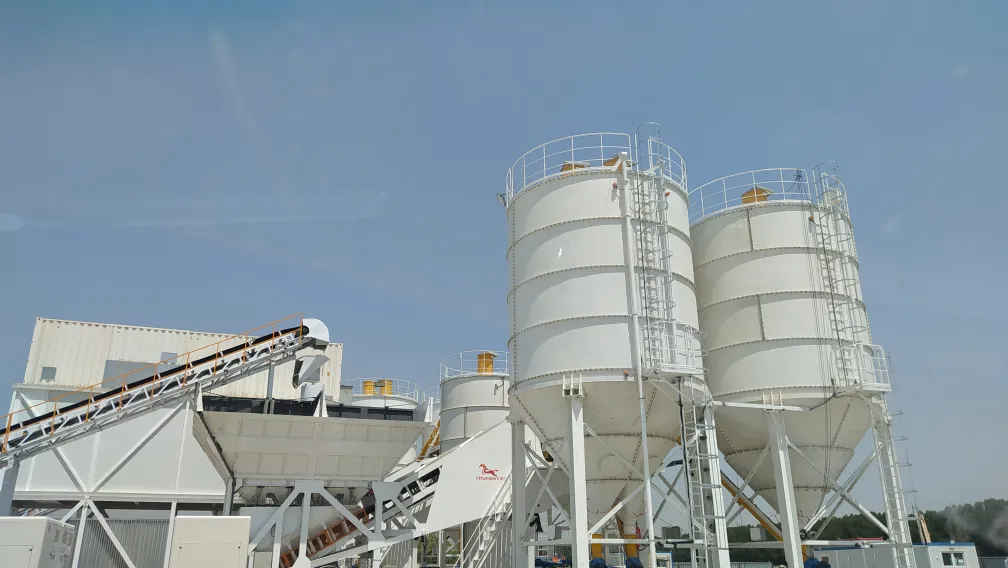
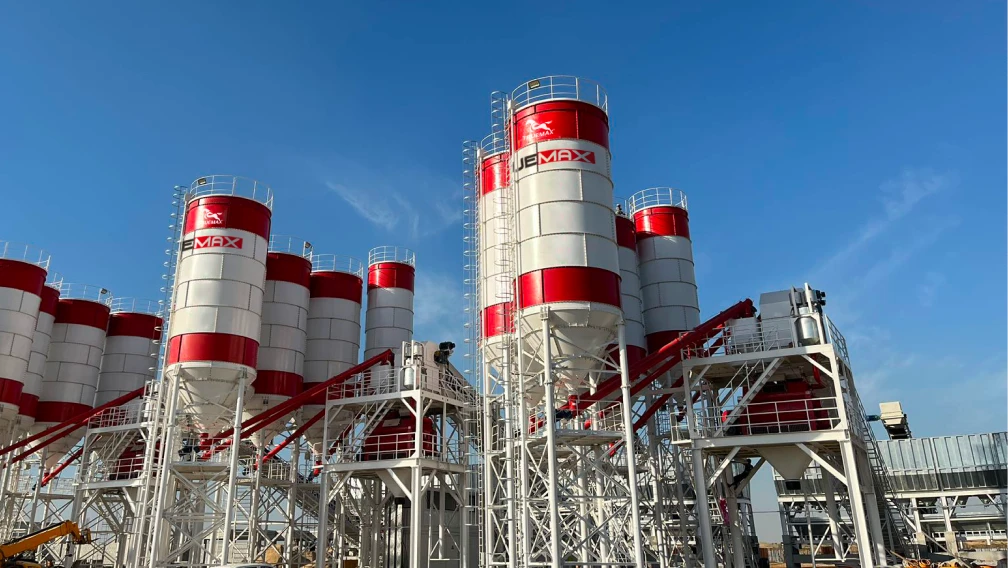
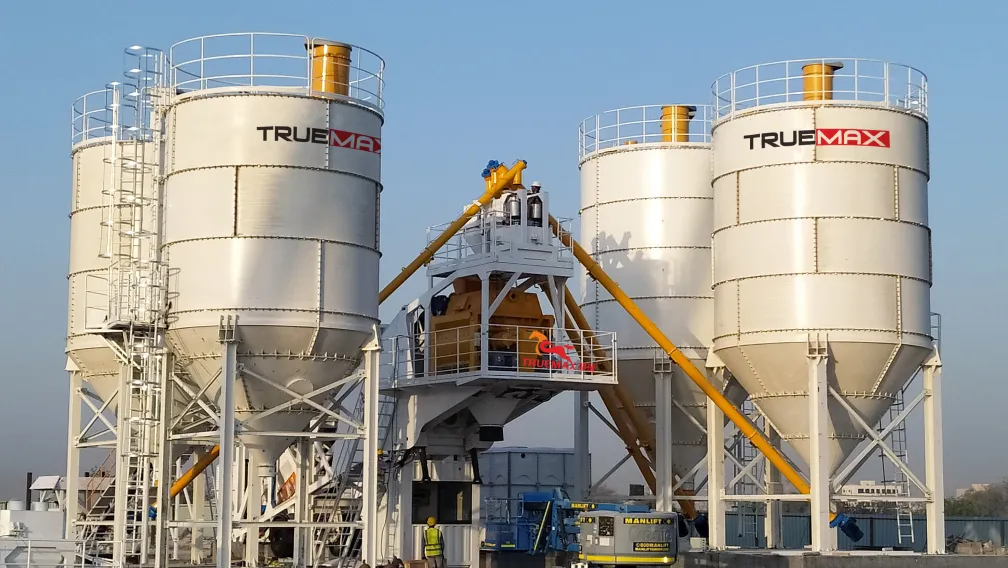
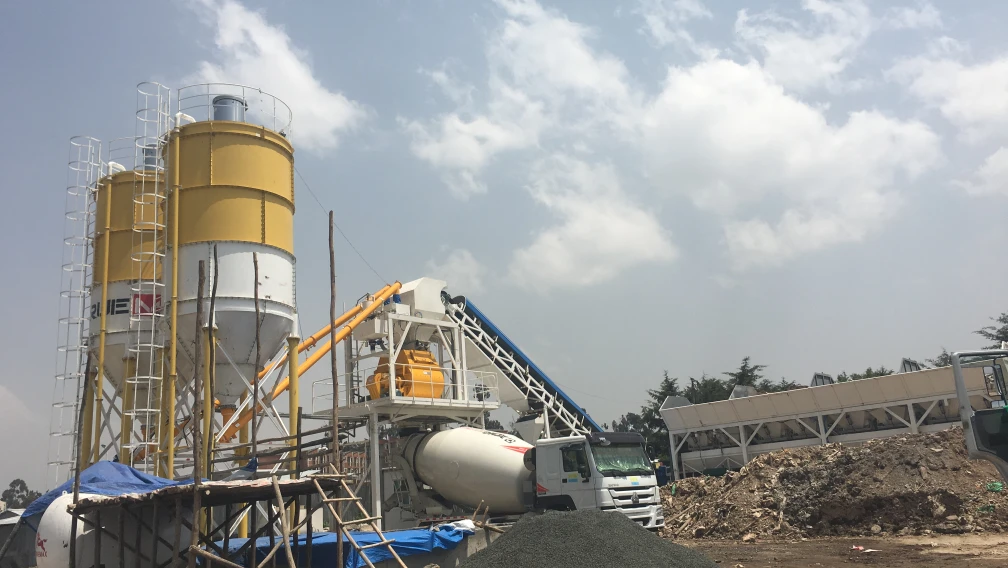
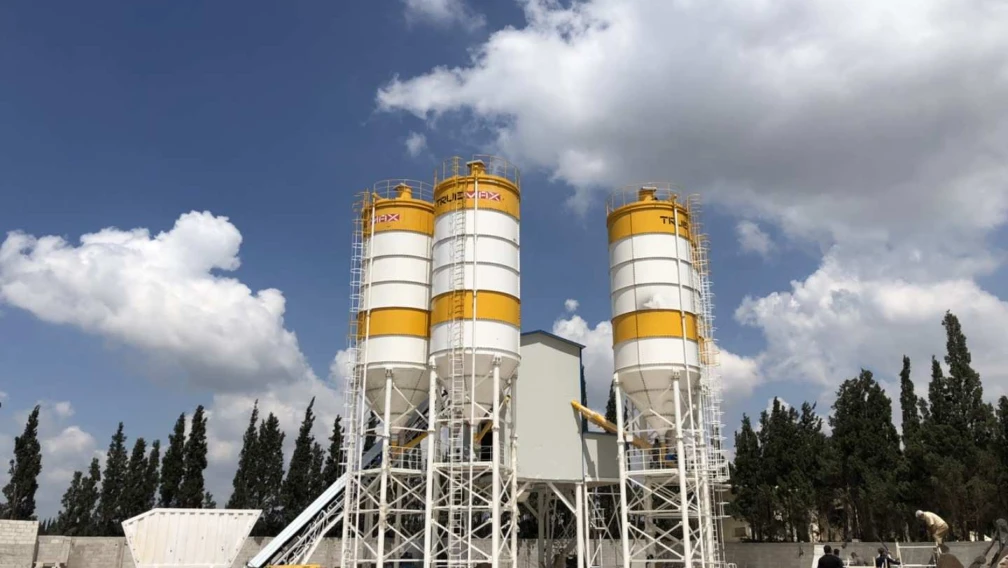
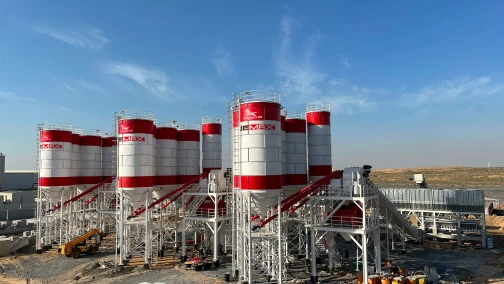
This rheological control originates at the concrete batching plant. The batching facility must be capable of producing an entirely uniform mix with zero variance in water-cement ratio from batch to batch. Even minor fluctuations in moisture content will alter the setting time, causing the slipform lifting jacks to fall out of synchronization with the material. Furthermore, ambient temperature fluctuations directly impact hydration rates. To counter this, the batching plant must integrate automated temperature control systems, utilizing chilled water or ice during daytime operations and heated water during nighttime drops, ensuring the concrete arrives at the pump hopper at a constant temperature regardless of environmental conditions.
4. Distribution Systems on Moving Formwork
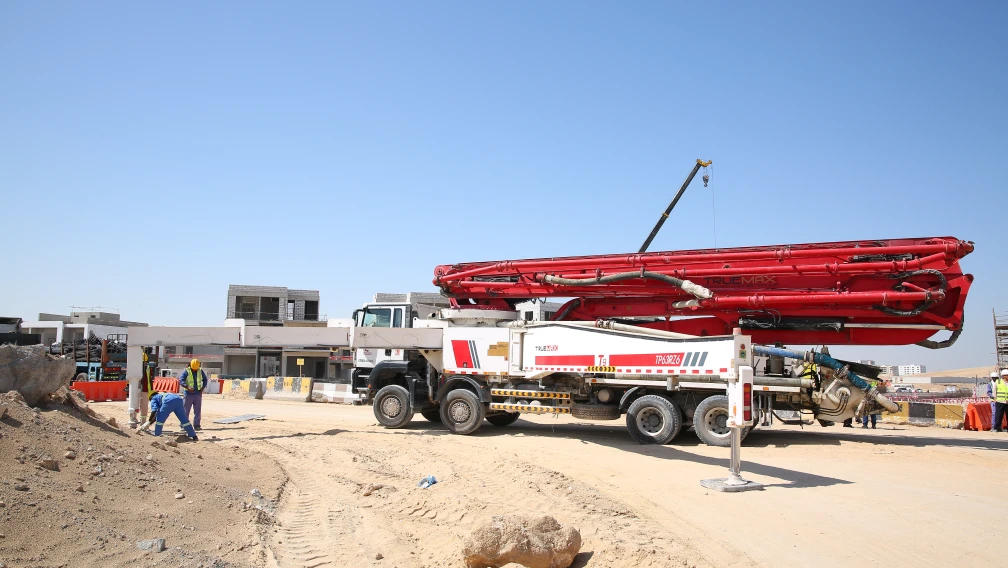
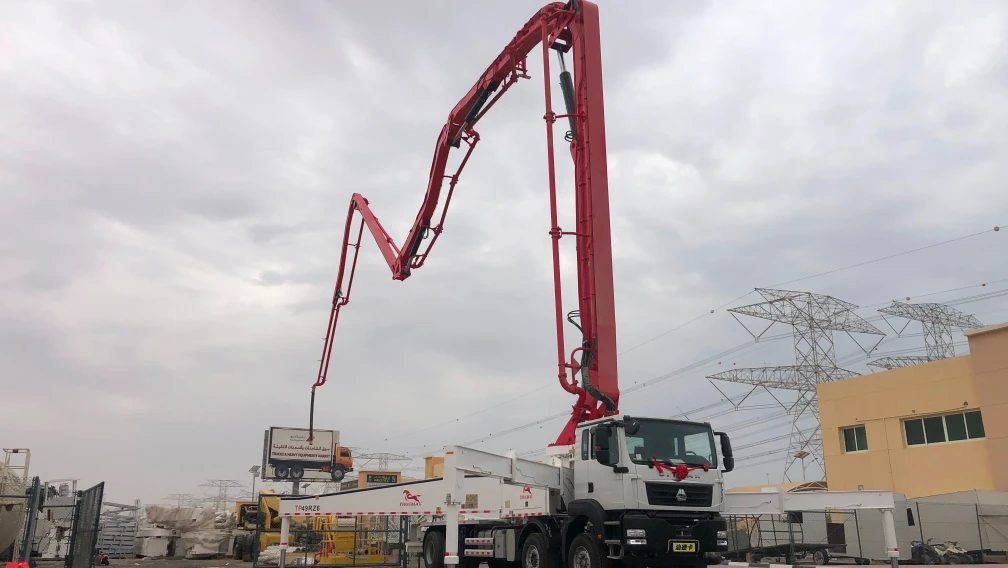
Distributing concrete efficiently across a moving slipform deck presents unique spatial and structural challenges. The deck is typically congested with hydraulic lifting jacks, reinforcement bars, surveying equipment, and personnel. Manually dragging heavy delivery hoses across this platform is inefficient and poses significant safety risks, while standard truck-mounted booms cannot reach the upper elevations of tall structures.
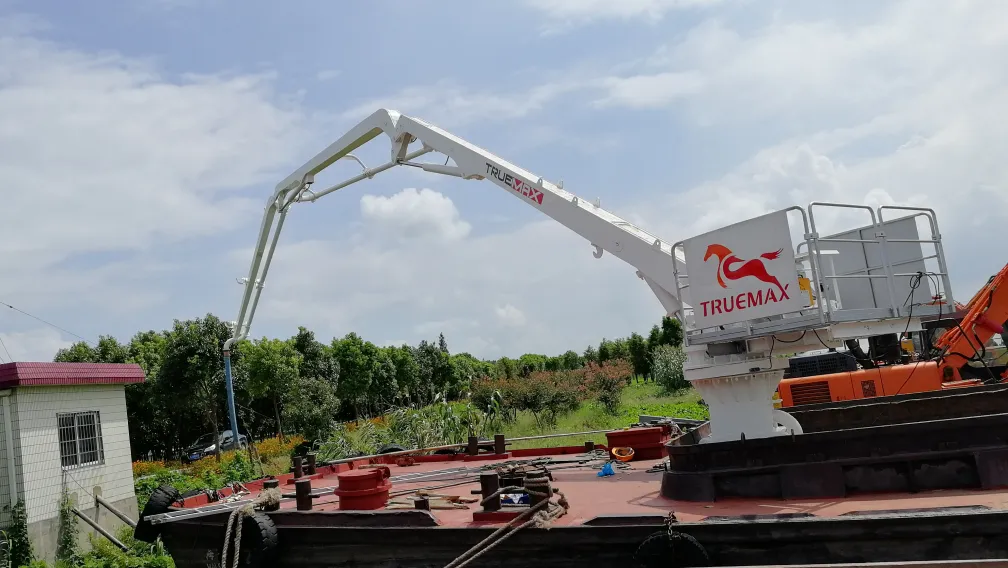
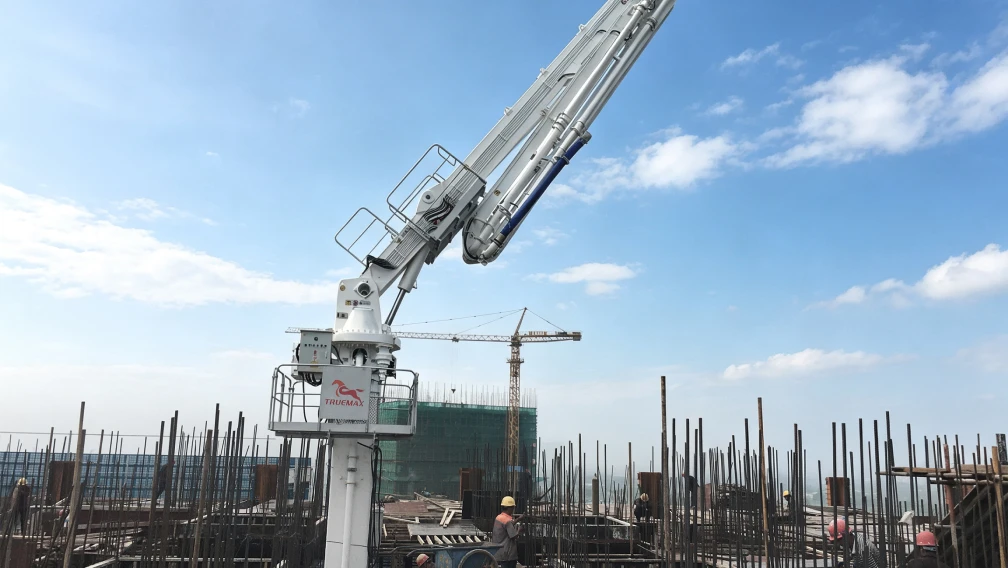
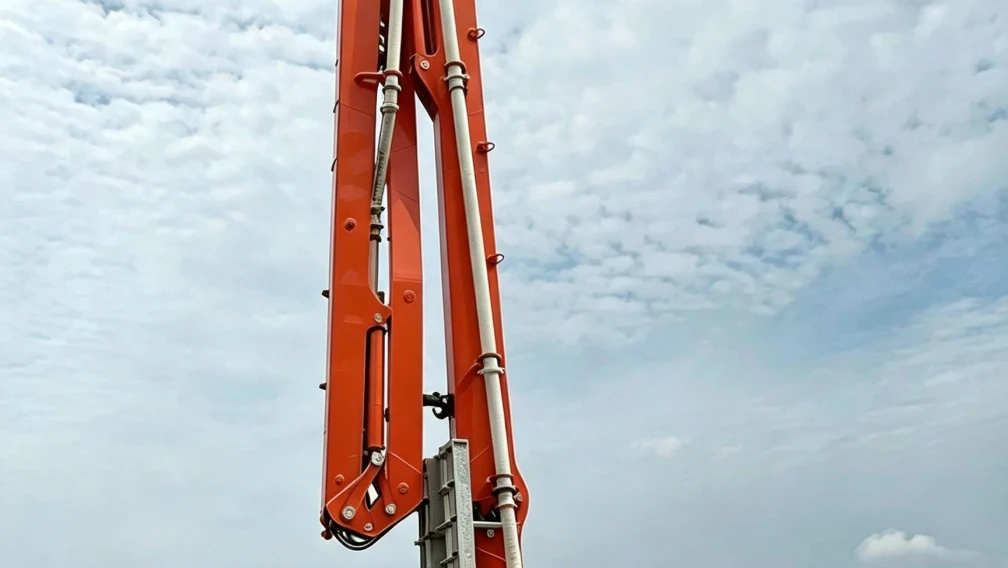
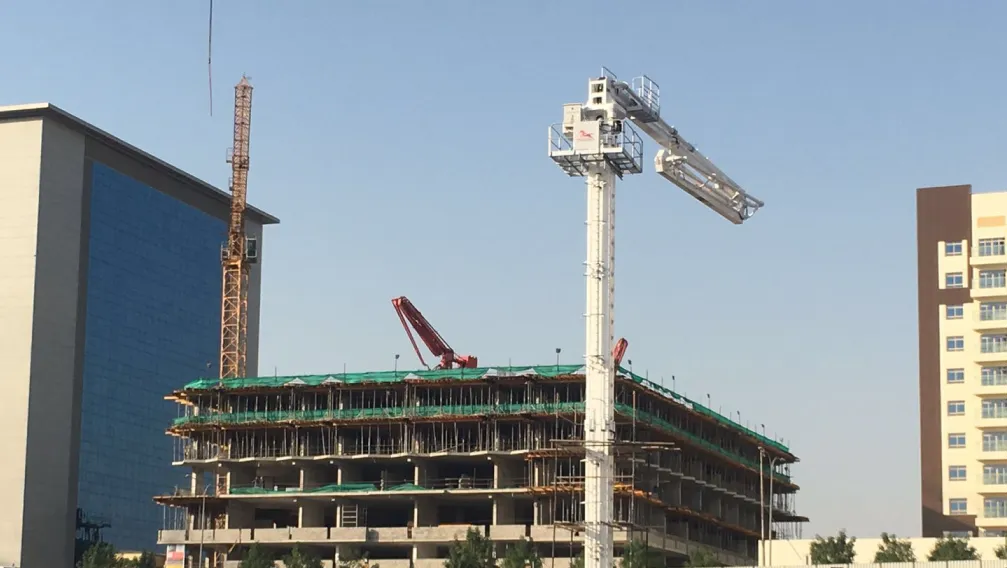
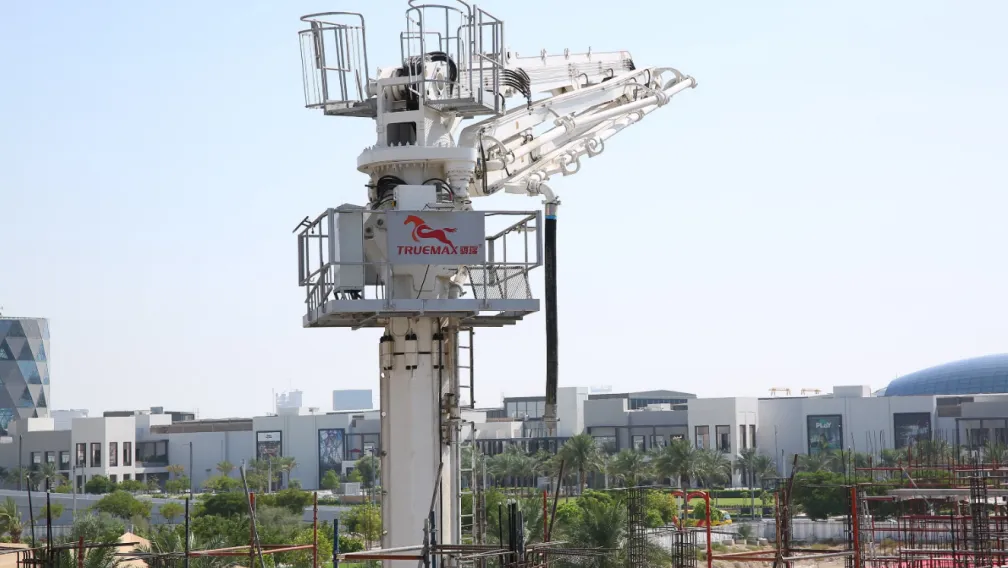
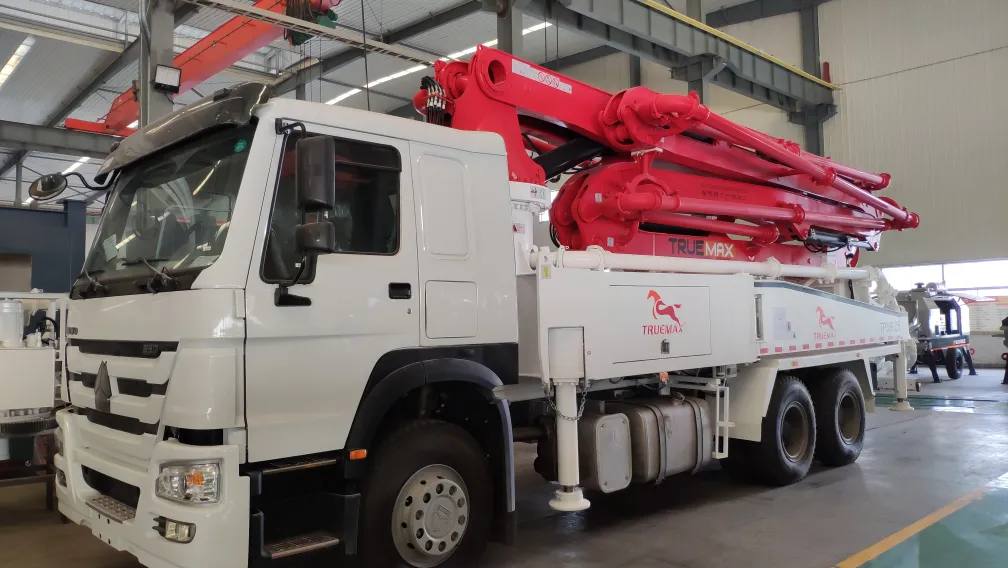
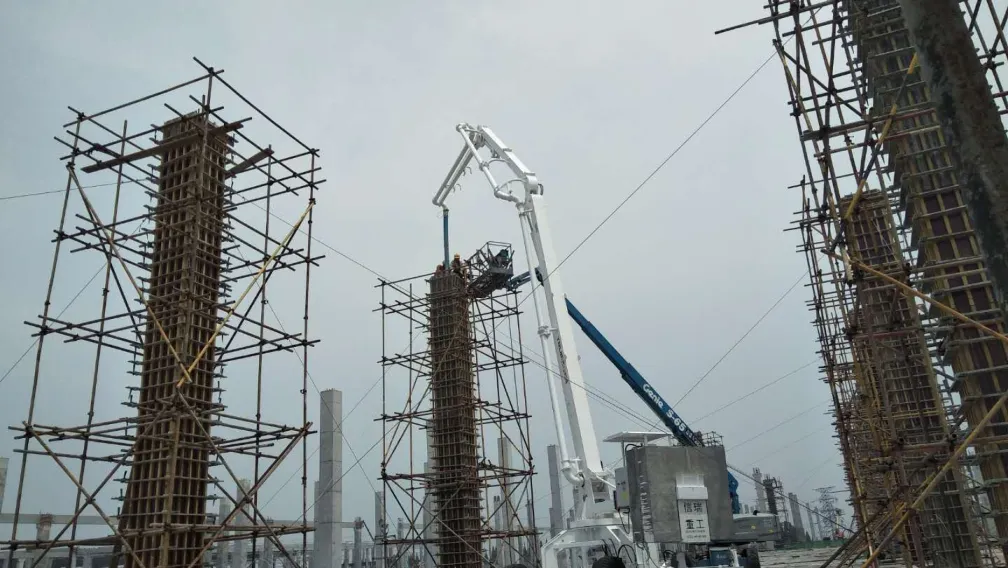
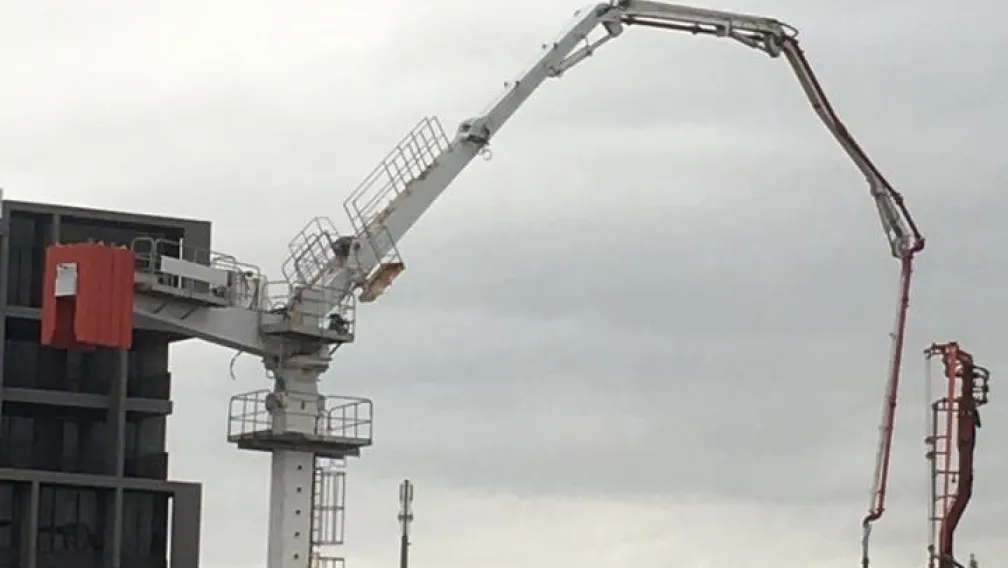
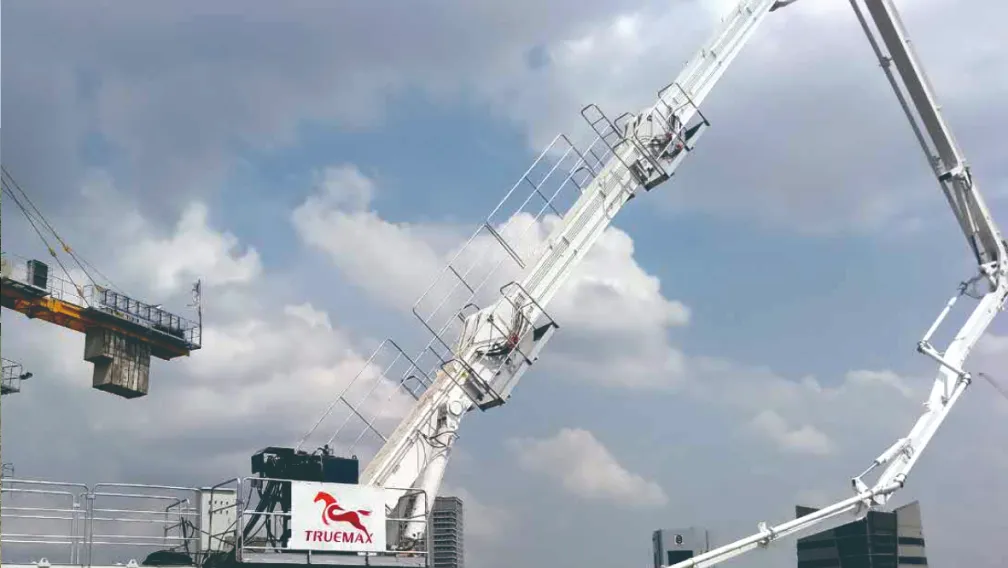
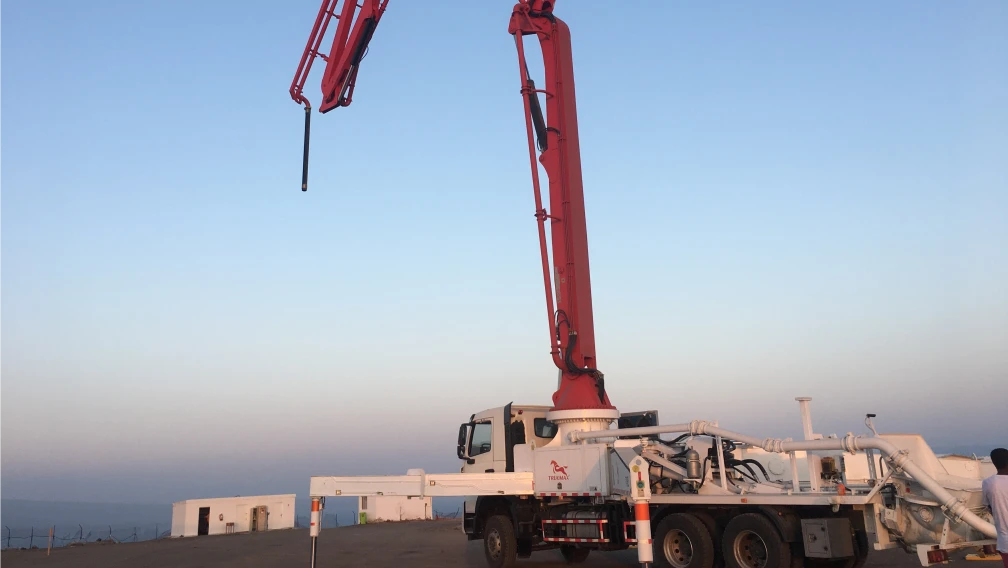
The optimal solution involves mounting a specialized concrete placing boom directly onto the slipform structure or integrating it into a central core that climbs ahead of the main deck. For silos or cooling towers, a rotary distributor or a lightweight spider boom is often utilized. The structural engineers must meticulously calculate the dynamic loads exerted by the placing boom—both its static weight and the rotational torque generated during operation—and ensure the slipform truss system can support these forces without deflection. Any tilt induced by uneven loading on the slipform deck will result in a structure that is out of plumb.
5. Riser Pipeline Management and Redundancy
As the structure rises, the delivery pipeline must be extended without interrupting the continuous pour. Stopping the pump to add sections of pipe creates a delay that can easily lead to a cold joint or a plugged line. To circumvent this, advanced slipform operations employ a double-riser pipeline system utilizing a heavy-duty hydraulic diverter valve at ground level.
In a double-riser configuration, concrete is pumped through Line A while Line B is extended. Once Line A reaches its maximum reach relative to the formwork, the operator switches the diverter valve to Line B, allowing the pour to continue seamlessly. Line A is then flushed, cleaned, and extended in preparation for the next cycle. This pipeline must be constructed of hardened steel, anchored securely to the mature concrete of the structure (never to the moving slipform), and fitted with heavy-duty safety cables at every coupling.
6. Contingency Protocols for Zero-Downtime Operations
Slipforming is an unforgiving process; once initiated, it cannot be paused without severe engineering and financial consequences. Equipment redundancy must be absolute. A standby stationary pump must be positioned on-site, fully primed, and connected to a manifold system allowing for an immediate switchover in the event of a primary pump failure. Dual hydraulic power packs for the slipform lifting jacks and backup generators for both the batching plant and the placing equipment are non-negotiable requirements.
Furthermore, a specialized chemical retardation protocol must be established. In the event of an unavoidable delay—such as an extreme weather event requiring a temporary halt—site engineers must be prepared to dose the final layers of placed concrete with specific retarders. This slows the hydration process, keeping the surface "alive" long enough to restart the operation without forming a structural cold joint, ensuring the monolithic integrity of the finished asset.
7. Frequently Asked Questions
Q: What is the main difference between pumping for slipforming versus conventional pouring?
A: Conventional pouring often focuses on maximum volume over a short period. Slipform pumping requires precise, continuous, low-volume extrusion at high pressure to perfectly match the upward lifting speed of the moving formwork.
Q: Why is pressure pulsation a severe issue in slipform construction?
A: Hydraulic shock and pulsation from the pump can cause the vertical delivery line to vibrate violently. If these vibrations transfer to the slipform deck, they can disturb the partially set concrete, compromising structural integrity and surface finish.
Q: How do temperature fluctuations affect slipform pumping?
A: Temperature dictates the hydration rate and setting time of the concrete. Because the slipform lifting speed relies on a consistent setting time, the batching plant must use heating or cooling systems to ensure the concrete temperature remains constant day and night.
Q: How is concrete distributed on a congested slipform deck?
A: Instead of manual hoses, lightweight spider booms or mast-mounted placing booms are integrated into the slipform structure. This allows precise placement while managing dynamic loads to keep the slipform deck perfectly level.
Q: How are delivery pipelines extended without stopping the continuous pour?
A: Operations use a double-riser system with a ground-level hydraulic diverter valve. Concrete is pumped through one line while the second line is extended. The flow is then instantly switched to the extended line without pausing the pump.
Q: What happens if a concrete pump fails during a slipform operation?
A: Slipforming has a zero-downtime tolerance. A fully primed standby pump must be integrated into the pipeline manifold prior to the pour, allowing for an immediate mechanical switchover to prevent the formation of a cold joint.
8. Engineering Support for Continuous Vertical Extrusion
Executing a continuous slipform or jumpform pour demands rigorous engineering and equipment synchronization. TRUEMAX specializes in configuring high-pressure stationary pumps, custom-mounted placing booms, and automated batching plants designed explicitly for zero-downtime continuous extrusion operations. Our systems provide the precise rheological control and hydraulic stability required for complex vertical structures. For equipment sizing, pipeline architecture, and redundancy planning specific to your next high-rise or silo project, submit your structural dimensions and target lifting speeds to our engineering team via the contact page.
-

TrueMax
Concrete & Construction Equipment ManufacturerEstablished in 2003, Truemax designs, manufactures, and delivers concrete pumping equipment, crushing machinery, and construction hoisting systems from our own factory in Haining, China to jobsites in over 120 countries.