

 LANGUAGE
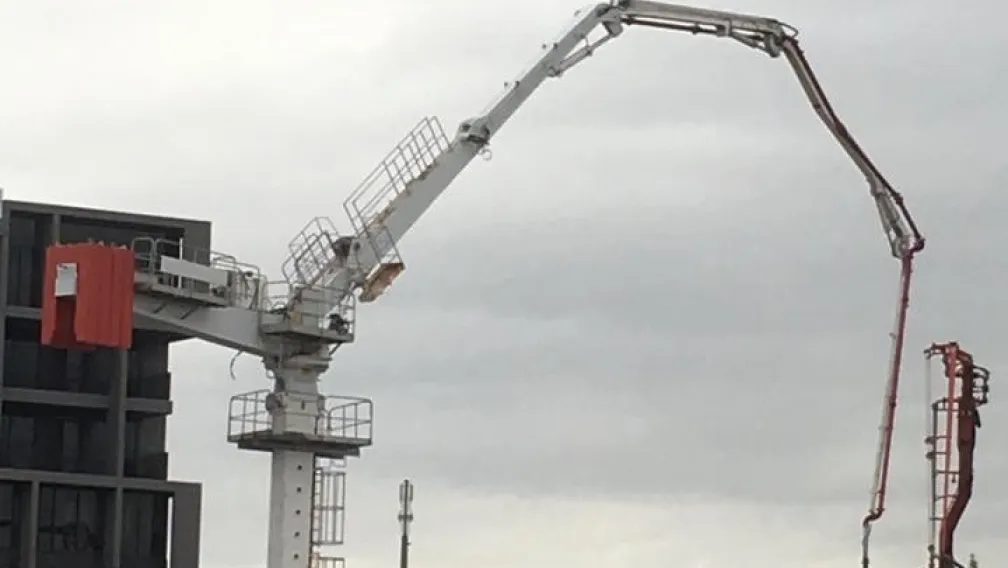
A concrete placing boom is the distribution device that sits at the end of a concrete pumping line and spreads fresh concrete across the pour. It carries no pump of its own. A stationary or trailer pump on the ground pushes concrete up a steel pipeline, and the boom — a mast with a 360-degree slewing, articulated arm — directs that flow to any point within its radius, usually under one operator with a remote control. On high-rise and large-area work it replaces the crew that would otherwise drag and re-position delivery hoses by hand.
We manufacture the PB series of hydraulic placing booms at TRUEMAX and supply them alongside the pumps that feed them, so the selection logic below comes from the questions contractors actually ask us: what the machine does, which type fits which structure, what radius to buy, and when a placing boom beats a boom pump truck.
What a Placing Boom Actually Does on a Pour
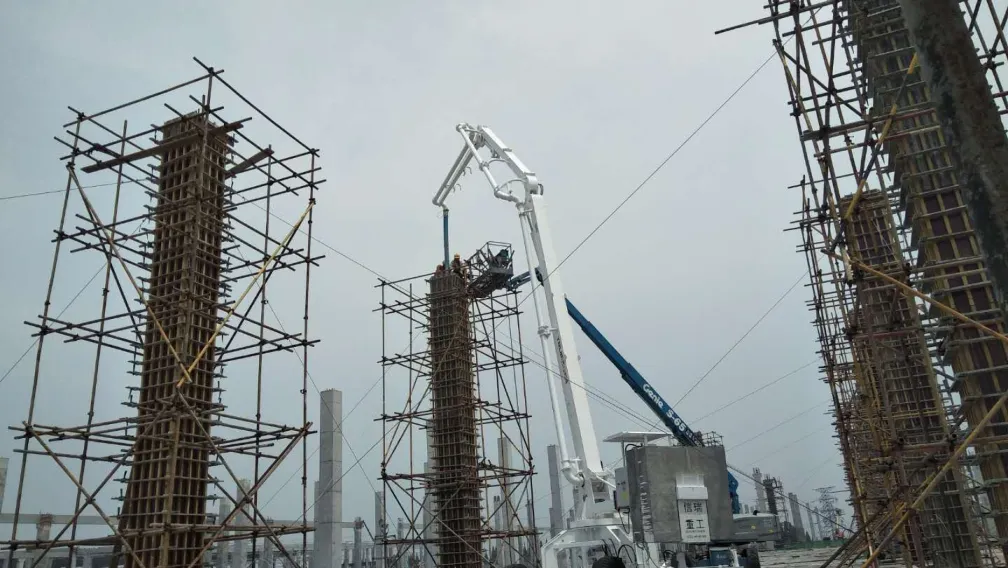
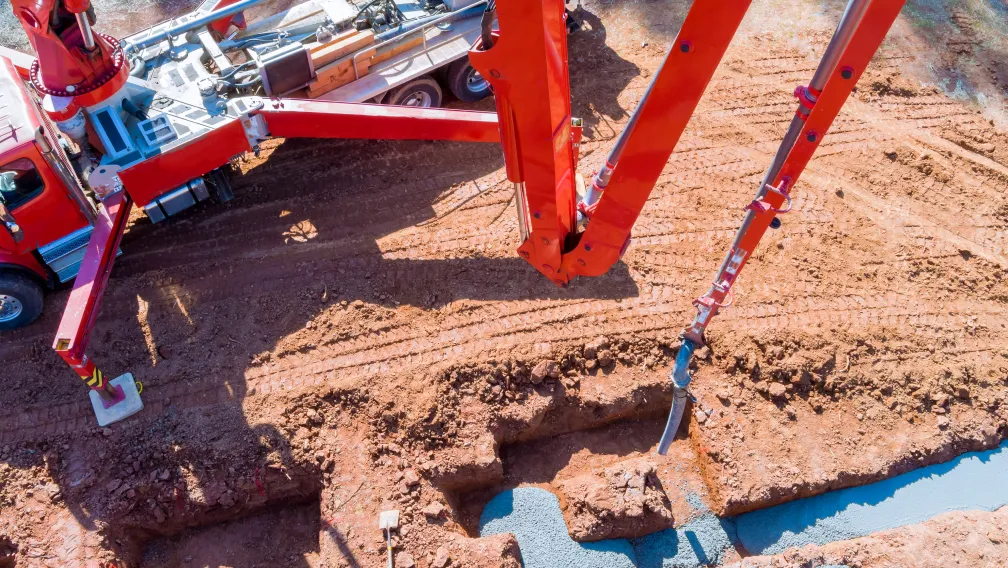
The placing boom solves the last section of concrete delivery — the part between the end of the pump line and the formwork. Without one, that gap is closed by workers carrying, dragging, and shifting heavy rubber hoses, which slows the pour, breaks placement continuity, and tires the crew into shortcuts. With a boom, concrete arrives continuously at the exact point of placement, layer after layer, which is what keeps large-area pours free of cold joints.
Two quality side effects matter on site. The boom never touches the formwork, so it transmits no vibration into freshly erected shutters. And because placement is fast and even, the next layer goes down before the previous one sets — the basic condition for a monolithic slab or wall. Field experience across the industry puts mechanized placement at three to five times the efficiency of manual hose work.
How the System Works: Pump, Pipeline, Boom
A placing boom is one half of a system. The other half is the pump. A stationary concrete pump at ground level draws concrete from mixer trucks and pushes it through a ground line, up a vertical riser pipe fixed to the structure, and into the boom's inlet at the base of the mast. Inside the boom, the line runs up the mast and out along the articulated sections to a flexible end hose, typically about three meters long, which gives the operator the final meter-by-meter control over the drop point.
The mast slews a full 360 degrees on a gear drive, and each boom section articulates hydraulically, so coverage is a full circle of the rated placing radius. The vertical reach of the whole system is set by the pump's pressure rating, not by the boom: a high-pressure stationary pump can serve a riser climbing hundreds of meters while the boom itself simply rides the structure upward.
The Four Main Types
Placing booms divide into four families, and the differences are about how the mast is supported and how it moves as the building grows:
| Type | Typical radius | How it is supported | Best fit |
| Manual placing boom | 12–18 m | Light frame on the floor, repositioned by hand or crane | Low-rise work, tight budgets, small floor plates |
| Spider (mobile) placing boom | 13–21 m | Self-standing spider legs; lifted floor to floor by tower crane | Projects where a tower crane is already on site |
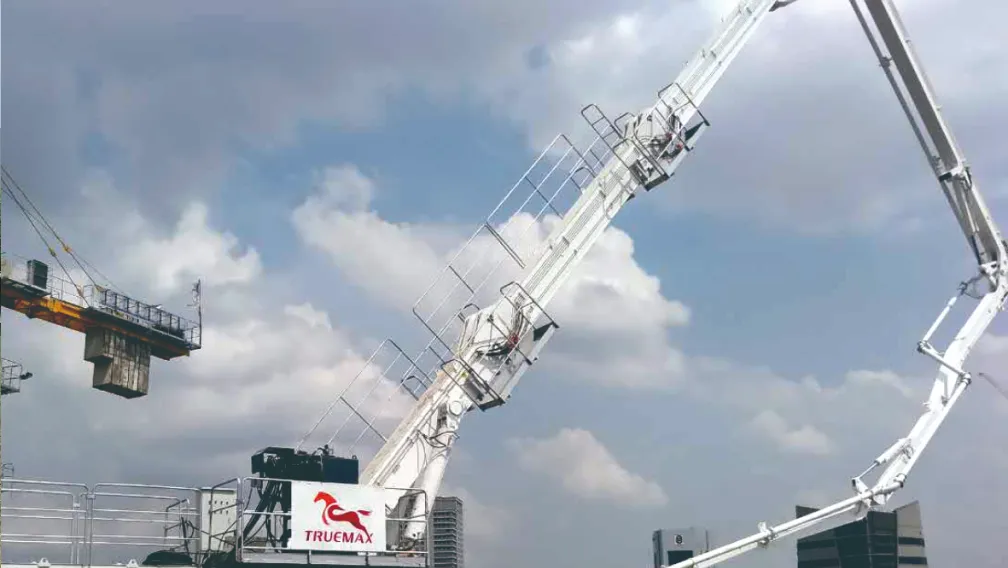
| Stationary floor-mounted boom | 13–32 m | Bolted through pre-set holes in the slab; crane-climbed in cycles | Mid- and high-rise frames, precast yards, bridge decks |
| Self-climbing placing boom | 24–36 m | Anchored inside the elevator shaft; hydraulic climbing frame raises itself with the floors | Tall towers with continuous floor-by-floor pours |
Manual units are the cheapest and simplest, but every pour position and every climb costs labor. Hydraulic models carry the higher purchase price and return it in speed: one operator places concrete at better than three times the manual rate. The self-climbing type removes the tower crane from the climbing cycle entirely, which is why it dominates tall-building work — crane time is usually the scarcest resource on a tower.
Placing Boom vs Boom Pump: Which One the Project Needs
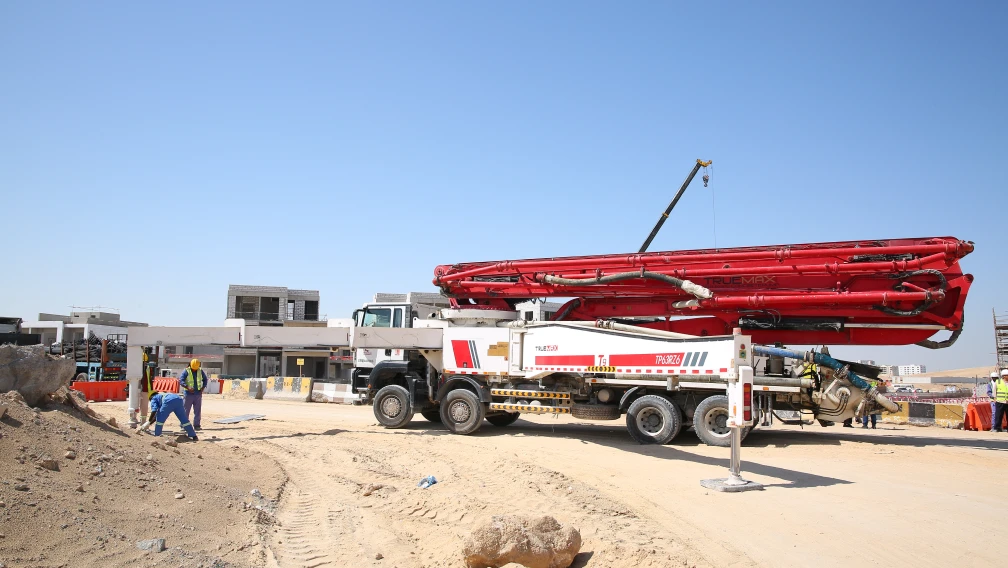
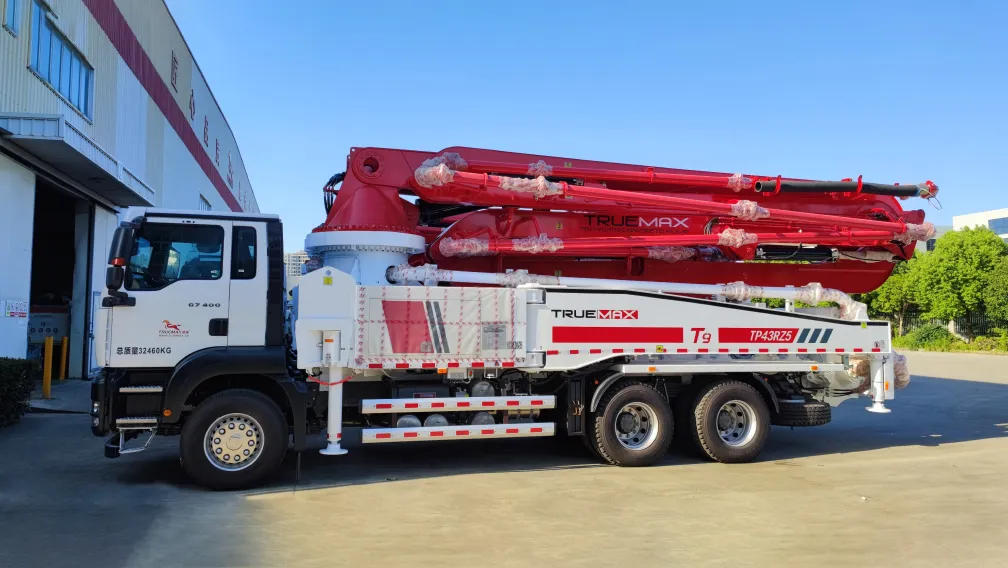
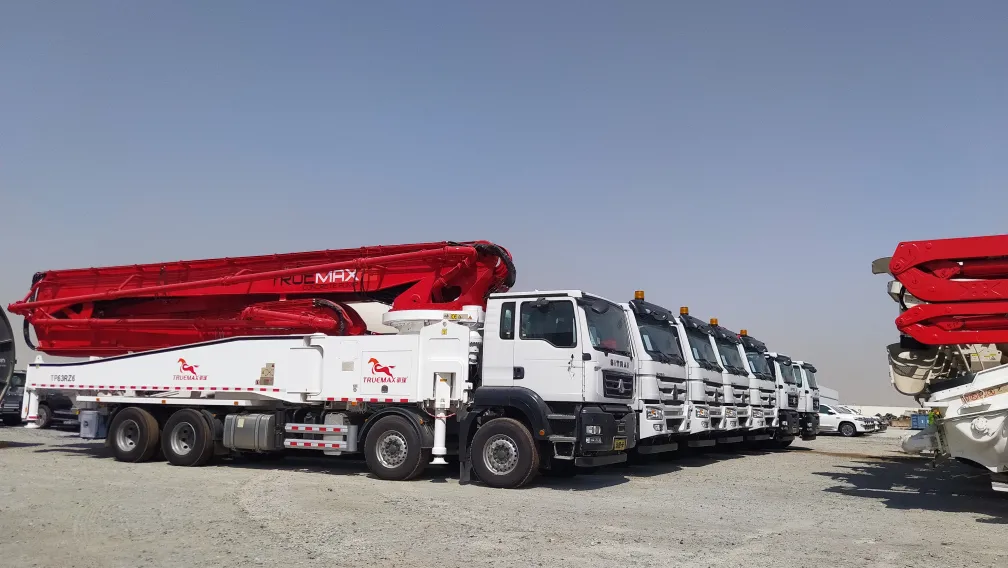
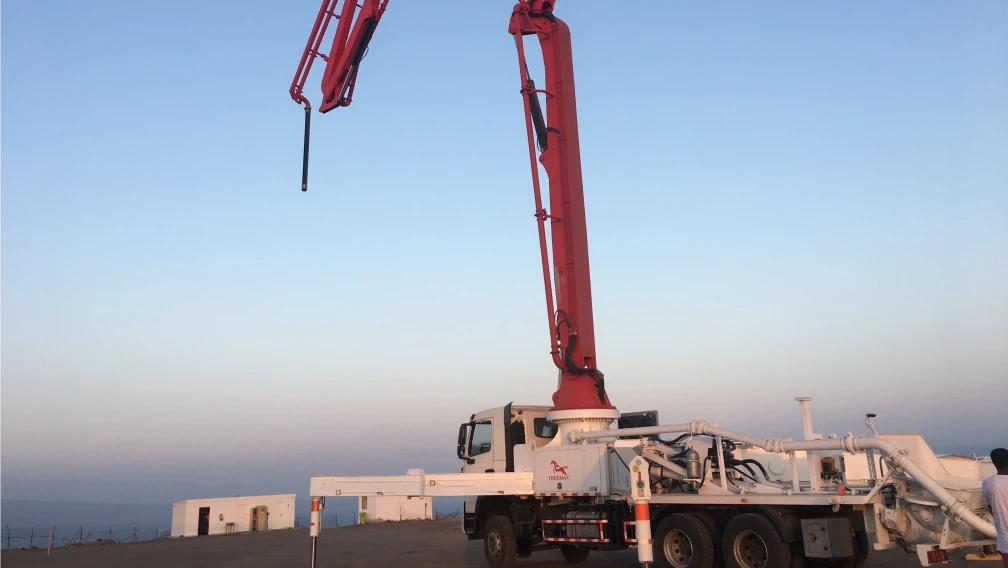
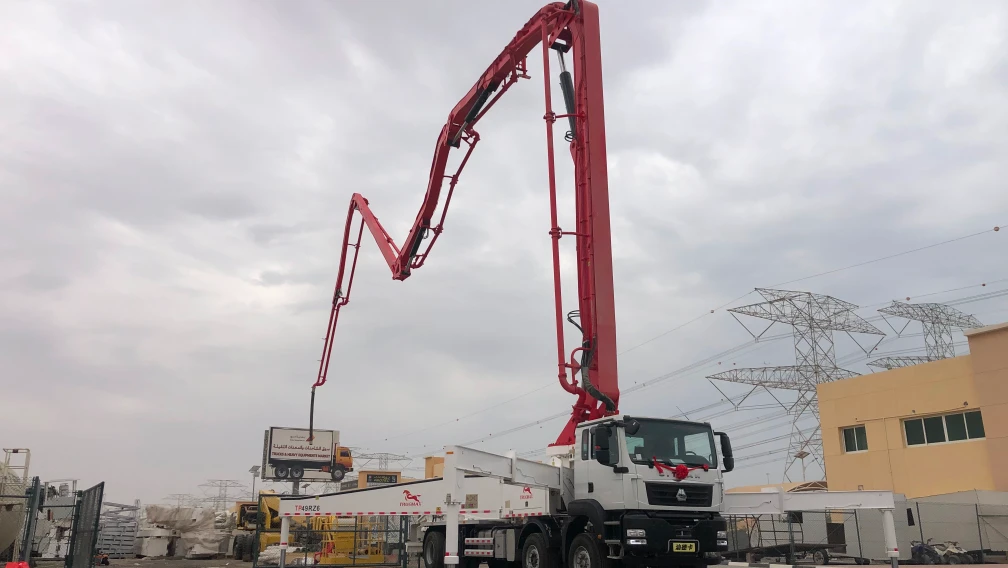
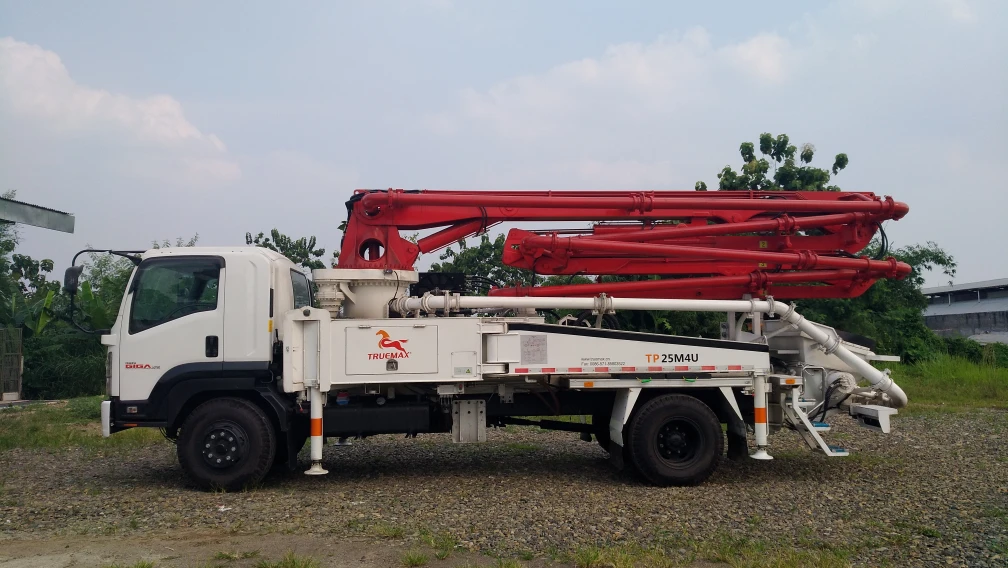
The two machines look similar and are bought for the same job — putting concrete where it is needed — but they belong to different project phases. A truck-mounted boom pump is a complete, mobile unit: it drives in, sets its outriggers, unfolds, places concrete, and leaves the same day. Its ceiling is physical. Even the largest truck booms top out around 60 to 70 meters of vertical reach, and daily mobilization makes them expensive to hold on a tower for months.
A placing boom is a fixed installation fed from the ground. Once the building climbs past practical mobile reach, or the schedule calls for steady floor-after-floor output over months, the placing boom takes over. It costs crane or shaft space and a planned installation, and in return it gives continuous placement with no daily setup, no outrigger footprint at street level, and no competition for crane buckets. Most towers use both: boom pumps for the podium and early floors, a placing boom from the level where mobile reach runs out. The planning mistake to avoid is scheduling the placing boom too late — installation, riser routing, and mounting details belong in the early pour plan, not in a mid-project scramble.
How to Choose: Radius, Mounting, Climbing
Selection comes down to four checks, in order:
- Floor plate dimensions: the length and width of the largest typical floor set the placing radius. A 36 m radius boom covers most tower floor plates from a single position; smaller plates can accept 13–21 m units at far lower cost.
- Building height and pour rhythm: below roughly ten floors, crane-climbed stationary or spider booms are usually enough. Above that, a self-climbing unit in the elevator shaft pays for its hydraulics in saved crane cycles.
- Crane availability: if the site already runs a tower crane with spare lifting windows, a spider boom is the economical middle path; if crane time is saturated, self-climbing is the correct answer.
- The pump behind it: vertical reach depends on pump pressure, so the boom and the stationary pump should be specified together. Under-powering the pump strands the boom's height advantage; over-powering wastes fuel and wear parts.
For the structural side of this decision — pour sequencing, riser routing, and output matching on tall buildings — our high-rise concrete pumping solution page covers the workflow in more detail.
Operation Points That Protect the Pour
Three habits separate good placing-boom crews from average ones. Keep the placement moving in planned layers so every new portion lands on concrete that is still workable; a boom makes this easy, and skipping it wastes the machine's main advantage. Keep the end hose off the reinforcement and let concrete drop vertically — dragging the hose sideways across rebar segregates the mix at the point where it matters most. And flush the boom line into the pump's return path at the end of each pour, because a riser left standing with concrete in it becomes tomorrow's blockage.
Get the Boom and Pump Specified Together
TRUEMAX supplies hydraulic placing booms from 13 to 36 m placing radius in stationary, spider, and self-climbing configurations, matched to the stationary pumps that feed them. Send us your floor plate dimensions, building height, and pump model — or ask us to spec both — through the contact page, and we will return a configuration with riser routing suggestions.
Frequently Asked Questions
Q1: What is a concrete placing boom?
A: A concrete placing boom is the distribution device at the end of a concrete pumping line: a slewing mast with an articulated arm that spreads fresh concrete across the pour area. It carries no pump and is fed by a stationary or trailer pump through a steel pipeline, replacing manual hose handling on the work surface.
Q2: Does a placing boom have its own pump?
A: No. A placing boom only distributes concrete; the pumping pressure comes from a separate stationary or trailer-mounted pump at ground level. The boom's vertical reach is therefore set by the pump's pressure rating, which is why the two machines should be specified as one system.
Q3: What is the difference between a placing boom and a boom pump?
A: A boom pump is a truck-mounted, self-contained machine that mobilizes daily and reaches about 60–70 meters vertically at most. A placing boom is a fixed installation on the structure, fed by a ground pump through a riser pipe, used once the building exceeds mobile reach or the project needs continuous floor-by-floor output over months.
Q4: What placing radius do I need?
A: Measure the largest typical floor plate: the boom's radius must reach every pour point from its mounting position, allowing for the roughly 3-meter flexible end hose. High-rise towers with wide plates commonly specify 24–36 m; smaller plates and precast yards often work with 13–21 m.
Q5: How does a self-climbing placing boom climb?
A: The mast is anchored inside the building's elevator shaft on a hydraulic climbing frame. When a floor is finished, hydraulic cylinders lift the mast one level, the frame re-anchors, and pouring continues — no tower crane pick is needed. The same boom can also be fixed directly to floors on buildings without a suitable shaft.
Q6: How high can a placing boom pour?
A: The boom itself adds only its own mast height. Real vertical reach comes from the pump: a high-pressure stationary pump can push concrete hundreds of meters up a riser, so the same boom model can serve a mid-rise frame or a supertall core depending on the pump behind it.
Q7: Manual or hydraulic placing boom — which should I buy?
A: Manual booms (12–18 m) cost a fraction of hydraulic units and suit low-rise work and occasional pours. Hydraulic booms place concrete more than three times faster with one remote operator, and self-climbing versions remove tower-crane dependence on tall buildings. Frequency and height of your pours decide the payback.
-

TrueMax
Concrete & Construction Equipment ManufacturerEstablished in 2003, Truemax designs, manufactures, and delivers concrete pumping equipment, crushing machinery, and construction hoisting systems from our own factory in Haining, China to jobsites in over 120 countries.