

 LANGUAGE

Urban and industrial concrete batching plants face tighter environmental enforcement every year. Uncontrolled cement dust and uncontained alkaline washout water bring regulatory fines, neighbour complaints, accelerated mechanical wear and forced shutdowns. Treating dust capture and wash water recycling as part of plant process engineering keeps operations compliant and lowers cost per cubic metre.
1. Why Environmental Controls Are Process Controls
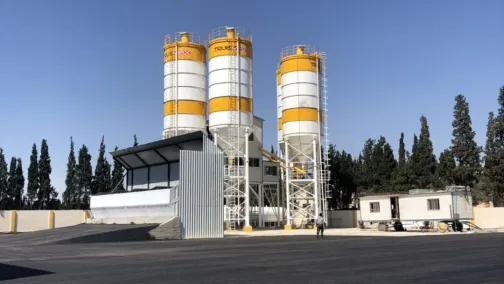
A batching plant handles fine powders and high-pH wash water across multiple transfer points. When dust escapes a silo vent or mixer discharge, the plant loses cementitious material, wears out nearby bearings and electrical panels, and creates airborne dust hazards. When wash water—commonly above pH 12—drains into soil or storm sewers, it contaminates runoff and breaches discharge limits.
Reliable compliance pairs point-source dust capture with closed-loop water recovery. A matched setup reduces fresh-water demand, limits sludge hauling and protects production schedules during inspections.
2. Point-Source Dust Control Across the Plant
Dust emissions concentrate at specific transfer zones. Each point needs controls matched to airflow, fines content and moisture sensitivity:
| Emission point | Primary control | Operating note |
|---|---|---|
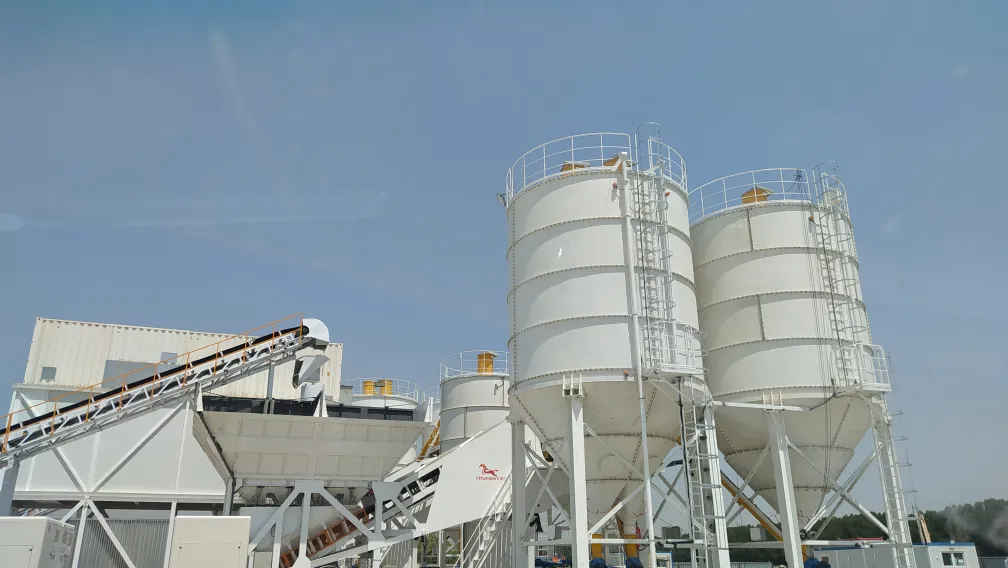
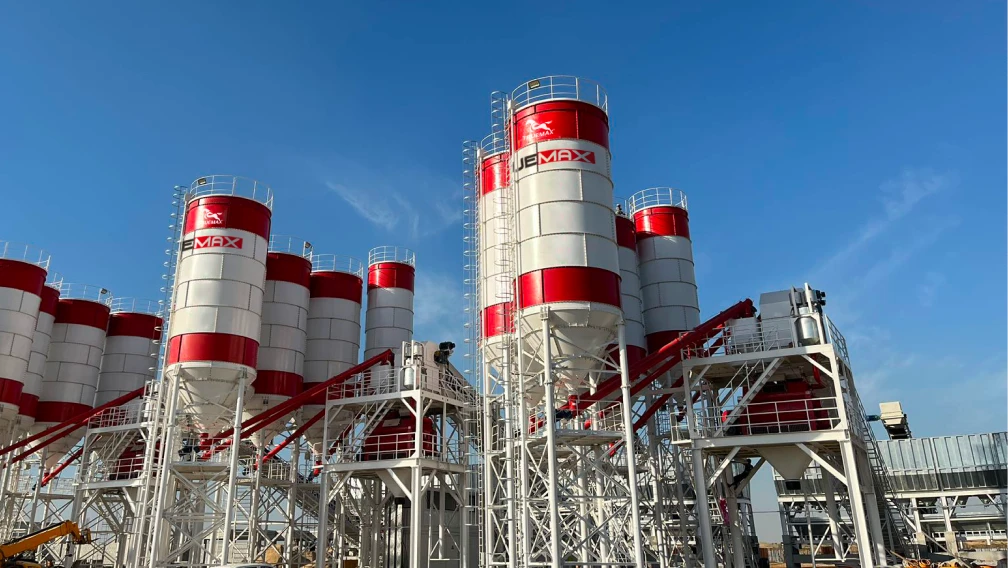
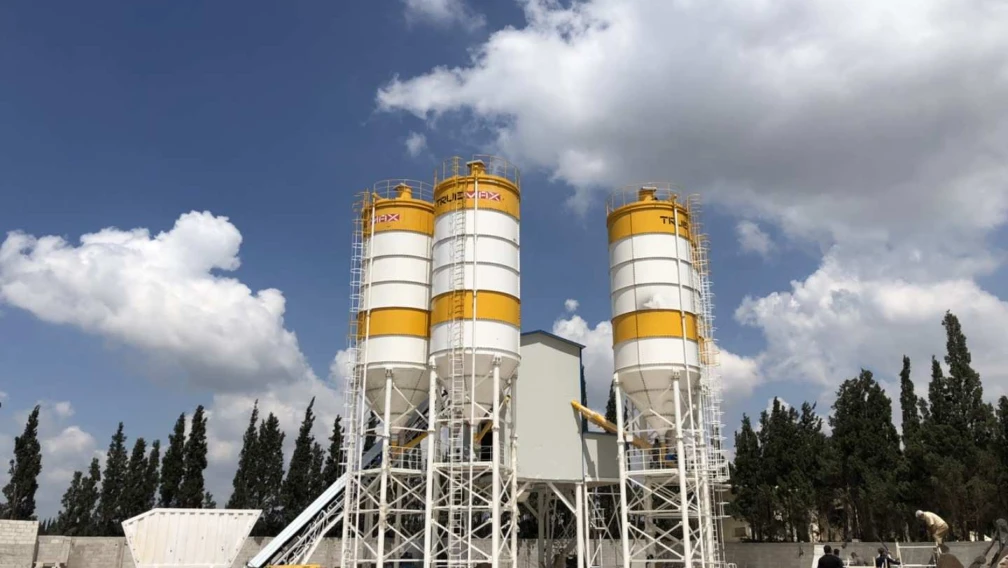
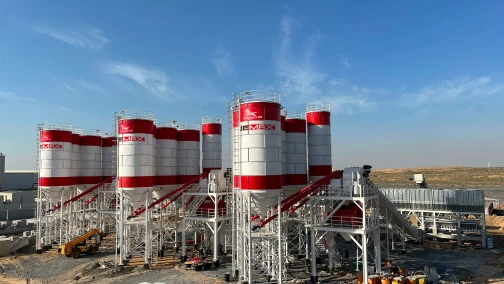
| Cement and SCM silos | Top-mounted pulse-jet dust collector | Keep filter media dry; damp cement cakes bags and drives up pressure drop |
| Aggregate conveyor transfer & bins | Enclosed chutes, skirtboards and fine mist sprays | Keep added water low so aggregate moisture stays predictable for weighing |
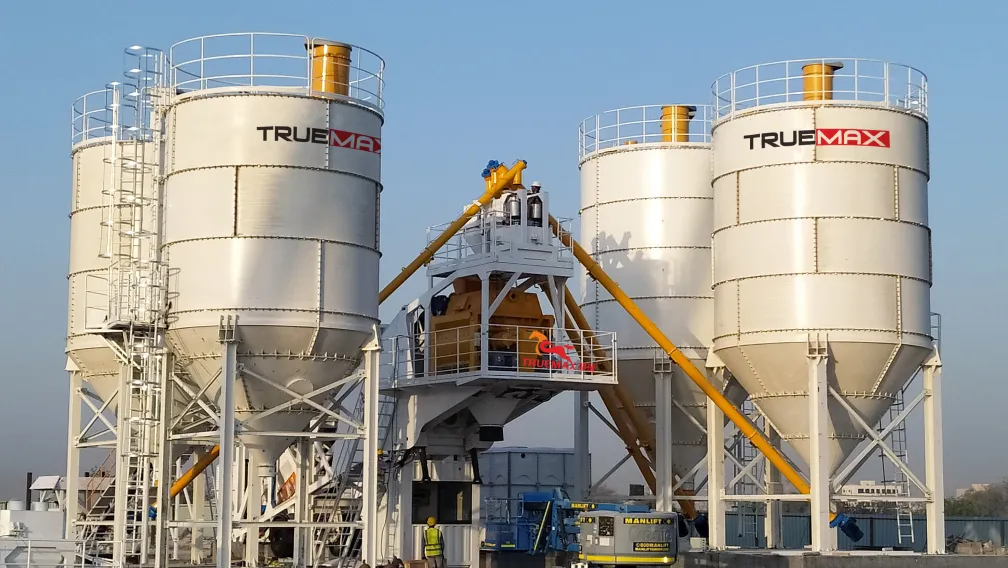
| Main mixer & weigh hopper | Negative-pressure hood vented to baghouse | Hold slight negative pressure without pulling excess steam or moisture into filters |
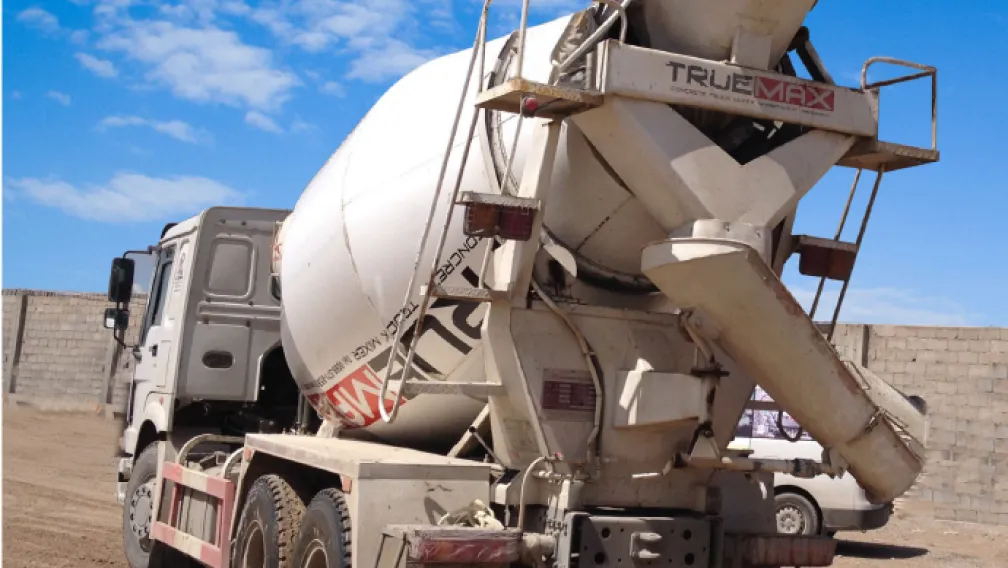
| Mixer truck loading station | Telescopic loading chute with dust skirt | Lower chute skirt near the drum opening to contain displaced air and fines |
For pulse-jet bag collectors, check compressed-air supply pressure, filter differential pressure and dust return routing regularly. Returning dry collected fines smoothly to the batching or mixing stage recovers material and prevents filter blinding.
3. Wash Water and Aggregate Recycling Architecture
Daily drum rinsing, chute flushing and yard cleanup generate coarse aggregates mixed with fine cement slurry. Separating solids before reusing water keeps both the batching system and the recycling loop stable:
- Coarse solids recovery: Route returning or rinsed concrete through a sand-gravel separator or screw classifier to recover coarse aggregate and sand while sending fine slurry downstream.
- Settlement and agitation: Hold fine slurry in baffled settlement tanks or agitated holding pits so solids settle evenly rather than packing into hard dead zones.
- Process water reuse: Pump clarified or controlled slurry water back into rinse lines or approved batching water circuits, reclaiming up to 80% of wash water volume.
- Sludge handling: Dewater or settle fine solids, then dispose of hardened cake as regulated construction waste rather than dumping on site.
When reusing wash water in concrete mixes, test water density, solids content and set behaviour first. High-solids slurry water can affect admixture demand and setting time if dosed without control.
4. Inspection and Maintenance Rhythm
Environmental hardware fails quickly when treated as secondary equipment. Tie basic checks to weekly and monthly plant routines:
- Weekly: Inspect silo and mixer dust collectors for abnormal differential pressure, air leaks or caked filter bags; clear washout channels and check pump sumps.
- Monthly: Check pulse-jet solenoid valves and compressed-air dryers; inspect chute seals and dust skirts for tears; clean settlement pits and verify pH or solids checks where required.
Dry compressed air is critical on silo filters. Moisture in the pulse-jet air line turns cement dust into cement paste on the filter fabric, cutting airflow and forcing premature bag replacement.
5. Frequently Asked Questions
Q1: Where do the largest dust emissions occur at a batching plant?
A: Main sources are cement and SCM silo vents during pneumatic unloading, aggregate transfer points, the main mixer discharge or weigh hopper, and the truck loading chute.
Q2: Why is moisture control critical in baghouse dust collectors?
A: Moisture in filter bags or pulse-jet compressed air causes fine cement to cake and blind the media, raising differential pressure and reducing dust capture efficiency.
Q3: How much wash water can a recycling system recover?
A: Well-maintained separation and settlement or recycling systems typically reclaim up to 80% of rinse water volume, while reducing fresh-water intake and liquid waste disposal.
Q4: Can washout water be reused directly in concrete batches?
A: Only under controlled mix design and quality checks. Solids concentration, pH and admixture compatibility must be verified so setting time and strength remain within specification.
Q5: How should hardened washout solids be disposed of?
A: Never discharge alkaline wash water into storm drains or bare soil. Settle or dewater the solids and handle hardened residue according to local construction and environmental waste rules.
Q6: Should dust and water systems be planned during initial plant layout?
A: Yes. Integrating dust collectors, washout pits, drainage grades and recycling tanks during initial site layout avoids costly retrofits and tight space constraints later.
6. Plan Environmental Systems With the Plant
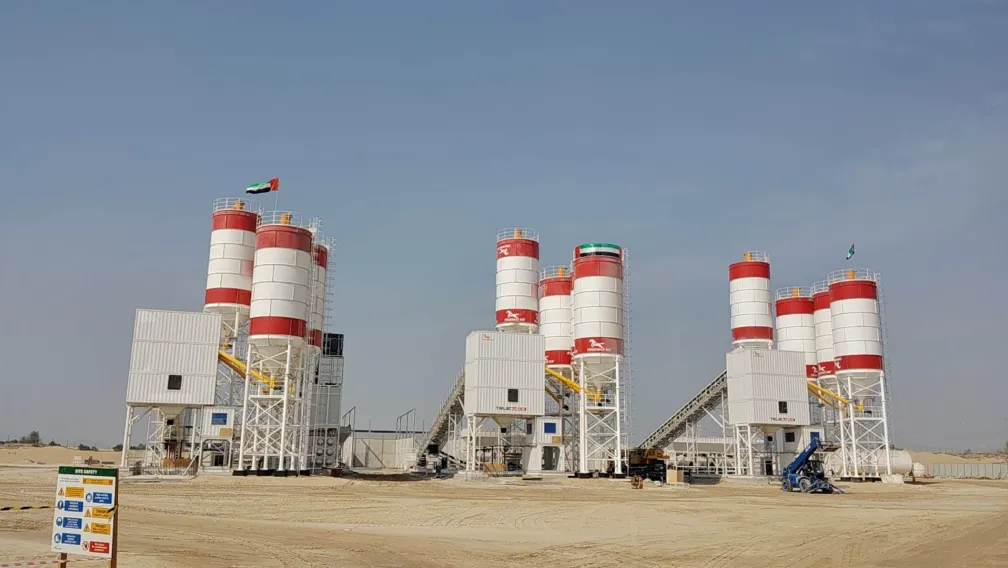
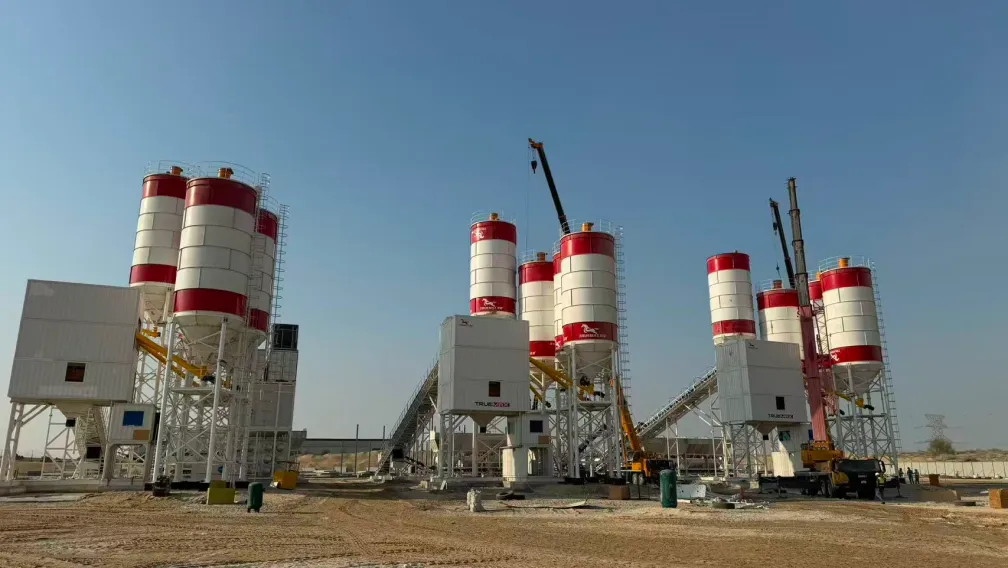
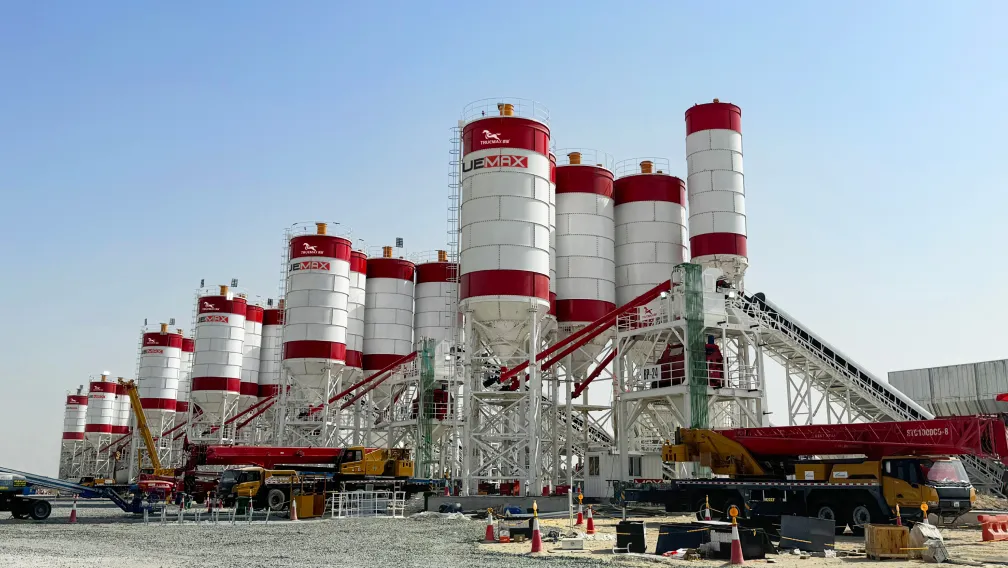
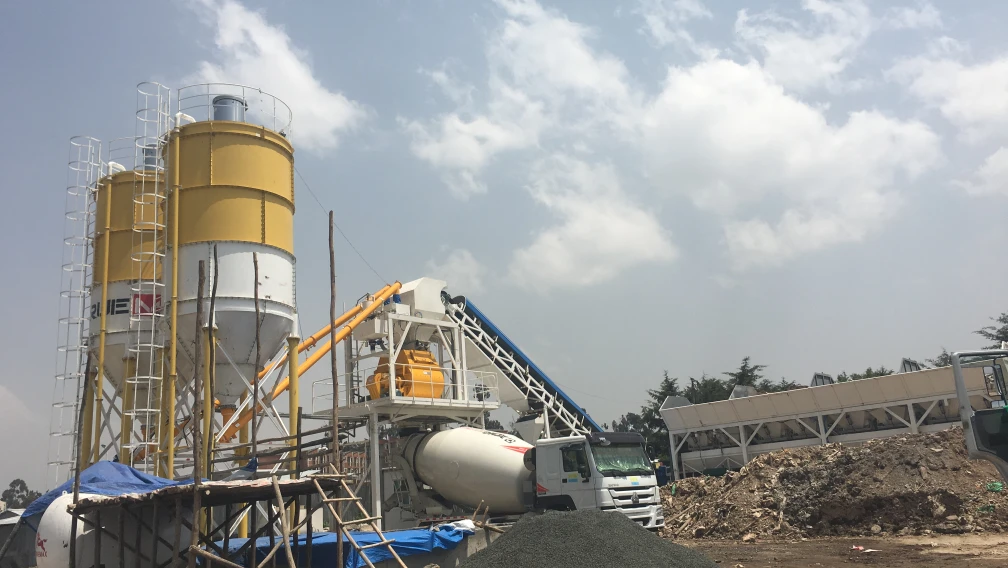
Dust collection and wash water recycling work best when engineered alongside the batching tower, silos and truck loading layout from day one. Whether you are specifying a stationary or mobile concrete batching plant for an urban site or upgrading an existing yard, contact our engineering team with your daily output, mix types and site layout to plan a practical dust and water-recycling configuration.
-

TrueMax
Concrete & Construction Equipment Manufacturer
Established in 2003, Truemax designs, manufactures, and delivers concrete pumping equipment, crushing machinery, and construction hoisting systems from our own factory in Haining, China to jobsites in over 120 countries.