

 Langue
1. The Mechanics of Compulsory Concrete Mixing
Modern structural concrete is a highly complex, multi-phase composite material. Achieving exact homogeneity across cement paste, fine aggregates, coarse stone, and chemical admixtures dictates the final compressive strength and durability of the cured structure. Legacy gravity-fall drum mixers are obsolete for industrial production because they lack the kinetic energy required to break apart cohesive cement clumps, especially in low water-to-cement ratio mixes.
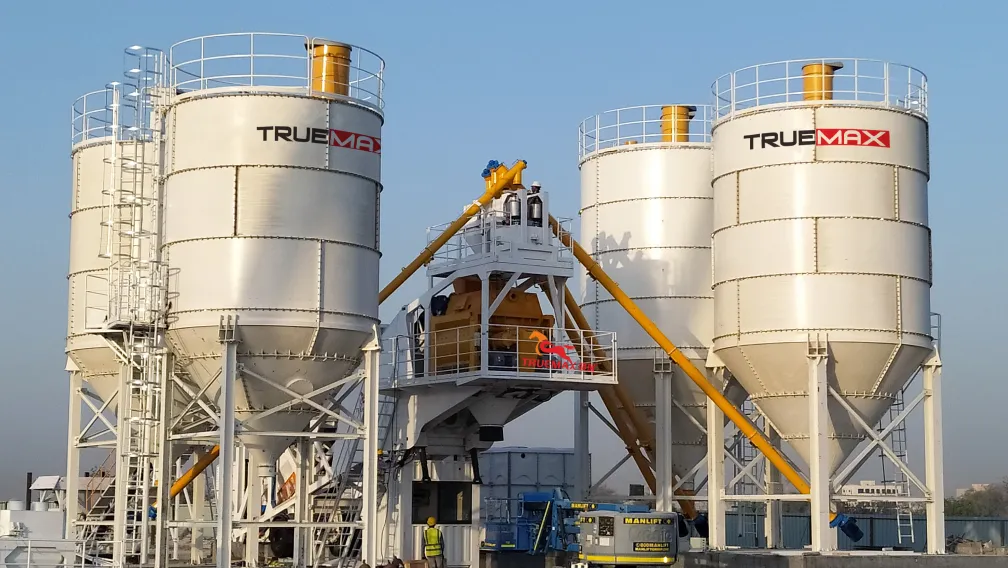
Today, the core of any commercial Concrete Batching Plant is a compulsory mechanical mixer. These machines force the aggregates and cementitious materials into violent, high-shear collision zones using motor-driven blades. The mixing kinetics must ensure that every single aggregate particle is completely coated with hydrated cement paste within a strictly defined cycle time, typically 60 to 90 seconds. Plant engineers evaluate and select compulsory mixers based on their intended structural output, primarily deciding between Twin-Shaft Horizontal Mixers and Planetary Counter-Current Mixers.
2. Twin-Shaft Horizontal Mixers: High-Volume Production
The twin-shaft horizontal mixer is the undisputed standard for high-volume ready-mix concrete production and heavy civil infrastructure projects. The architecture consists of two parallel horizontal shafts equipped with staggered mixing arms and heavy-duty paddles.
As the two shafts rotate in opposite directions, the overlapping paddle trajectories create a dynamic, three-dimensional boiling effect. The material is continuously lifted, sheared, and forced into the central intersecting zone between the two shafts. This intersecting zone generates maximum kinetic turbulence, aggressively dispersing water and chemical superplasticizers throughout the dry aggregates. The rapid material exchange along the longitudinal axis of the mixing trough guarantees extremely fast homogenization.
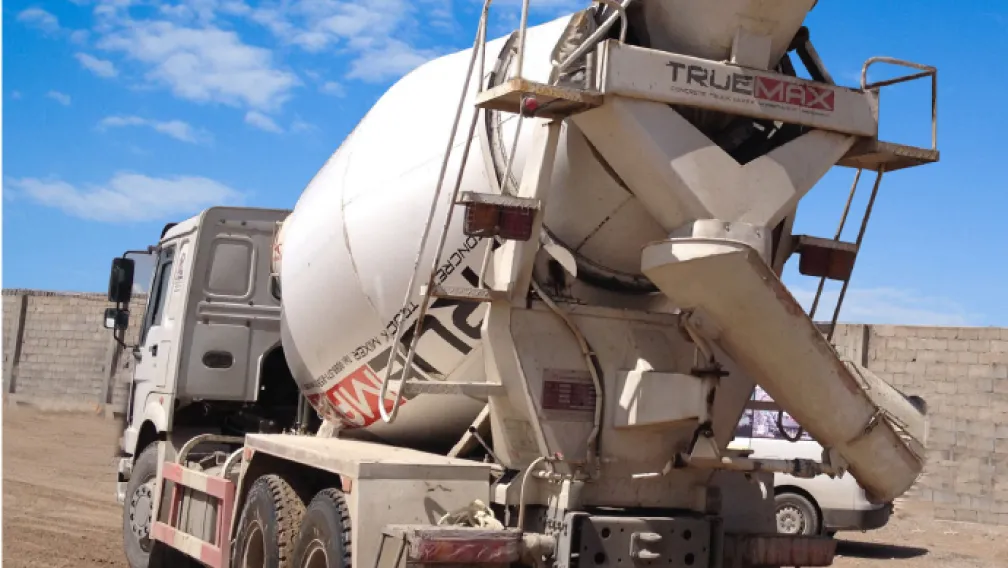
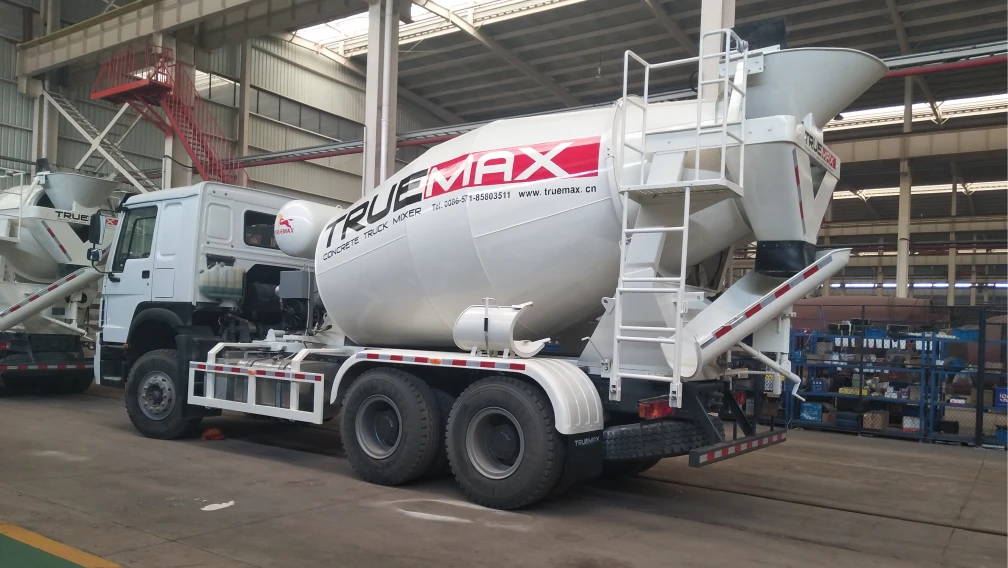
Twin-shaft mixers excel at processing large nominal maximum aggregate sizes (up to 150 mm for hydroelectric dam roller-compacted concrete) and outputting massive daily volumes. A standard 3.0 cubic meter twin-shaft mixer easily supports a plant production rate of 120 to 150 cubic meters per hour, feeding a continuous fleet of Concrete Truck Mixers without creating a supply chain bottleneck.
3. Planetary Counter-Current Mixers: Extreme Shear Precision
For precast concrete manufacturing, architectural cast stone, and Ultra-High-Performance Concrete (UHPC), the twin-shaft mixer is frequently replaced by a planetary counter-current mixer. Planetary mixers utilize a vertical shaft design enclosed in a circular pan.
The mechanics mimic a planetary gear system. Mixing stars (equipped with multiple blades) rotate rapidly on their own vertical axes while simultaneously orbiting around the central axis of the mixing pan. This compound epicyclic motion ensures that the mixing blades sweep through the entire floor area of the pan during every revolution. There are absolutely no mechanical dead zones.
Because the planetary motion generates extreme localized shear forces, it is unparalleled at dispersing ultra-fine powders like silica fume and color pigments. Precast operators rely on planetary mixers to produce stiff, zero-slump dry-cast concrete and highly cohesive self-consolidating concrete (SCC). However, planetary mixers are generally limited to smaller batch volumes (typically 0.5 to 2.5 cubic meters) and require highly refined aggregates to prevent mechanical jamming between the floor blades and the pan bottom.
4. Tribological Wear Management and Metallurgy
The interior of a compulsory mixer is an aggressively abrasive environment. Crushed granite, sharp silica sand, and abrasive cement powder continuously grind against the mixing tools and the stationary housing walls at high velocities. Without high-grade metallurgy, the internal components would be destroyed within weeks.
Manufacturers armor the interior of the mixing trough or pan with replaceable, bolted wear liners. These liners, along with the mixing paddles and scraper blades, are cast from high-chromium white iron (Ni-Hard alloys). The chromium carbides suspended in the metallurgical matrix provide extreme resistance to sliding abrasion, achieving a minimum surface hardness rating of 600 Brinell Hardness Number (HB).
Operators must conduct weekly internal inspections using thickness gauges. If the floor or wall liners wear down past their operational limits, the underlying structural steel shell of the mixer will be exposed and quickly eroded. Furthermore, as the mixing paddles wear down, the clearance gap between the blade tip and the floor liner increases. A gap exceeding 10 mm allows coarse aggregates to wedge underneath the blade, which severely spikes the mechanical torque and accelerates motor fatigue.
5. Shaft Sealing Technology and Bearing Protection
The most critical engineering vulnerability in a twin-shaft mixer is the point where the rotating horizontal shafts exit the mixing trough and connect to the external gearboxes. These exit points are constantly submerged under highly pressurized, abrasive cement grout during operation. If cement slurry penetrates the shaft seals and enters the main roller bearings, the bearings will seize, causing catastrophic mechanical failure.
To protect the bearings, modern twin-shaft mixers utilize complex multi-stage labyrinth seals. The system consists of stacked polyurethane rings, bronze thrust collars, and an automated continuous greasing system. A dedicated high-pressure pneumatic grease pump injects specialized lithium-based grease into the seal cavity at a pressure of up to 300 bar. The grease acts as a physical barrier, continuously flushing outward into the mixing trough and preventing the abrasive cement paste from migrating outward toward the mechanical bearings. Plant operators must verify the grease reservoir levels daily; operating a twin-shaft mixer with an empty automated greasing unit will destroy the shaft seals within a single production shift.
6. Discharge Logistics and Downstream Synchronization
Once the mixing cycle concludes, the concrete must be evacuated from the chamber rapidly and cleanly. Twin-shaft mixers utilize a full-width hydraulic rotary door at the bottom of the trough, while planetary mixers use hydraulically actuated sliding floor gates.
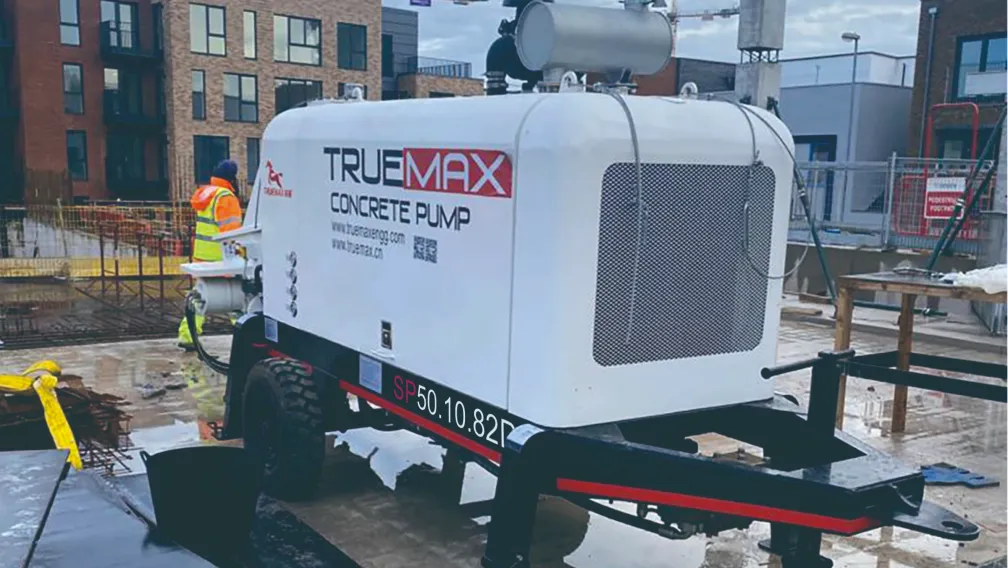
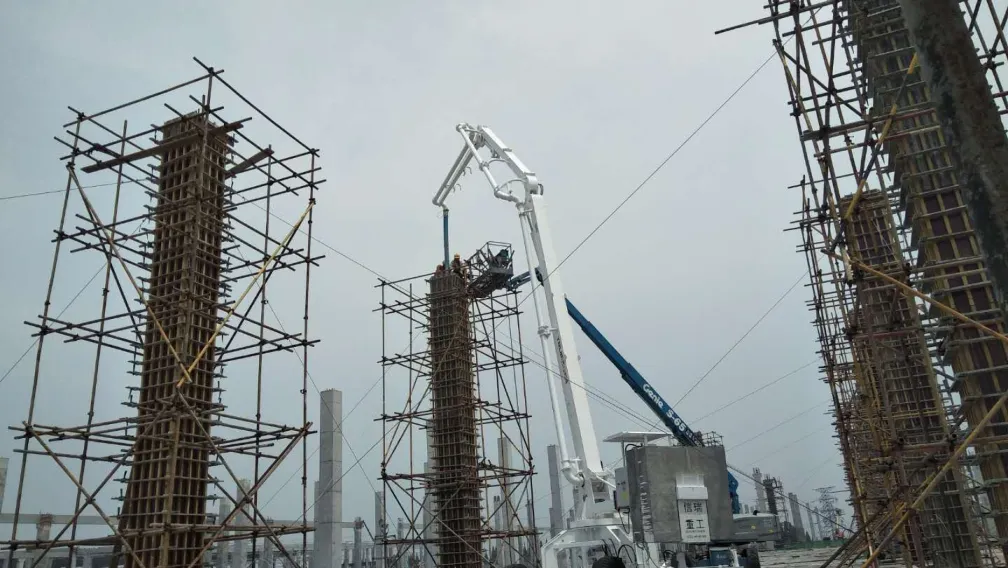
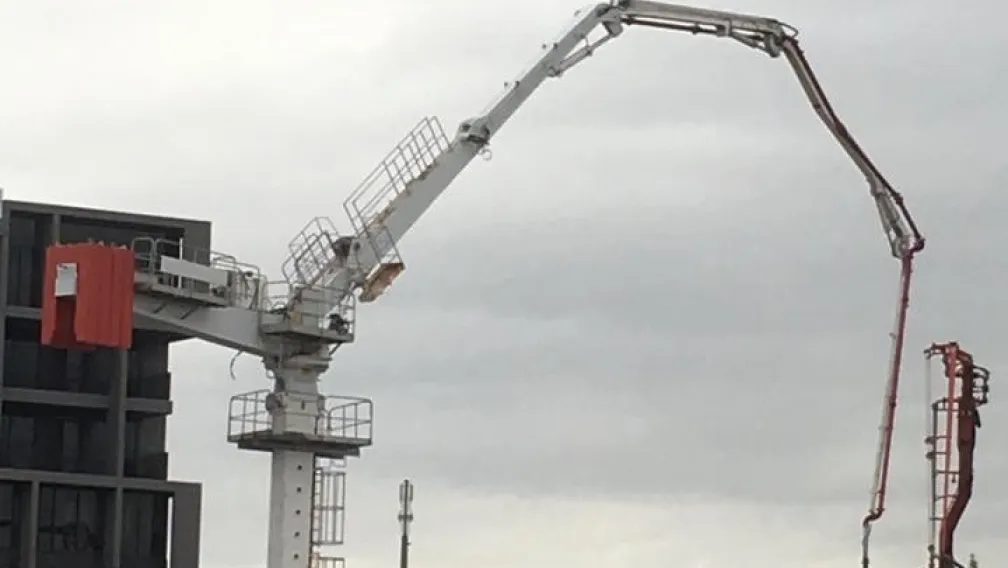
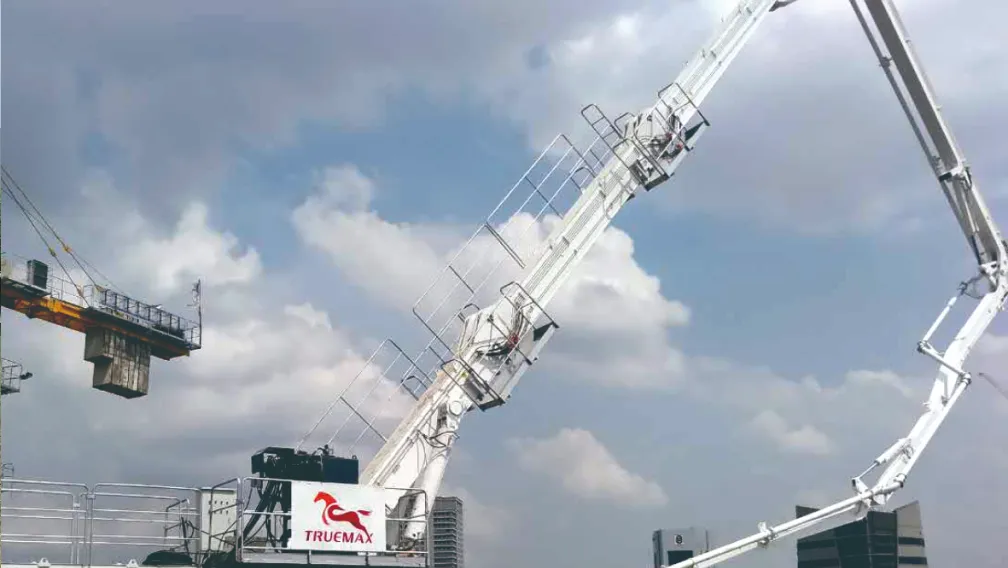
The discharge rate must be mathematically synchronized with the receiving equipment. If the mixer dumps 3.0 cubic meters of heavy concrete into a holding hopper too quickly, it risks overflowing or violently shocking the truck mixer alignment funnel. The hydraulic control block of the discharge door is equipped with proportional valves, allowing the operator to open the door partially to meter the initial flow, then open it fully to evacuate the remaining material. Rapid, clean discharge ensures that the subsequent delivery equipment, whether a transit mixer or a high-pressure Stationary Concrete Pump feeding a vertical Concrete Placing Boom, receives a steady, homogenous material feed without interrupting the structural placement cycle.
7. Frequently Asked Questions
Q1: Why can't gravity-fall drum mixers be used for commercial batching plants?
A: Drum mixers rely purely on gravity—lifting material up and dropping it. This action lacks the mechanical shear force necessary to break apart the cohesive cement paste required in modern low-water, high-strength concrete mixes. Compulsory mixers use driven blades to forcefully sheer and homogenize the materials.
Q2: How often should the automated greasing system on a twin-shaft mixer be serviced?
A: The grease reservoir must be checked daily. The grease lines and distribution blocks should be inspected weekly to ensure no lines are crushed or blocked. Running a twin-shaft mixer without active grease pressure in the labyrinth seals will result in immediate bearing contamination.
Q3: What causes a compulsory mixer motor to stall during a batch cycle?
A: Motor stalling is typically caused by overloading the aggregate scale, a severe drop in the site's electrical supply voltage, or a failure in the water dosing system that results in an overly dry, stiff mix. Worn mixing blades with excessive floor clearance can also cause large aggregates to wedge and mechanically jam the shaft.
Q4: Can a planetary mixer process large aggregates for civil infrastructure projects?
A: Planetary mixers are generally not recommended for nominal aggregate sizes exceeding 40 mm. The precise, tight clearances between the rotating stars and the pan floor make them susceptible to jamming when processing oversized river rock or crushed boulders.
Q5: What is the purpose of the high-pressure washout system?
A: Cement paste hardens rapidly inside the mixer trough. High-pressure washout systems use rotating 100-bar water nozzles to scour the internal walls, shafts, and blades immediately after the production shift ends. This prevents concrete build-up, which would otherwise alter the internal mixing volume and add excessive dead weight to the electric drive motors.
Q6: How do twin-shaft mixers maintain synchronization between the two rotating shafts?
A: The two mixing shafts are mechanically synchronized via a heavy-duty timing belt or a synchronized double-output gearbox. This absolute synchronization ensures the staggered mixing arms intermesh perfectly in the center of the trough without colliding and snapping the heavy cast-iron blades.
8. Technical Equipment Consultation
Selecting the optimal mixing host dictates the operational efficiency, mix consistency, and long-term maintenance overhead of your entire concrete production facility. For detailed technical comparisons between high-capacity twin-shaft configurations and high-shear planetary models, or for custom wear-part metallurgy specifications, submit your daily output requirements to the Truemax engineering team to receive a comprehensive technical proposal within 24 hours.
-

TRUEMAX
Fabricant d'équipements pour travaux de béton et de constructionLa société TRUEMAX a été fondée en 2003. Nous concevons, fabriquons et fournissons des pompes à béton, des installations de concassage et des engins de levage pour la construction depuis notre usine à Haining (Chine) vers des chantiers dans plus de 120 pays du monde.